Built from documented writings, speeches, decisions and historical records. Council members argue from documented positions, applied to today's question.
Lebanon needs international partners who can fund state rebuilding while deterring Iranian interference.
Ben-Gurion's demand for disarmament first ignores Lebanon's collapsed state capacity after 2019. Sirleaf and Adenauer both rebuilt failed states by accepting international oversight in exchange for resources and security guarantees. Schmidt warns that Lebanon's multiple dependencies let external powers manipulate domestic actors through competing funding streams.
The council splits on sequencing: security first versus simultaneous reconstruction through international integration.
- 1Establish international partnership framework providing both economic reconstruction aid and military deterrence against Iranian proxy interference.
- 2Reduce Lebanon's structural dependencies by diversifying revenue sources beyond Syrian electricity and external militia funding.
- 3Focus international aid on creating domestic economic opportunities rather than subsidizing existing loyalty networks.
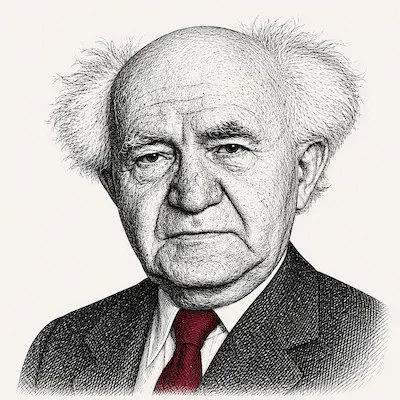
Security is the precondition of everything else in Lebanon.
Lebanon cannot achieve peace while Hezbollah controls territory and 100,000 rockets. I learned this in 1948 when the Irgun tried to import weapons independently of our new government. I ordered the IDF to sink the Altalena arms ship, killing 16 of our own fighters. There can only be one army in a state. Any armed force outside state command threatens the state itself. Lebanon's government has spent eighteen years unable to implement Resolution 1701 because it cannot disarm Hezbollah. Until that changes, there is no state to make peace with.
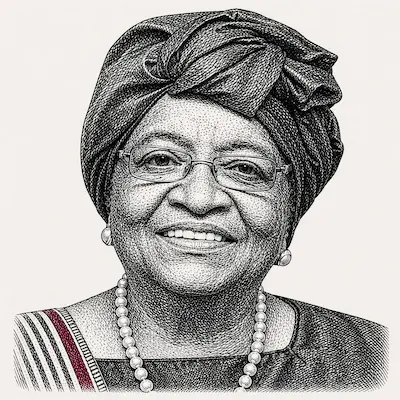
You cannot sequence security before governance when the state has no capacity to provide either.
Ben-Gurion assumes Lebanon has a functioning government that can choose to disarm militias. In 2006 I inherited a Liberia with no electricity grid, no paid police, and no credible courts. Our militias weren't just armed groups; they were the only functioning authority in large areas. I had to negotiate with warlords while building state capacity simultaneously. Lebanon's banking collapse means the government cannot pay salaries or deliver services. Hezbollah fills that vacuum. Demanding disarmament before rebuilding basic state functions is asking Lebanon to destroy the only institutions that work.
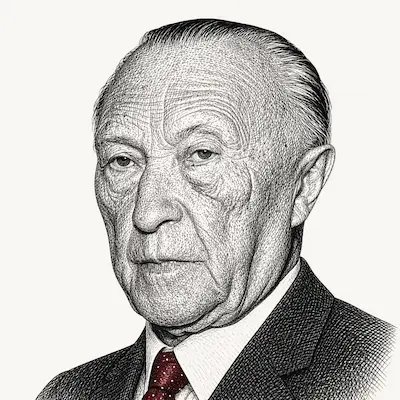
Lebanon's survival requires deep integration with partners who guarantee both economic recovery and territorial security.
Sirleaf is right that state capacity must be rebuilt, but Lebanon cannot do this alone against regional threats. In 1949 West Germany faced complete institutional collapse while Soviet divisions sat 100 kilometers from the Rhine. I chose Westintegration, accepting constraints on sovereignty in exchange for Marshall Plan resources and NATO protection. Lebanon needs the same framework: international partners providing economic reconstruction aid while guaranteeing security against external interference. The current UN peacekeeping mission lacks enforcement authority. Lebanon requires partners with both resources and military credibility to deter Iranian proxy warfare.
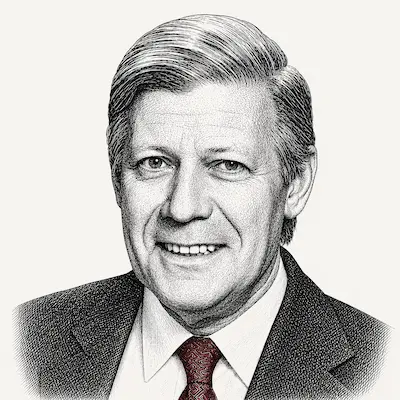
Lebanon's dependencies make it a playground for external powers rather than a sovereign state.
Adenauer's integration model assumes reliable partners with aligned interests. Lebanon faces the opposite: competing external powers using Lebanese proxies to fight regional conflicts. In 1973 I learned that energy dependence is not an energy question but a sovereignty question. Lebanon depends on Syrian electricity, Iranian funding for Hezbollah, Saudi funding for Sunni groups, and Western aid for the government. Each dependency creates a lever for manipulation. Lebanon cannot achieve peace while its domestic actors answer to external sponsors. The path forward requires reducing these structural dependencies through diversified partnerships and domestic revenue generation.
Making exit harder through economic recovery could shift Lebanon's population from loyalty to Hezbollah toward voice against it.
Schmidt identifies the dependency trap, but Lebanon's brain drain shows the exit option still functions for those who can afford it. My framework suggests that when exit becomes costly, voice increases. Lebanon's economic collapse has made emigration harder for middle-class families who previously would have left. This creates potential for domestic voice against all armed actors, including Hezbollah. In Colombia I learned that development projects work when they create productive tensions forcing creative solutions. Lebanon's crisis could force a new social contract if international aid focuses on making exit costlier through economic opportunity rather than making loyalty cheaper through subsidies.
The convergence note
Where the council converges: Lebanon's current state structure cannot deliver sustainable peace. External dependencies enable armed non-state actors to operate independently of government authority.
Where it divides: Whether security must precede governance reconstruction (Ben-Gurion) or whether both must proceed simultaneously through international integration (Adenauer, Sirleaf, Schmidt, Hirschman).
For a policymaker to decide on: Which comes first: disarming Hezbollah or rebuilding Lebanese state capacity? And which external partners can credibly guarantee both economic resources and territorial security?