Should the EU impose sanctions on Israel for its attacks on Lebanon?
Built from documented writings, speeches, decisions and historical records. Council members argue from documented positions, applied to today's question.
EU sanctions would isolate Europe without changing Israeli behavior or protecting Lebanese civilians.
Schmidt warns sanctions work only when they isolate the target, not the sanctioning power. Roosevelt argues human rights law means nothing if it bends to protect allies. Ben-Gurion insists military action becomes necessary when diplomacy fails to remove existential threats. Maathai shows how military responses and punitive sanctions both strengthen the cycles they claim to break.
The split turns on what EU policy should prioritize: alliance relationships or legal consistency.
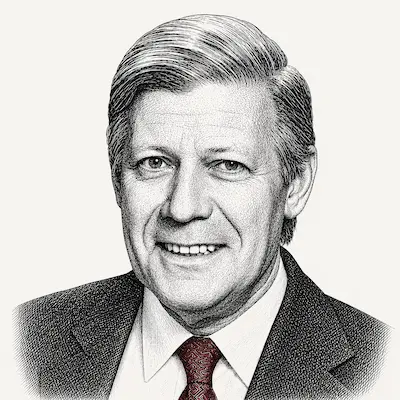
EU sanctions against Israel require clear strategic calculation, not moral posturing.
In November 1973 I told the Bundestag that energy dependence is not an energy question but a sovereignty question. The same principle applies to sanctions policy. When Europe imposes sanctions, we must ask: what do we achieve, and what do we sacrifice? My experience managing the 1973 oil embargo taught me that Middle East conflicts create dependencies Europe cannot afford. Israeli military action in Lebanon disrupts regional stability. But EU sanctions against Israel would accomplish nothing while damaging our own strategic position.
The Americans will not follow European sanctions against Israel. We learned this during the neutron bomb crisis in 1978 — when Carter reversed his decision, I absorbed the political damage without consultation. European isolation on Middle East policy serves no one's interests. Sanctions work only when they isolate the target, not the sanctioning power.

Human rights law means nothing if it applies selectively to protect our friends.
Schmidt's strategic calculation ignores the foundation we built in 1948. When we drafted the Universal Declaration, we faced exactly this argument from every delegation — that universal principles must yield to national interests. The British objected to self-determination clauses. The Soviets objected to civil rights. The Americans objected to economic rights. We rejected all these objections because rights that bend to political convenience are not rights at all.
Article 3 of the Universal Declaration guarantees the right to life, liberty and security of person. This right belongs to Lebanese civilians regardless of Israel's security concerns and regardless of Europe's alliance relationships. When states systematically violate civilian protection, other states have an obligation to respond. That obligation does not disappear because the violating state is an ally.
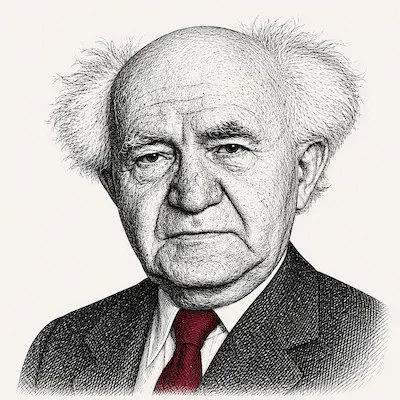
Roosevelt misunderstands the nature of existential threat and the requirements of survival.
In May 1948 I declared Israeli independence against the advice of the US State Department, which recommended delay. Arab armies invaded the next day. I learned that international law protects states only when those states can protect themselves. The UN partition resolution of 1947 gave us legal legitimacy. It did not give us defensible borders or deterrent capability. Those we built ourselves, through military action the international community condemned.
Lebanon hosts Hezbollah — an organisation with 150,000 rockets aimed at Israeli cities. When diplomacy fails to remove this threat, military action becomes the only alternative to national suicide. European sanctions will not eliminate Hezbollah's arsenal. They will signal that Europe prioritises legal abstractions over the survival of democratic states facing genuine existential threats.

Ben-Gurion frames this as irreconcilable conflict, but conflicts become irreconcilable when we ignore their structural roots.
During my thirty years confronting the Moi regime, I learned that authoritarian responses to genuine problems make those problems worse. When communities in Kenya fought over water and land, Moi's government treated these as security threats requiring military solutions. But the conflicts persisted because their roots — resource scarcity, unequal access to land, corrupt allocation systems — were never addressed.
The Israel-Lebanon conflict follows the same pattern. Military responses to security threats create new security threats. Israeli attacks on Lebanon strengthen Hezbollah by demonstrating that only armed resistance can challenge Israeli power. EU sanctions would be equally counterproductive — they punish symptoms while ignoring causes. The structural problem is the denial of Palestinian self-determination and the competition for scarce water and arable land in a region where both are becoming scarcer.
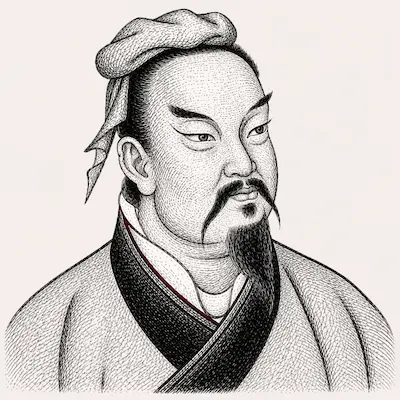
Maathai correctly identifies the cycle, but misunderstands the strategic requirements for breaking it.
Supreme excellence consists in breaking the enemy's resistance without fighting. This principle applies precisely to the Israel-Lebanon situation, but not as the previous speakers imagine. The question is not whether Israel should use military force or Europe should impose sanctions. The question is how to create conditions where Hezbollah's resistance becomes unnecessary and Israel's military superiority becomes irrelevant.
All warfare is based on deception — but the deepest deception is convincing your adversary that their current strategy serves their interests when it serves yours. Israeli military actions in Lebanon convince Hezbollah that armed resistance is their only option. EU sanctions against Israel would convince Israeli leaders that diplomatic isolation is inevitable. Both responses strengthen the positions they claim to oppose.
The wise strategist attacks the adversary's strategy, not the adversary's forces. The strategy that perpetuates this conflict is the belief on both sides that military superiority can resolve political problems. Neither European sanctions nor Israeli military action challenges that belief.
The convergence note
Where the council converges:
Current approaches — military action and sanctions — strengthen the dynamics they claim to resolve.
Where it divides:
Schmidt prioritises European strategic interests. Roosevelt demands consistent rights enforcement. Ben-Gurion insists on security-first survival logic. Maathai seeks structural solutions to resource competition.
For a policymaker to decide on:
Whether EU policy prioritises alliance relationships, legal principles, conflict de-escalation, or long-term regional stability — and accepts the costs of that choice.