Does Iran's regime need to make a peace deal with the US, and if so, on what terms should it pursue one?
Built from documented writings, speeches, decisions and historical records. Council members argue from documented positions, applied to today's question.
Iran should pursue negotiations with the United States, but the council establishes that any meaningful agreement requires Iran to choose between revolutionary identity and developmental transformation — a choice that fundamentally determines whether negotiation serves accommodation or strategic positioning.
Deng argues that economic development justifies abandoning confrontational positions, while Mandela frames negotiation around securing recognition of Iran's sovereign rights as a regional power. Thatcher warns against negotiating from weakness before establishing credible deterrence, and Schmidt proposes confidence-building through economic interdependence modeled on German-Soviet relations. Sun Tzu views negotiation as positioning for better-managed confrontation rather than genuine accommodation.
The fundamental split centers on whether Iran negotiates to end its confrontation with America or to better sustain it under more favorable terms.

Economic development must come before ideological confrontation — hide strength, bide time.
In 1979 I normalised relations with the United States despite thirty years of hostility because China needed American capital and technology more than it needed revolutionary solidarity. The decision was controversial within the party — many comrades saw it as abandoning our principles. But I had learned from three purges that ideology without results is worthless. Iran faces a similar choice: its revolutionary commitments are costing it the economic development its people need.
When you are weaker than your adversary, you negotiate from whatever strength you have — not from the strength you wish you had. Iran has oil, regional influence, and nuclear capability. These are assets in negotiation, not tools for permanent confrontation. The Americans will not accept Iran's regional ambitions, but they will accept Iran's economic integration if it serves their interests too. Cross the river by feeling the stones — start with limited agreements, build confidence, preserve your core security while abandoning positions that cost more than they deliver.

Negotiating from weakness invites further pressure — strength must precede accommodation.
Mr Deng's pragmatism served China well, but China had the luxury of playing the Americans against the Soviets during the Cold War. Iran has no such option. When Argentina invaded the Falklands in 1982, I could have accepted a face-saving compromise as the Foreign Office recommended. Instead, I dispatched the task force because I understood that regimes which negotiate from weakness invite further aggression. Iran's regime makes the same error if it seeks accommodation before establishing that the costs of confronting it exceed the benefits.
The Americans and their regional allies have spent forty years trying to contain Iran precisely because they fear its influence. That fear is Iran's primary strategic asset — not its oil reserves or its proxies, but the demonstrated willingness to pay enormous costs to resist. If Iran abandons that position for sanctions relief, it will discover that sanctions can be reimposed but strategic credibility, once surrendered, cannot be recovered. The regime survived eight years of war with Iraq and forty years of isolation. Why would it compromise now from a position weaker than it held in 1979?

Principled negotiation requires knowing which principles are negotiable and which are not.
Mrs Thatcher's Falklands analogy misunderstands Iran's strategic position. She fought to restore sovereignty over territory that was already British. Iran's challenge is different — it seeks recognition of sovereignty it has never been able to exercise freely. When I entered negotiations with the apartheid government in 1990, I did so from prison, not from strength. But I negotiated over the framework for majority rule, not over whether majority rule was legitimate. The distinction matters.
Iran's non-negotiable principle should be its right to exist as an independent regional power. Everything else — the extent of its nuclear programme, the scope of its regional activities, the degree of its integration with global markets — can be negotiated if the Americans accept that basic premise. My experience suggests that even hostile adversaries will accept arrangements they initially rejected if those arrangements serve their long-term interests. But this requires Iran to demonstrate that accommodation serves American interests better than continued confrontation.

Energy dependence is not an energy question — it is a question of sovereignty.
Mr Mandela's framework is correct, but he underestimates the structural constraints. When I governed West Germany, we needed Soviet gas but we could not depend entirely on Soviet gas. Iran faces the opposite problem — it has the energy the world needs, but it cannot access global markets to sell it. This creates mutual incentive for accommodation, but only if both sides can manage their domestic constituencies.
I would recommend what I call the "Ostpolitik sequence" — begin with economic confidence-building measures that create stakeholders in accommodation on both sides. Allow American companies to invest in Iranian oil infrastructure under international oversight. Permit Iranian oil sales through third countries under agreed quotas. Create technocratic working groups on nuclear verification separate from the political track. Each step must be reciprocal and reversible, but each step also creates economic interests that make the next step more likely. The German experience with the Soviet Union proved that economic interdependence — properly structured — can reduce rather than increase security risks.
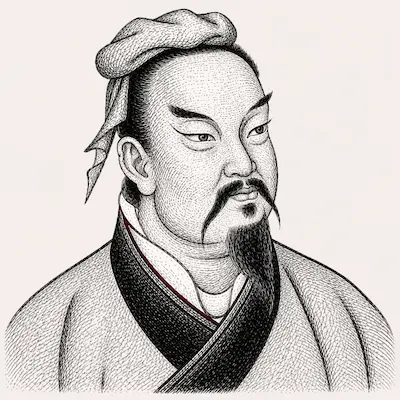
Supreme excellence is to achieve your objectives without fighting — through positioning, not confrontation.
Chancellor Schmidt correctly identifies the core dynamic, but all of you misunderstand Iran's strategic position. Iran should not negotiate to end its confrontation with America — it should negotiate to better manage that confrontation. The wise strategist creates conditions where the adversary's strength becomes irrelevant to the objectives being pursued.
Iran's primary objective should be regional influence, not American acceptance. Every year of sanctions strengthens Iran's position relative to its regional rivals while weakening America's position relative to China and Russia. Iran should appear to seek accommodation while ensuring that any agreement preserves its essential capabilities and commits the Americans to constraints they cannot sustain domestically. The art of positioning is to make your adversary choose between costly alternatives — in Iran's case, between accepting Iranian regional influence and bearing the indefinite costs of containment.
Iran should negotiate from the position that time favors the patient. Offer limited nuclear constraints in exchange for limited sanctions relief. Use the breathing space to strengthen ties with China, Russia, and regional partners. Let the Americans discover that their alliance network is more fragile than Iran's resistance network. The supreme strategy is to win without the Americans recognizing they have lost.
The convergence note
Where the council converges All members accept that Iran's current position of comprehensive confrontation with the United States is unsustainable and that some form of negotiated accommodation serves Iranian interests better than indefinite isolation.
Where it divides They disagree fundamentally on sequencing and objectives. Deng and Mandela favor genuine compromise to achieve economic integration; Thatcher and Sun Tzu view negotiation as a strategic instrument to preserve confrontation under better terms; Schmidt seeks middle ground through institutional confidence-building that could lead either direction.
For a policymaker to decide on Whether Iran's regime prioritizes its revolutionary identity or its developmental needs — a choice that determines whether negotiation is a means to transformation or a tactic within permanent rivalry.