What conditions would make a Ukraine ceasefire durable and acceptable?
Built from documented writings, speeches, decisions and historical records. Council members argue from documented positions, applied to today's question.
Ukraine must choose between accepting territorial losses now for institutional protections, or fighting longer to build independent deterrent capacity.
Kissinger and Schmidt agree that Russia's 20% territorial control reflects military reality that diplomacy cannot reverse immediately. Ben-Gurion counters that Western aid dependence makes Ukraine vulnerable to political shifts in donor countries. Ibn Khaldun notes that prolonged war erodes the national unity that makes resistance effective.
The council splits on timing versus leverage. Accept current lines for international guarantees, or use continued resistance to build permanent deterrent capacity.
- 1Accept current territorial control lines in exchange for NATO Article 5 guarantees for remaining Ukrainian territory.
- 2Build independent Ukrainian military production capacity during any ceasefire period to reduce Western aid dependence.
- 3Establish international monitoring mechanisms with enforcement powers to prevent ceasefire violations from escalating.

A ceasefire must reflect the actual balance of power, not aspirational justice.
In 1973 I negotiated the Paris Peace Accords knowing full well that North Vietnam would eventually violate them. The question was not whether they would cheat, but whether the agreement could buy time for South Vietnam to strengthen itself. Ukraine faces the same calculus today. Any durable ceasefire requires that both sides see continued fighting as more costly than accepting current positions. Russia controls 20% of Ukrainian territory because it can hold it militarily. A ceasefire that ignores this reality will collapse when Russia decides the constraints no longer serve its interests.
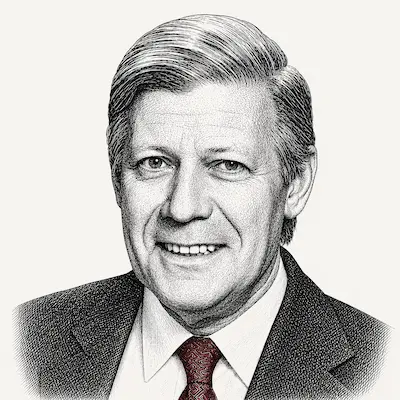
Frozen conflicts preserve options that hot wars destroy.
Kissinger misses the essential point. I managed German division for eight years not because I accepted it as permanent, but because institutionalizing the status quo created mechanisms for eventual change. The 1975 Helsinki Accords legitimized European borders while establishing human rights monitoring that ultimately undermined Communist rule. Ukraine needs similar architecture: international guarantees, monitoring mechanisms, and economic integration that makes aggression costlier over time. A ceasefire without institutional scaffolding is merely an armistice. But a ceasefire with proper verification and enforcement creates the stability from which legitimate change can emerge.
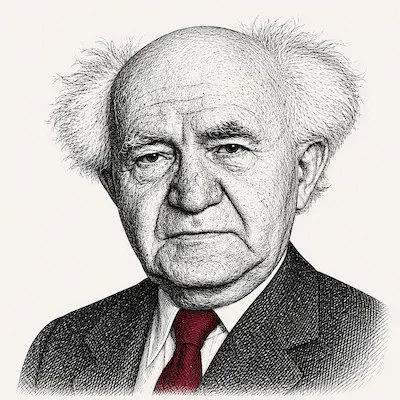
Survival requires independent deterrent capacity, not international promises.
Schmidt's Helsinki model assumes rational actors operating within accepted rules. I faced existential threats from neighbors who denied my state's right to exist. Ukraine's situation is closer to Israel's in 1948 than to Germany's in 1975. International guarantees without credible enforcement mechanisms are worthless. The UN promised to protect Israel through armistice agreements; we learned that only our own strength mattered. Ukraine must use any ceasefire period to build independent military capacity and multiple alliance relationships. Dependence on Western aid is necessary now but dangerous permanently. A state that cannot defend itself will not survive, regardless of how many papers are signed.
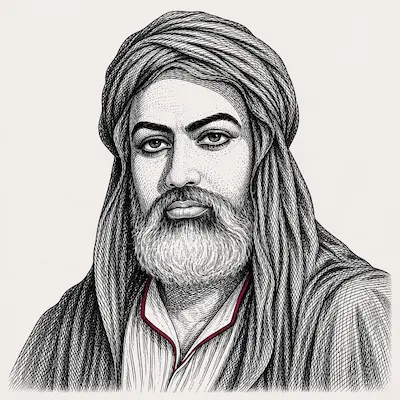
External pressure consolidates groups with strong internal cohesion and destroys those without it.
Ben-Gurion assumes Ukraine possesses the social solidarity that Israel demonstrated. But asabiyya is not automatic. I observed that external threats either forge unity or expose existing fractures. Russia's invasion has strengthened Ukrainian national identity in ways that decades of independence did not. This is Ukraine's strategic asset. However, prolonged war erodes the very social cohesion that makes resistance possible. A ceasefire becomes durable when both sides recognize that their internal solidarity depends on ending the conflict. Russia's demographic decline and economic isolation suggest its asabiyya is weakening. Ukraine's challenge is preserving its newfound unity while building state capacity during any pause in fighting.
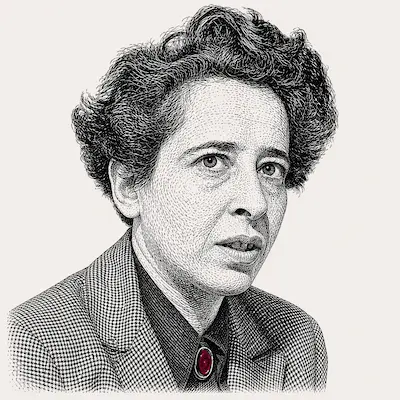
Any settlement imposed through violence alone lacks the power to endure.
Ibn Khaldun correctly identifies solidarity as crucial, but misses the distinction between power and violence. Power arises when people act together; violence destroys the very power it claims to serve. Russia's occupation of Ukrainian territory demonstrates violence, not power. The occupied populations have withdrawn their consent, making Russian control dependent on continuous coercion. This is unsustainable. A durable ceasefire requires that Ukraine retains sufficient political agency to choose compliance rather than being compelled to it. International guarantees matter not because they provide military protection, but because they preserve the space for political action that makes agreements meaningful rather than mere truces between episodes of violence.
The convergence note
Where the council converges: All members agree that durability requires both sides to see continued conflict as more costly than accepting current arrangements.
Where it divides: Kissinger prioritizes immediate strategic stability; Schmidt wants institutional mechanisms; Ben-Gurion demands independent deterrence; Ibn Khaldun focuses on social cohesion; Arendt insists on preserving political agency.
For a policymaker to decide on: Whether to prioritize territorial settlement, security guarantees, or institutional frameworks as the primary foundation for any ceasefire agreement.