Meet the council
An assembly of historic leaders and thinkers, coming from different centuries, continents and traditions. Each one earned their place through real decisions and lasting work.
- 1A question is submitted.
- 2Relevant historical figures are selected.
- 3Arguments are grounded in documented ideas, writings and actions.
- 4Council members challenge previous arguments before a verdict is reached.
- 5The council reaches a verdict.
- 6The session is archived publicly.
- AH
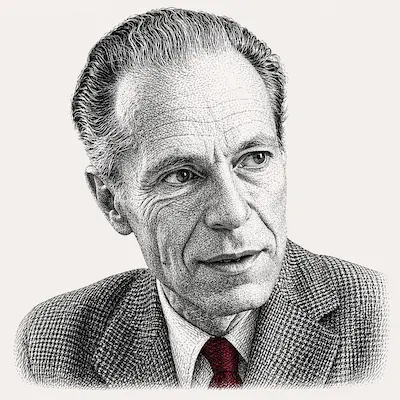 ThinkerAlbert HirschmanEconomist · Exit, Voice and Loyalty1915–2012 · Germany / USA
The ultimate optimist in a field full of gloom. Fled the Nazis, fought in Spain, reinvented himself in Latin America. Concluded that disorder is not an obstacle to development but its engine.
- Unbalanced growth: progress comes from tension between sectors, not from everything working smoothly at once.
- The hiding hand: we underestimate both the difficulties ahead and our ability to overcome them. That gap is what makes progress possible.
- Exit, voice, loyalty: when an institution fails, people leave, complain, or stay silent. Which option is available determines whether it improves.
Core beliefStop trying to control everything. The creativity that solves the problem emerges from the chaos of attempting it.7 debates → - AA
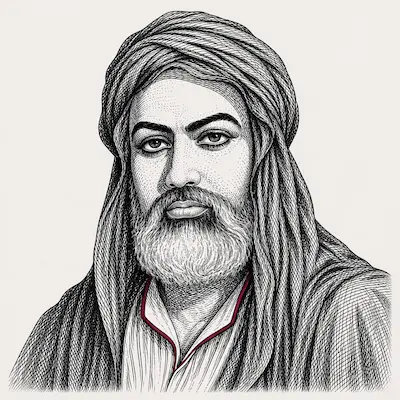 ThinkerAli ibn Abi TalibFourth Caliph of Islam · Letter to Malik al-Ashtar601–661 · Arabia
Cousin and son-in-law of the Prophet, fourth Caliph of Islam. His letter to the governor of Egypt remains one of history's most sophisticated texts on the obligations of power. Assassinated in 661. His death split Islam into Sunni and Shia.
- Justice before stability: a ruler who maintains order through injustice has not solved the problem but postponed it.
- Fair taxation: tax according to what the land produces, not according to what you need. Greed destroys the prosperity it tries to extract.
- Judicial independence: if the judge fears the ruler, there is no justice. The test of governance is whether the powerful can be held to account.
Core beliefThe ruler who governs for himself will lose everything. The ruler who governs for his people might keep it.4 debates → - AS
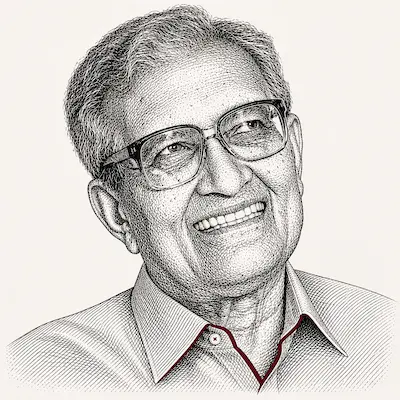 ThinkerAmartya SenEconomist · Development as Freedomb. 1933 · India / UK
Watched people starve in Bengal as a child, not because there was no food but because they had no money to buy it. Spent his life proving that poverty is a political failure, not a natural condition. No functioning democracy with a free press has ever had a famine.
- The capability approach: development means expanding what people can actually do and be. GDP misses most of what matters.
- Famines and democracy: famines happen when governments have no incentive to prevent them. A free press and elections fix that incentive fast.
- Women's education: educate women and everything else improves. It is the highest-return investment in development.
Core beliefPoverty is not a natural condition. It is a political failure, and political failures can be corrected.42 debates → - 孔
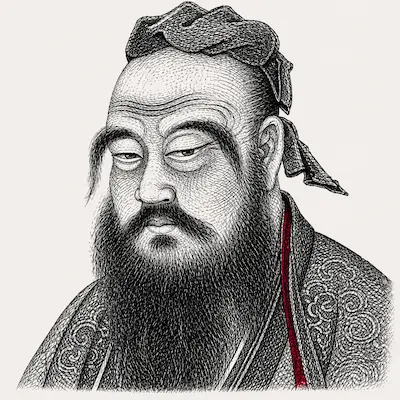 ThinkerConfuciusPhilosopher · The Analects551–479 BC · China
Spent decades trying to persuade rulers to govern morally. None of them listened. He died believing he had failed. Two and a half thousand years later his ideas still shape how a third of the world thinks about authority, merit and obligation.
- Rectification of names: when rulers call things what they are not, governance becomes confused. Clarity of language is the foundation of order.
- Meritocracy: authority should come from ability and character, not birth or wealth. Reward the wrong people and you will be governed by them.
- The ruler's obligation: the people's trust is the only thing a ruler cannot afford to lose. Armies and wealth can be rebuilt. Trust cannot.
Core beliefGovern yourself before you govern others. Moral authority is not a luxury. It is the only authority that lasts.16 debates → - BG
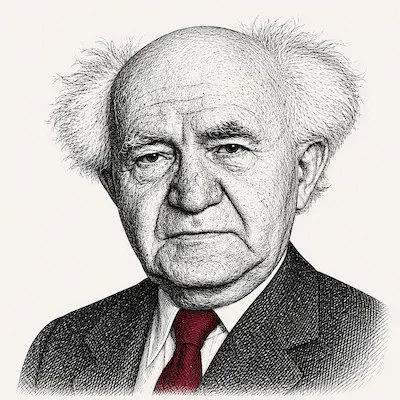 LeaderDavid Ben-GurionPrime Minister, Israel 1948–53; 1955–631886–1973 · Israel
Declared Israeli independence in 1948 with five Arab armies already massing on the border. Simultaneously built a state and fought a war, then resigned twice and came back twice. Understood that survival is not a policy choice but the precondition of all others.
- Security first: a state without defensible borders cannot govern, plan or promise its citizens anything. Everything else comes after.
- Build while fighting: institution-building cannot wait for peace. If you wait, there will be no state when peace arrives.
- Pragmatic alliances: align with whoever keeps you alive. Ideology is a luxury small states cannot afford.
Core beliefSurvival is not a policy choice. It is the precondition of all others. A state that forgets this will not last long enough to remember.18 debates → - DX
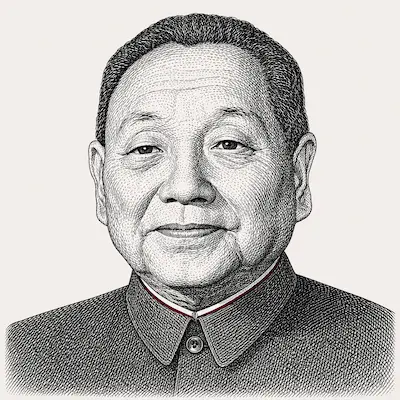 LeaderDeng XiaopingParamount Leader, China 1978–921904–1997 · China
Purged twice, returned twice. Took over a country wrecked by the Cultural Revolution and turned it into the world's fastest-growing economy. No blueprint, no ideology, no apology.
- Cross the river by feeling the stones: test reforms in one province first, and if they work, scale them. Doctrine kills faster than error.
- Economic opening with political control: market economies and authoritarian governance can coexist if the sequence is right. China proved it.
- Absorb, adapt, indigenise: import foreign technology, master it, then make it your own. Dependency ends when you can build it yourself.
Core beliefIt does not matter whether the cat is black or white, as long as it catches mice. Results are the only ideology that never fails.37 debates → - ER
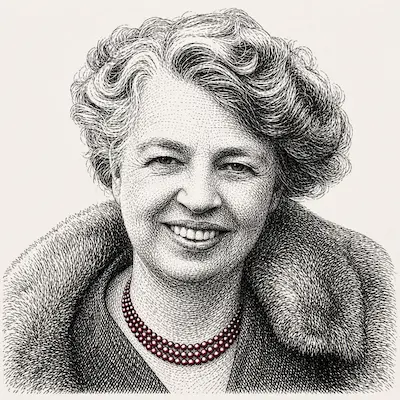 ThinkerEleanor RooseveltHuman rights architect · Universal Declaration of Human Rights1884–1962 · United States
Had no elected office and more influence than most heads of state. Drove the Universal Declaration of Human Rights through eighteen governments who agreed on almost nothing. Then spent the rest of her life pointing out that rights without enforcement are just words.
- A right you cannot claim is not a right: the stateless have no court, no government, nothing to appeal to.
- Economic rights belong on the same list: the right to eat is not softer than the right to speak.
- Moral authority without power has a ceiling: institutions move governments further than persuasion does.
Core beliefDeclarations are easy. Building something that forces governments to honour them is the actual work.24 debates → - EO
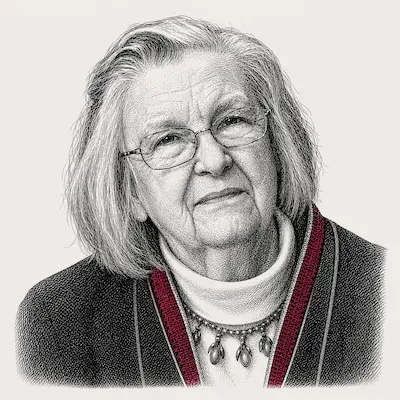 ThinkerElinor OstromEconomist · Governing the Commons1933–2012 · United States
Spent her career studying fishing villages, forests and irrigation canals to test whether communities can govern shared resources without privatisation or state control. They can, and often better. First woman to win the Nobel Prize in Economics, in 2009.
- The commons: fishing villages, forests and irrigation canals can be governed by the communities that depend on them, often better than markets or states.
- Polycentric governance: no single structure fits all situations. Standardising them destroys what makes each work.
- Local knowledge: the farmer who worked the same land for thirty years knows things no central planner ever will.
Core beliefNeither the market nor the state has a monopoly on good governance. Communities can solve what both fail to fix.38 debates → - EJS
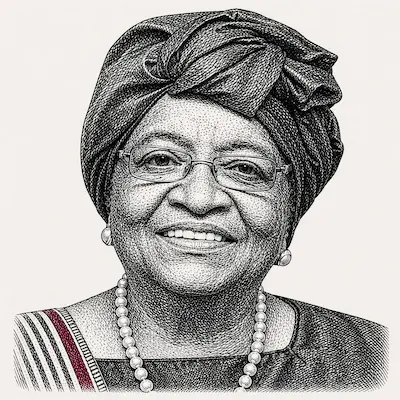 LeaderEllen Johnson SirleafPresident, Liberia 2006–18b. 1938 · Liberia
Took power in Liberia after a civil war that had destroyed almost every institution. Built international credibility fast, established working government from scratch, and stepped down when her term ended. The first female head of state in African history.
- Credibility is the first currency of post-conflict recovery: without it, no investment, no aid, no reform holds.
- Women's participation is not a moral argument: every country that excluded women from economic life left growth on the table.
- You cannot skip the sequence: security, then institutions, then development. The step you skip comes back.
Core beliefRebuilding a broken state is a political problem, not a humanitarian one. Get the politics wrong and the rest is wasted.6 debates → - FDR
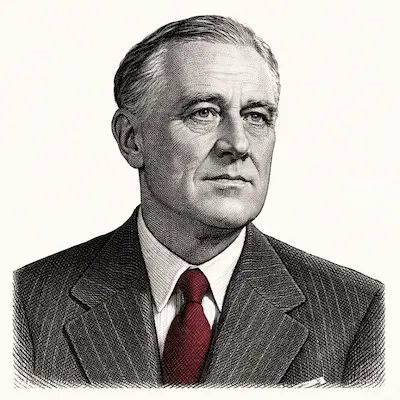 LeaderFranklin D. RooseveltPresident, United States 1933–451882–1945 · United States
Took office with banks failing and a quarter of the workforce unemployed. Closed every bank in the country for four days, reopened them with government backing, and told Americans it was safe. Most of them believed him.
- Government must act when markets cannot: waiting for self-correction is itself a choice, with consequences.
- Build the broadest coalition before committing: a reform that only half the country accepts will be reversed by the other half.
- Relief, recovery and reform run simultaneously: the political window for radical change does not stay open while you sequence.
Core beliefThe only thing to fear is inaction dressed up as prudence. A government that explains why it cannot move has already decided not to.28 debates → - FF
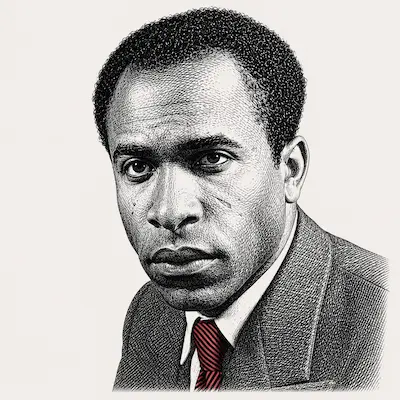 ThinkerFrantz FanonPhilosopher · The Wretched of the Earth1925–1961 · Martinique / Algeria
The first thinker to argue that colonialism damages the minds of the colonised as much as their economies. That insight explained why so many independence movements produced governments that behaved just like the colonial powers they replaced.
- Colonialism colonises the mind: independence without undoing that produces leaders who govern like the people they replaced.
- The flag changes, the structure stays: inheriting colonial institutions means inheriting colonial logic.
- Watch who takes the keys: the national bourgeoisie typically serves the same interests in different clothing.
Core beliefLiberation that stops at the border crossing is not liberation. The deeper occupation is in the mind.6 debates → - FH
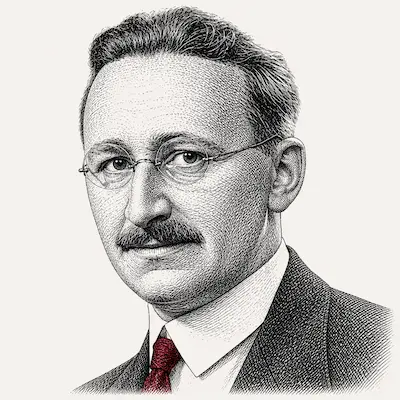 ThinkerFriedrich HayekEconomist · The Road to Serfdom1899–1992 · Austria / UK
Wrote The Road to Serfdom in 1944 when everyone assumed central planning was the future. Got laughed at for thirty years. Then stagflation hit, the planned economies collapsed, and nobody was laughing.
- The knowledge problem: prices aggregate dispersed local knowledge that no central planner can replicate. Planning always knows less than it thinks.
- Spontaneous order: the institutions that work best were not designed. They emerged from voluntary exchange over time. Designing them destroys what makes them function.
- The road to serfdom: economic planning requires political control to enforce it. That is how good intentions become tyranny.
Core beliefThe market knows things no planner ever will. Ignore that and you do not just fail economically. You build the road to something worse.37 debates → - HA
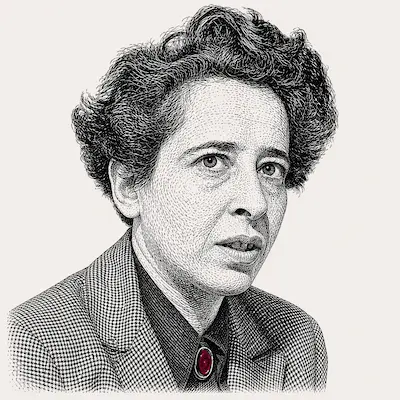 ThinkerHannah ArendtPhilosopher · The Origins of Totalitarianism1906–1975 · Germany / USA
Fled Nazi Germany, spent 18 years stateless, reported on the Eichmann trial and concluded that the greatest evil is not committed by monsters but by bureaucrats who stop thinking.
- The banality of evil: atrocity does not require monsters. It requires ordinary people following orders without moral judgment.
- Power and violence: power comes from people acting together. Violence can destroy power but cannot create it.
- The public realm: when the space where citizens act and are seen disappears, what remains is administration, not governance.
Core beliefStop thinking and you become an instrument of whatever system surrounds you. That is how ordinary people do extraordinary harm.64 debates → - HS
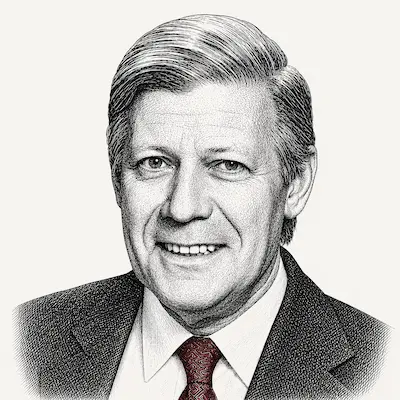 LeaderHelmut SchmidtChancellor, West Germany 1974–821918–2015 · West Germany
Governed West Germany during the oil shock, RAF terrorism and the NATO dual-track debate simultaneously. Made enemies in his own party enforcing decisions he knew were unpopular. A leader who avoids the hard choice, he said, has already failed.
- Energy dependence is a sovereignty question: a country that cannot power itself cannot govern itself.
- Crisis demands simultaneous action: sequencing is a luxury that belongs to peacetime. In a crisis, everything must happen at once.
- Never eliminate your last emergency option: the leader who has no fallback has already lost control of events.
Core beliefA leader who waits for perfect information before deciding has already decided to let events decide for him.86 debates → - IK
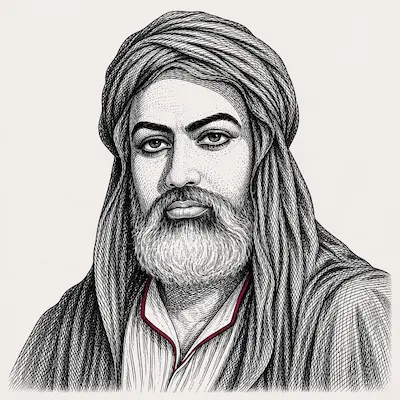 ThinkerIbn KhaldunHistorian · The Muqaddimah1332–1406 · North Africa
Born in Tunis, served courts across North Africa and Iberia, negotiated with Tamerlane outside Damascus in 1401 and survived. Along the way wrote the first systematic theory of why civilisations rise and fall.
- Asabiyya: social cohesion is the engine of political power. When it erodes, the state follows.
- The cycle of dynasties: every ruling group plants the seeds of its own decay. Success breeds comfort, comfort erodes discipline.
- Taxation theory: tax moderately and prosperity grows. Tax heavily and you destroy the base. Ibn Khaldun described the Laffer curve six centuries before Laffer.
Core beliefThe past resembles the future more than water resembles water. Human nature does not change. Only the costumes do.36 debates → - IG
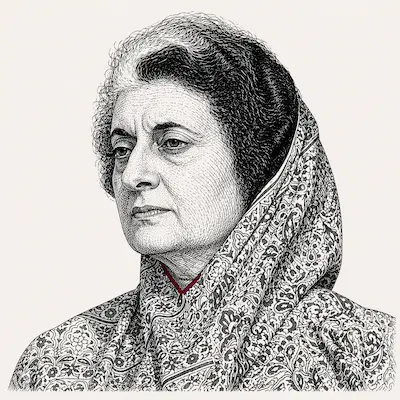 LeaderIndira GandhiPrime Minister, India 1966–77; 1980–841917–1984 · India
The only leader in modern democratic history to suspend her own democracy, stand for election, lose, then win again. Governed India through war, famine and separatism. Assassinated by her own bodyguards in 1984.
- Continental democracy requires centralising authority at moments of crisis. A state that cannot act decisively cannot protect what it claims to govern.
- Non-alignment is strategic independence, not neutrality. A country of India's size cannot afford to be anyone's satellite.
- Poverty elimination justifies state intervention when markets leave the majority behind.
Core beliefA state that cannot act decisively when it must is not a state. It is an arrangement waiting to fall apart.7 debates → - JNe
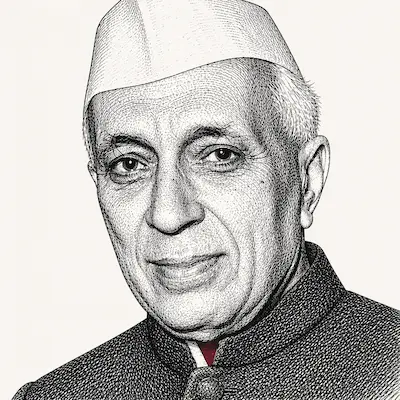 LeaderJawaharlal NehruPrime Minister, India 1947–641889–1964 · India
Built a functioning democracy across 350 million people, fourteen languages and no tradition of central rule. Also founded the non-alignment movement, giving developing countries a way to stay independent from both Washington and Moscow.
- Institutions before growth: the countries that skipped this step got oligarchs, not citizens.
- Non-alignment is a strategy, not a posture: staying outside the blocs was the only way to keep options open.
- Independence without science is incomplete: a country that cannot build what it needs will always depend on those who can.
Core beliefPolitical freedom is the beginning. Without institutions to protect it and capacity to use it, it does not last a generation.5 debates → - JJR
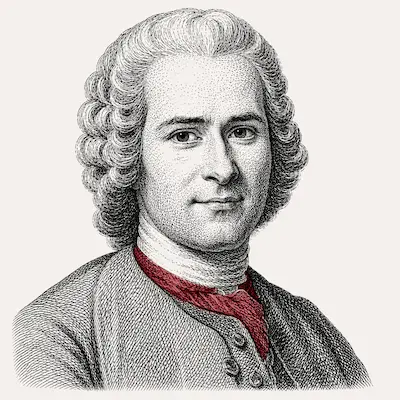 ThinkerJean-Jacques RousseauPhilosopher · The Social Contract1712–1778 · France / Geneva
Argued that inequality is not natural. Property, law and social convention created it, and what humans created they can change. That single idea runs through almost every left-wing political movement that came after him.
- The general will is not a vote: what a community needs is not always what its members want.
- Inequality was invented: property created it, law entrenched it, habit made it feel natural. None of it is inevitable.
- Legitimate authority requires total consent: a law some obey only because they have no choice is coercion with better paperwork.
Core beliefSociety produces human nature, not the other way around. Get the society wrong and everything else follows.23 debates → - JL
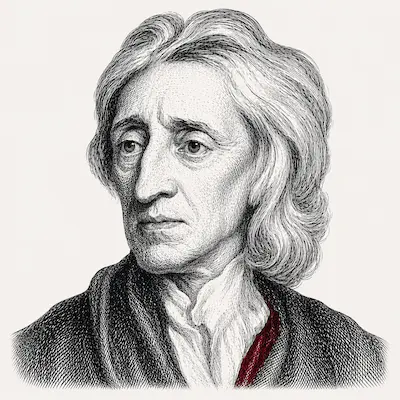 ThinkerJohn LockePhilosopher · Two Treatises of Government1632–1704 · England
Wrote the case for liberal democracy while in exile before any of it was law: government by consent, natural rights, the right to remove rulers who violate them. The American founders read him so closely that the Declaration of Independence reads like a summary.
- Consent is not optional: a ruler who governs without consent is not a government. He is an occupation that has not yet been challenged.
- Rights exist before the state, not because of it: life, liberty and property are not gifts from governments. Governments exist to protect them.
- Revolution is an obligation, not a last resort: a government that violates natural rights has broken the contract. Replacement is the only legitimate response.
Core beliefPower that cannot justify itself by what it protects has no claim to obedience. That is not radical. It is the only thing that makes government legitimate.14 debates → - JMK
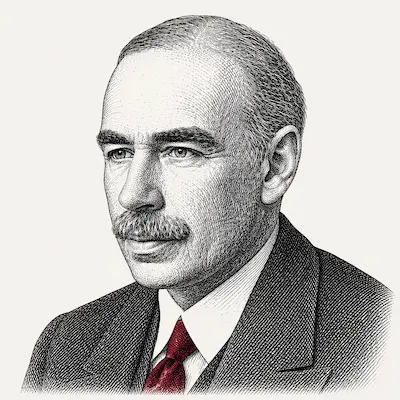 ThinkerJohn Maynard KeynesEconomist · The General Theory1883–1946 · United Kingdom
Attended the Paris Peace Conference in 1919, concluded the reparations terms would destroy Germany, resigned in protest and wrote a book predicting exactly what followed. Was ignored. Spent the next twenty years developing an economics to prevent it happening again.
- Aggregate demand: when private spending collapses, public spending must fill the gap. Economies do not self-correct. They spiral.
- The paradox of thrift: when every household saves simultaneously, spending collapses. Individual logic, collective catastrophe.
- Uncertainty: under genuine uncertainty, insure against the worst case, not just the most likely one.
Core beliefIn the long run we are all dead. Policy must solve present problems with present tools, not wait for a future the present has already foreclosed.23 debates → - JR
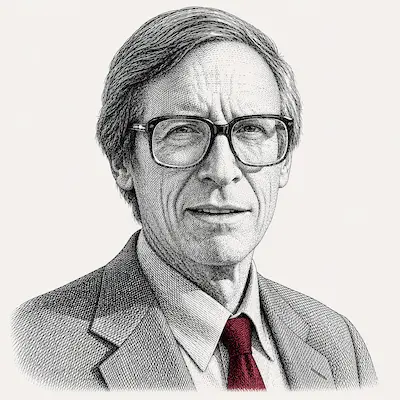 ThinkerJohn RawlsPhilosopher · A Theory of Justice1921–2002 · United States
Asked one devastatingly simple question: what kind of society would you design if you did not know where you would end up inside it? Rich or poor, healthy or sick, powerful or forgotten. That thought experiment gave liberal democracy a moral foundation it had never had before.
- The veil of ignorance: design policy before knowing if you will be born rich or poor. Your choices look different from behind that veil.
- Inequality must earn its place: only justified when it makes the worst-off better off. Growth that leaves the bottom behind fails the test.
- Justice is not a reward for prosperity: a society that plans to be fair once it is rich enough will never be fair.
Core beliefThe comfortable design systems that serve the comfortable. Design from behind the veil and you break that loop.32 debates → - JNy
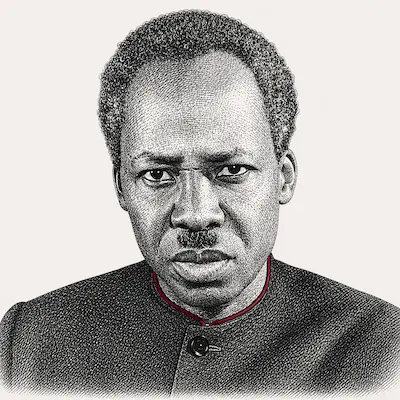 LeaderJulius NyererePresident, Tanzania 1964–851922–1999 · Tanzania
Built African socialism from scratch in Tanzania, watched it fail, and said so publicly. No other African head of state of his generation did that. He stepped down voluntarily. Few of them did that either.
- Self-reliance is not isolation: it means building the capacity to negotiate as an equal.
- The international order reproduces poverty: the trade rules, the debt terms, the aid conditions all tilt the same way.
- Aid that bypasses local institutions destroys them: every time the helper decides, the local decision-maker becomes redundant.
Core beliefWe are at war with poverty and ignorance. You do not win that war by waiting for better conditions.6 debates → - KT
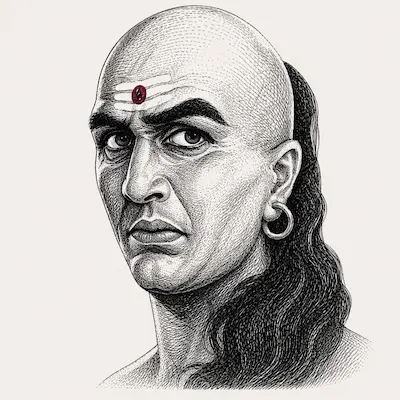 ThinkerKautilyaStatesman · The Arthashastra350–283 BC · India
Chief minister to the founder of the Maurya Empire, the largest state the Indian subcontinent had seen. Wrote the Arthashastra: a complete manual of statecraft covering espionage, taxation, trade and governance. Machiavelli gets the credit. Kautilya got there 1,800 years earlier.
- The welfare state: the welfare of the ruler is in the welfare of the subjects. A state that extracts from its people will not last.
- Enemy of my enemy: foreign policy is identifying your adversary's adversary and turning him into your ally. Sentiment has no place in this.
- The treasury: a state without revenue is a state without spine. Everything depends on a functioning treasury.
Core beliefThe king who is energetic and wise prospers. The king who is energetic and unwise destroys himself. The king who is neither destroys his people.10 debates → - KA
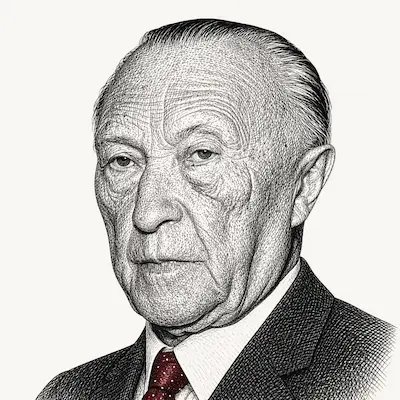 LeaderKonrad AdenauerChancellor, West Germany 1949–631876–1967 · West Germany
Took over a country in rubble, with twelve years of nazism to answer for and no army, no sovereignty and no money. Bet everything on Western integration when the alternative was permanent occupation. Got it right at 73, and governed until 87.
- Western integration as security: sovereignty claimed alone is weaker than sovereignty pooled with allies.
- Economic recovery before democratic consolidation: people who are hungry and humiliated do not make reliable democrats.
- Moral reckoning alongside rebuilding: you cannot wait to be forgiven before you start building.
Core beliefWe all live under the same sky, but we do not all have the same horizon. Extend the horizon first. The rest follows.22 debates → - LKY
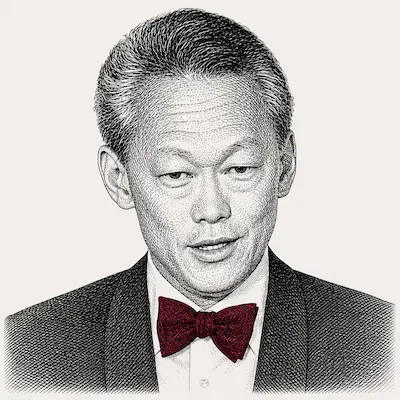 LeaderLee Kuan YewPrime Minister, Singapore 1959–901923–2015 · Singapore
Took over a city with no hinterland, no resources and four languages that did not get along. Built one of the wealthiest states in the world by deciding what mattered and refusing to apologise for the rest. The argument about whether it was democracy never stopped.
- Resilience over optimism: design policy for the worst case, not the most likely. Small states that plan for good outcomes are surprised by bad ones.
- Meritocracy as non-negotiable: a state that rewards the wrong people will be governed by them. The pipeline from school to government must select on ability.
- Small state survival through usefulness: neutrality is not a strategy. Make yourself indispensable and you are harder to ignore.
Core beliefA small state that is not useful to its neighbours will not survive them. Usefulness is not weakness. It is the only strategy that works.49 debates → - MM
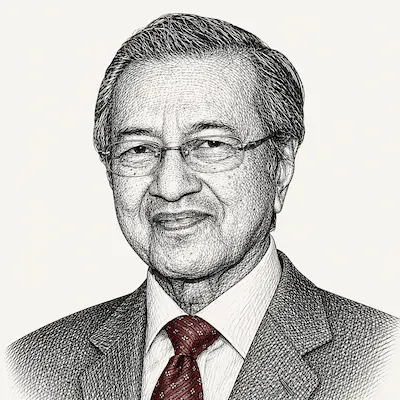 LeaderMahathir MohamadPrime Minister, Malaysia 1981–2003b. 1925 · Malaysia
Governed Malaysia for 22 years, modernised it, then came back at 92 to govern it again. Rejected IMF conditions during the 1997 Asian financial crisis and imposed capital controls instead. The IMF said it would be catastrophic. It was not.
- Reject orthodoxy when it conflicts with national interest: what works in Washington does not automatically work in Kuala Lumpur.
- Industrial policy works in early development: markets left alone do not always build the industries a developing country needs.
- Monetary sovereignty is non-negotiable: a country that cannot control its own currency cannot control its own economy.
Core beliefDevelopment is not a gift from richer countries. It is something you build yourself, on your own terms, even when they tell you it cannot be done that way.8 debates → - MT
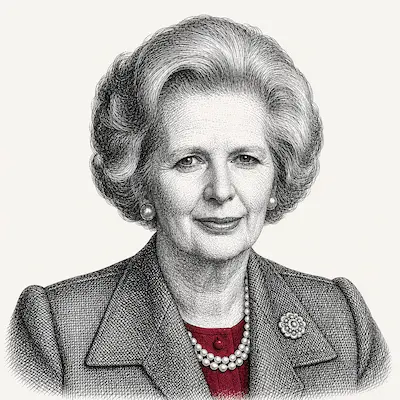 LeaderMargaret ThatcherPrime Minister, United Kingdom 1979–901925–2013 · United Kingdom
Came to power when Britain was ungovernable. Three-day weeks, rubbish in the streets, the IMF at the door. Broke the unions, privatised the utilities, rewrote the rules of the British state. She did not seek consensus. She thought consensus was the problem.
- The state crowds out private initiative: reducing its scope is not a policy preference but the precondition of growth.
- Property rights and rule of law are non-negotiable. Everything else can be debated.
- A country that cannot power itself cannot govern itself. Energy is sovereignty.
Core beliefThe market is not perfect. But a government that thinks it can do better has not been paying attention to governments.33 debates → - MF
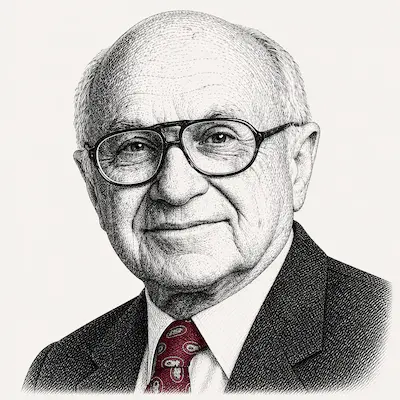 ThinkerMilton FriedmanEconomist · Capitalism and Freedom1912–2006 · United States
Told anyone who would listen for thirty years that inflation is always and everywhere a monetary phenomenon. Governments ignored him until the 1970s, when inflation hit and they ran out of alternatives.
- Monetarism: inflation comes from too much money chasing too few goods. Control the money supply and you control inflation.
- Economic and political freedom: restrict economic freedom and political freedom follows. The two cannot be separated for long.
- Government failure: government programs rarely solve the problems they are designed to fix. They create constituencies for their own continuation.
Core beliefThe market is imperfect. Government is also imperfect. Market mistakes are corrected by competition. Government mistakes are entrenched by politics.33 debates → - MKA
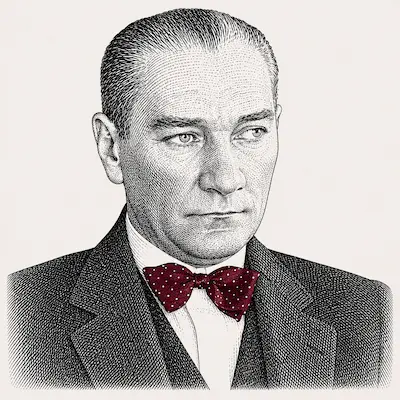 LeaderMustafa Kemal AtaturkPresident, Turkey 1923–381881–1938 · Turkey
Took the ruins of the Ottoman Empire and built a secular republic in eight years. Changed the alphabet, the calendar, the legal code and the dress code. Did it all top-down, without asking permission.
- Radical transformation over gradualism: when the structure is wrong, reform is not enough. Gradualism preserves what needs to be destroyed.
- Secularism as precondition: religion as the basis of the state produces a state that cannot adapt.
- Define the nation by its future, not its past: the Ottoman inheritance was not a foundation to build on. It was a weight to discard.
Core beliefA nation that looks only backward will walk into the future facing the wrong direction. Turn around, and walk forward. - NM
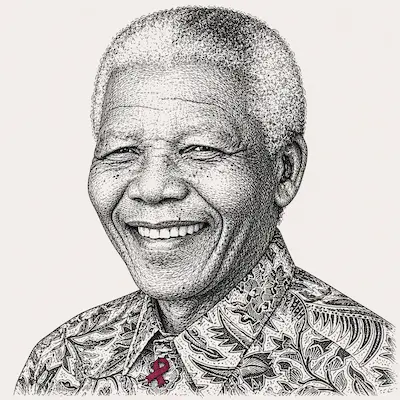 LeaderNelson MandelaPresident, South Africa 1994–991918–2013 · South Africa
27 years in prison. Walked out and chose reconciliation over retribution when no one would have blamed him for the alternative. Handed power over peacefully four years later.
- Retribution feels like justice but functions like destruction: a country that settles scores cannot build anything.
- Moral authority is leverage: it changes what is politically possible in ways that force cannot.
- Governance capacity before redistribution: a state that cannot deliver services cannot redistribute anything that stays redistributed.
Core beliefResentment is a prison you build for yourself. The man who walks out is the only one free enough to build something new.11 debates → - NMa
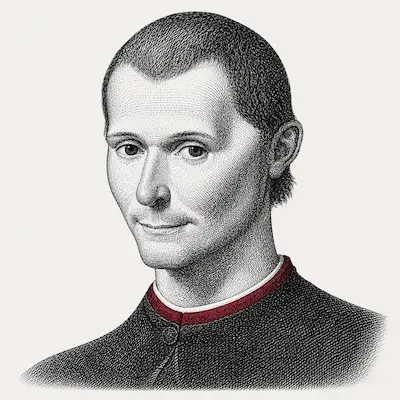 ThinkerNiccolo MachiavelliStatesman · The Prince1469–1527 · Florence
Served the Florentine Republic loyally for 14 years, was tortured after the Medici returned to power, and retired to write the books that made him famous. The Prince was a job application that never worked. He died without the career he spent his life trying to restore.
- Effective power over moral power: the question is not whether force is just, but whether it is effective. A ruler who is only good will be destroyed.
- Strategic patience: timing is everything. Strike at the right moment, not the righteous one.
- Fear over love: it is better to be feared than loved when you cannot be both. But it is fatal to be hated.
Core beliefEveryone sees what you appear to be. Few experience what you really are. In politics, appearances are not a distraction from reality. They are part of it. - OP
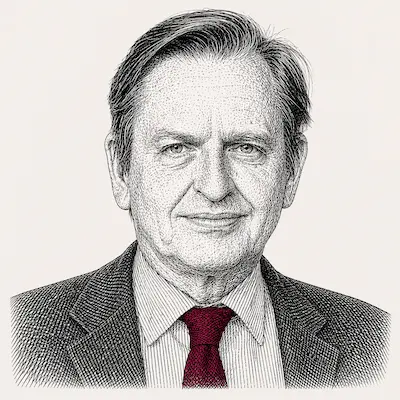 LeaderOlof PalmePrime Minister, Sweden 1969–76; 1982–861927–1986 · Sweden
Led Sweden to take clear positions on Vietnam, apartheid and nuclear weapons when it would have been easier to stay quiet. Showed that a small country with no military power could still matter in world politics, if it was consistent enough.
- Security is not zero-sum: building safety at your neighbour's expense creates the next conflict. The adversary must also feel secure.
- A small state's only currency is consistency: one exception and the credibility is gone. There is no rebuilding it.
- Equality and efficiency reinforce each other: the trade-off is smaller than its opponents need it to be.
Core beliefA small country cannot project military power. It can project moral consistency. That turns out to be worth more.10 debates → - RP
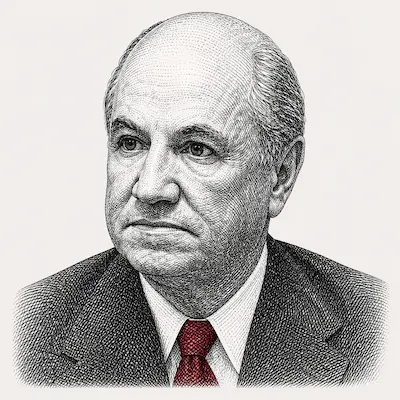 ThinkerRaul PrebischEconomist · Dependency Theory1901–1986 · Argentina
Ran Argentina's central bank and spent decades watching the same pattern: poor countries export raw materials, rich countries sell them back as finished goods. He named that mechanism and gave the developing world a way to understand why free trade was not working in their favour.
- The terms of trade are a trap: commodity prices fall over time relative to manufactured goods. Free trade locks in who is ahead.
- Industrialise or stay dependent: you cannot develop by selling what richer countries need. Build your own capacity, then compete.
- The playing field was designed by those already winning: the global trading system reflects the interests of those who built it.
Core beliefThe invisible hand works beautifully for countries already ahead. For everyone else, it locks in the starting position. - RL
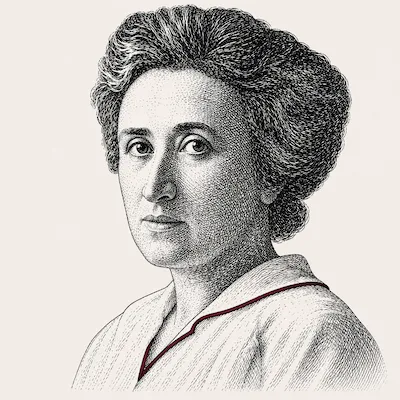 ThinkerRosa LuxemburgRevolutionary theorist · The Accumulation of Capital1871–1919 · Poland / Germany
Argued that a socialist revolution that silences its critics will end up oppressing everyone. She wrote that before the Soviet Union existed to prove her right. Almost no one on the left listened. History did.
- Socialism without freedom is a different kind of cage: a revolution that suppresses dissent to achieve equality will end by suppressing both.
- Capitalism must expand or die: when it runs out of new markets, it manufactures war. Imperialism is not foreign policy, it is economic necessity.
- Revolution cannot be commanded: it rises from workers acting together, not from a vanguard deciding for them.
Core beliefFreedom is only real for the person who thinks differently. A socialism that cannot tolerate dissent has already failed the test.14 debates → - SB
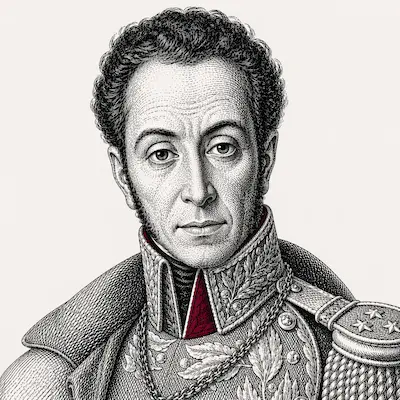 LeaderSimon BolivarPresident, Gran Colombia 1819–301783–1830 · Venezuela
Liberated six countries from Spanish rule, then watched them fragment. Died in 1830 convinced he had ploughed the sea. The United States of South America he dreamed of never came. What came instead were the caudillos he had always feared.
- Liberation is the beginning, not the end: the skills that win independence are not the skills that build a state.
- Strong executive or fragmentation: post-colonial republics need a strong centre or they dissolve into regional strongmen.
- Regional unity or external domination: history offers no stable third option for small states in a world of great powers.
Core beliefIndependence without unity is just a change of masters. Building a state that holds together is harder than winning the war and more important. - ST
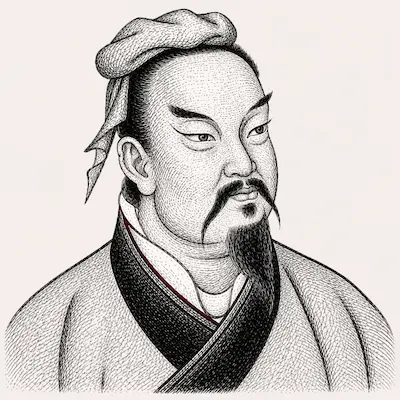 ThinkerSun TzuStrategist · The Art of War544–496 BC · China
May or may not have existed as a single person. The Art of War almost certainly did not come from one hand. None of that has mattered. Fifteen centuries of generals and every business school in the world have found it indispensable.
- Supreme strategy: the highest form of strategy is to defeat the adversary without fighting. Force is expensive, slow and produces enemies.
- Know yourself and your enemy: the commander who does not know his own weaknesses loses every battle, however large his army.
- Deception as strategy: appear weak when strong, strong when weak. The adversary who misreads you has already lost.
Core beliefThe general who wins the battle has already won it in his mind before it is fought. The general who loses has fought first and sought victory afterwards.24 debates → - WM
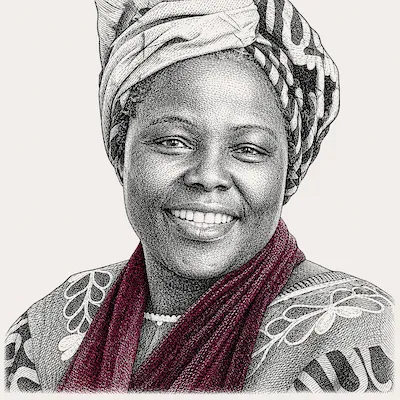 ThinkerWangari MaathaiPolitical ecologist · The Green Belt Movement1940–2011 · Kenya
Founded the Green Belt Movement in Kenya and planted 30 million trees by organising rural women to do it. Jailed repeatedly by the government for her activism. Won the Nobel Peace Prize in 2004, the first African woman to do so.
- Deforestation is a governance failure: when women walked further each year for firewood, the cause was who controlled the land and for whose benefit.
- Communities protect what they govern: move ownership to the state or a corporation and the incentive to protect disappears.
- Women are not a social issue: in most of Africa, women manage water, food and fuel daily. Exclude them and the decisions will be wrong.
Core beliefA government that degrades its land is degrading its people. The two cannot be separated.30 debates →