What conditions and actions would resolve the conflict between Iran and the USA?
- HS
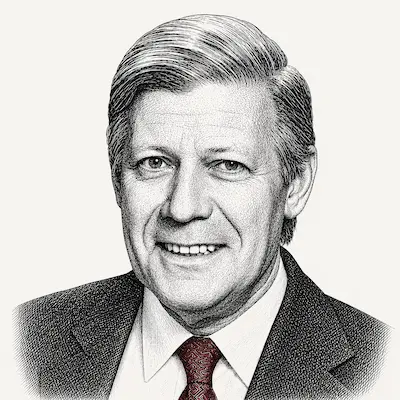 Helmut
Schmidt - JMK
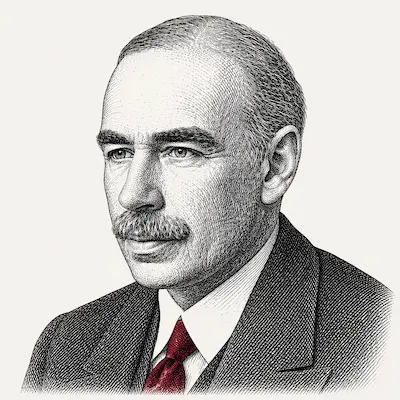 John Maynard
Keynes - NM
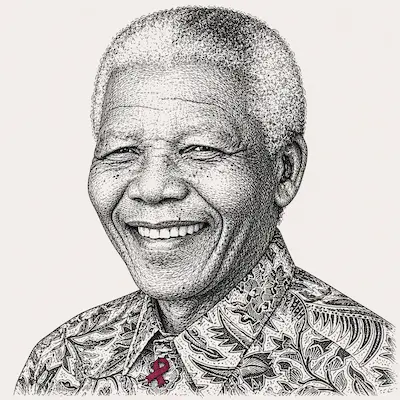 Nelson
Mandela - IK
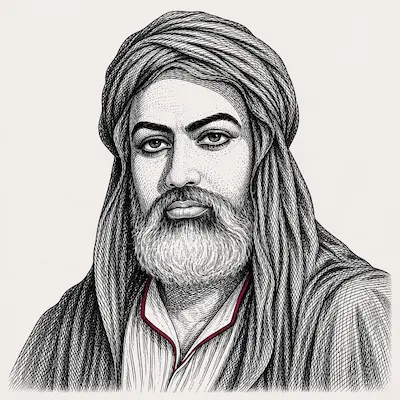 Ibn
Ibn
Khaldun - NM
 Niccolò
Machiavelli - DB
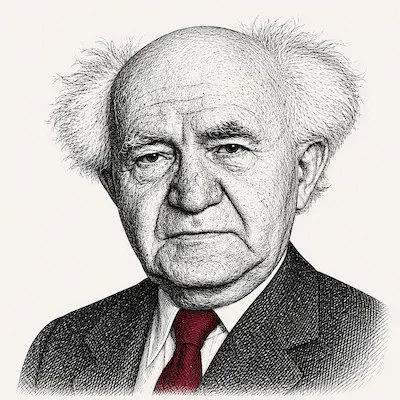 David
David
Ben-Gurion
Built from documented writings, speeches, decisions and historical records. Council members argue from documented positions, applied to today's question.
A deal is possible, but only if both governments can frame concessions as victories at home.
Schmidt and Machiavelli converge on the same structural point: sanctions without clear terms for relief harden Tehran rather than move it, and military capacity matters only as leverage to open talks, not as a substitute for them. Keynes anchors this in 1919, when reparations with no viable payment path collapsed Weimar rather than disciplined it. Mandela adds that each side must be able to sell the deal domestically; at Groote Schuur in 1990, he gave the apartheid government language it could defend, and that formula held.
Ibn Khaldun and Ben-Gurion mark the limit. Ibn Khaldun argues that the Islamic Republic's core constituencies are still cohesive enough that external pressure consolidates rather than fractures the regime. Ben-Gurion insists that any agreement leaving Iran a viable path to nuclear weapons is not a resolution; Israel absorbs the risk alone if that path remains open.
- 1Open a direct US-Iran negotiating channel with explicit, public terms for sanctions relief tied to verifiable nuclear limits.
- 2Frame each concession in public statements as a strategic gain, not surrender, so both governments can defend the deal domestically.
- 3Require verified closure of Iran's nuclear weapons pathway as a non-negotiable condition before any agreement is finalised.
Both sides need a credible exit ramp, not just a credible threat.
Sanctions without a negotiated off-ramp repeat every failed embargo I watched. In 1979 I refused to join the American position on Iran's hostage crisis because I judged that economic strangulation, with no clear terms for relief, would harden Tehran rather than move it. The structure here is identical to what I managed with Moscow: you maintain deterrent capacity so the other side cannot ignore you, then you open a channel where concessions are reciprocal and neither party is seen to capitulate publicly.
Punish a country's economy without terms, and you guarantee the hardliners.
Schmidt is right that the off-ramp matters. At Paris in 1919 I watched the Allied powers demand reparations from Germany with no viable path for Germany to pay them. The result was not compliance. It was Weimar's collapse and what followed. Iran's sanctions regime carries the same structural flaw: it impoverishes the population, concentrates economic power in the Revolutionary Guards who control the black market, and gives reformers nothing to point to. A deal must offer Iran a real economic path or domestic pressure will destroy any agreement before the ink dries.
Permanent enmity is a choice, not an inevitability.
Keynes identifies the economic trap correctly. But the deeper obstacle is that both governments have built their internal legitimacy on the other's villainy. I know this problem precisely. In 1990 I walked out of prison and into talks with the men who had imprisoned me, not because I trusted them, but because I understood that sustainable resolution requires your adversary to survive the agreement politically. At the Groote Schuur talks we gave the government language it could defend at home. The US and Iran each need the same: a staged process where each concession is framed as strength, not surrender.
Sanctions strengthen the rulers they are meant to break.
Mandela asks the right question, and my answer, drawn from watching the Marinid and Hafsid dynasties absorb external pressure across the 14th century, is unambiguous: when a group's asabiyya is still intact, outside threat consolidates it. The Islamic Republic in Tehran is not a regime in its final dynastic phase. It retains sufficient internal cohesion among its core constituencies. Applying the framework from Muqaddimah Book II to a modern sanctions regime requires care, but the structure is the same: the population suffers, the elite's control of scarce resources grows, and the rulers gain a foreign enemy to blame. Pressure fractures only what is already cracking from within.
Neither side can negotiate while needing the other as an enemy.
Ibn Khaldun describes the consolidating effect of pressure precisely. The strategic problem is that both Washington and Tehran have rulers whose domestic position depends on the conflict continuing. When I observed Cesare Borgia in 1502, I watched a prince who understood that the appearance of strength and the reality of strength must be managed separately. The US must maintain credible military capacity, not to use it, but so that Iran cannot ignore the negotiation. Iran must be given a formula where accepting limits on its nuclear programme reads domestically as a strategic achievement, not a capitulation to foreign force. The fox and the lion must operate together.
No agreement holds if Iran retains a path to nuclear capability.
Machiavelli frames the appearance of strength correctly, but for Israel the question is not appearance. It is survival. I built the Dimona reactor in the late 1950s with French assistance precisely because I understood that a small state surrounded by hostile neighbours cannot rely on anyone else's security guarantee. My peripheral strategy treated pre-revolutionary Iran as a strategic partner, not because I trusted the Shah's ideology, but because geography made Iran a counterweight to Arab state power. That logic collapsed in 1979. Any resolution between Washington and Tehran that leaves Iran with a viable path to a nuclear weapon is not a resolution. It is a postponement with consequences Israel will absorb alone.