Built from documented writings, speeches, decisions and historical records. Council members argue from documented positions, applied to today's question.
Iran's regime faces a strategic choice between building permanent alternatives to Western economic systems and accepting managed integration that preserves long-term capacity while reducing immediate costs.
Mahathir argues for sustained resistance through non-Western partnerships, drawing from Malaysia's successful defiance of IMF pressure during the 1997 crisis. Schmidt advocates strategic accommodation that accepts near-term constraints to preserve institutional capacity, citing West Germany's experience within alliance structures. Deng emphasizes that temporary disadvantage can accelerate capability-building through managed technology transfer and industrial learning. Sun Tzu reframes the choice entirely, suggesting Iran should position itself so American pressure inadvertently strengthens Iranian alternatives.
The split turns on whether Iran's domestic legitimacy requires continued confrontation or whether economic benefits from accommodation would strengthen the regime's position — a judgment about Iranian society that depends on internal political dynamics beyond external strategic analysis.
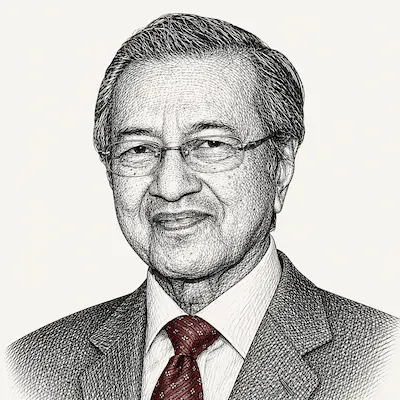
Iran's regime must defend monetary sovereignty against Western financial institutions.
My experience with the 1997 Asian financial crisis provides the essential precedent. When international speculators attacked the ringgit, I imposed capital controls and fixed the exchange rate against explicit IMF and US Treasury advice. Every Western economist called it economic suicide. Malaysia recovered faster than Thailand, Indonesia, and South Korea — all of which followed IMF prescriptions. The principle is documented: a developing country's right to manage its own currency and capital flows is non-negotiable. Iran faces the same structural pressure today — sanctions, currency attacks, demands for economic "reform" that amount to surrender of sovereign economic policy.
The Islamic Republic possesses what Malaysia had in 1998: domestic legitimacy, strategic alternatives through non-Western partners, and natural resource revenues that provide a buffer against external pressure. The choice is not between prosperity and isolation — it is between maintaining the capacity for independent decision-making or accepting economic subordination disguised as "integration." Every peace deal with the United States will require Iran to accept IMF-style conditionality that eliminates its policy space. Small and medium powers cannot afford this surrender.

Strategic accommodation can preserve long-term objectives while managing immediate vulnerabilities.
Mahathir, you succeeded in 1997 precisely because your confrontation was temporary and tactical, not permanent and ideological. Your capital controls lasted eighteen months, not eighteen years. Iran's situation requires the strategic patience I learned during the oil embargo of 1973: accept constraints in the near term to preserve capacity in the medium term. When OPEC cut off our energy supply, I did not declare energy independence impossible — I introduced Fahrverbote, diversified suppliers, and rebuilt our position gradually.
Iran's nuclear programme and ballistic missile capabilities already demonstrate that technical sovereignty can advance even under sanctions pressure. The question is whether continued confrontation strengthens or weakens their strategic position over the next decade. My assessment: sanctions are extracting resources faster than domestic development can replace them. A negotiated settlement — even one with significant conditionality — preserves the institutional capacity that total isolation erodes. The Federal Republic accepted significant limitations on our sovereign decision-making through NATO and the EMS, but these frameworks ultimately enhanced our strategic autonomy by providing us security guarantees and market access that we could not have achieved alone.
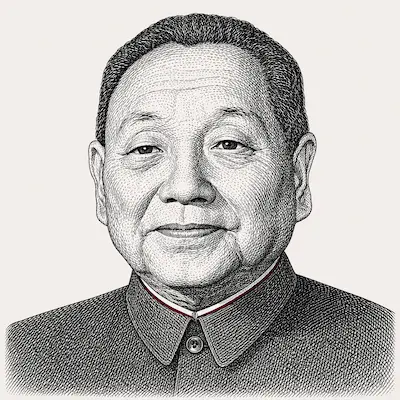
Strategic patience requires accepting temporary disadvantage to build permanent capability.
Schmidt correctly identifies the key principle: hide your strength, bide your time. When China opened in 1978, we accepted foreign direct investment on terms that appeared humiliating — joint ventures where Chinese partners held minority stakes, technology transfer agreements that favoured foreign firms, export-oriented manufacturing that made us dependent on Western markets. The objective was not immediate benefit but institutional learning. Within a generation, Chinese firms had absorbed the technology, captured the supply chains, and reversed the dependency relationship.
Iran's challenge is structural: oil revenues create the illusion of self-sufficiency while the economy lacks the diversified industrial base that genuine sovereignty requires. Sanctions, ironically, force exactly this diversification — but at enormous opportunity cost. A peace settlement could accelerate industrial development through managed exposure to global supply chains and technology transfer, while their domestic institutional capacity grows stronger each year. The key is ensuring the settlement preserves policy space for industrial strategy and financial system development.
The Islamic Republic possesses advantages China lacked in 1978: higher educational levels, significant scientific and engineering capacity, and a domestic market large enough to support industrial scale production. Strategic accommodation is not capitulation — it is trading temporary constraints for permanent capabilities.
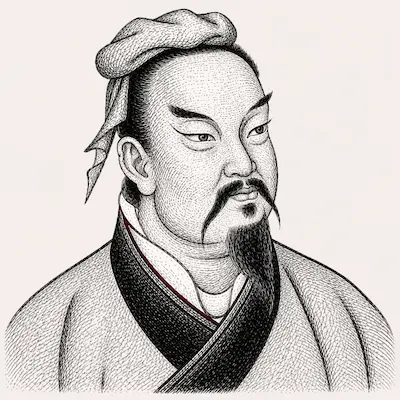
Supreme excellence requires creating conditions where the adversary's pressure becomes self-defeating.
The previous speakers analyze this as a choice between confrontation and accommodation. Both approaches accept the adversary's framing. The higher strategy is to position Iran such that American pressure serves Iranian objectives rather than constraining them. When the adversary applies economic force expecting submission, appearing to yield while systematically building alternatives transforms their strength into your advantage.
Iran's current position demonstrates classic strategic error: fighting where the adversary is strongest rather than where they are weakest. American financial dominance creates vulnerability for those dependent on dollar-denominated systems. But sustained pressure forces the development of parallel systems — alternative payment mechanisms with Russia and China, bilateral trade agreements that bypass Western financial architecture, technological cooperation with non-aligned powers. Each sanction creates incentives for other nations to reduce their own dollar dependency.
The peace settlement offers tactical flexibility while strategic positioning continues. Accept limitations that appear substantial but preserve the capacity to act decisively when circumstances change. The adversary who believes they have achieved their objective becomes complacent. Meanwhile, the parallel economic and security relationships continue developing. When the next crisis emerges — and it will — Iran's strategic options will be broader, not narrower. Victory belongs to those who create the conditions for success before the decisive moment arrives.
The convergence note
Where the council converges All members accept that Iran faces genuine structural pressure from American economic and financial dominance, and that managing this pressure requires strategic rather than merely reactive responses.
Where it divides Mahathir advocates permanent resistance through non-Western alternatives; Schmidt and Deng favor strategic accommodation that preserves long-term capacity; Sun Tzu treats the binary choice itself as a strategic error requiring a more sophisticated response.
For a policymaker to decide on Whether Iran's domestic political legitimacy depends more on continued resistance to American pressure or on the economic benefits that accommodation might provide — a judgment about Iranian society that external analysis cannot make.