Built from documented writings, speeches, decisions and historical records. Council members argue from documented positions, applied to today's question.
The EU can reverse decline but only by completing political union or accepting managed fragmentation.
Schmidt and Adenauer show that European institutions remain sound but need active political renewal. Roosevelt demonstrates that unions survive by delivering visible benefits that create citizen loyalty beyond elite commitment. Bolívar warns that continental unions fragment when national interests diverge from shared costs.
Ibn Khaldun reveals the deeper pattern: the solidarity that built the EU has weakened with prosperity and distance from the wars that created it.
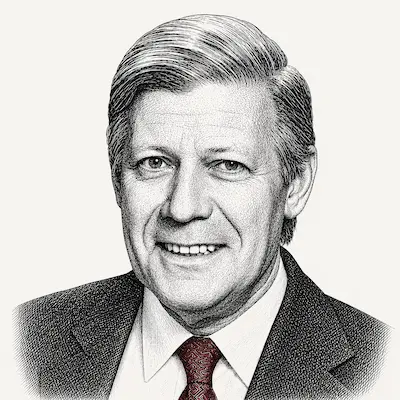
European integration requires constant political will and crisis management; institutions decay without active maintenance.
In November 1973, I told the Bundestag that the oil embargo was not an energy question but a sovereignty question. A state that cannot secure its basic resource needs cannot govern. This principle applies directly to the EU's current crisis. European institutions are not self-sustaining mechanisms — they require continuous political investment and adaptation to survive external pressure. When I created the European Monetary System with Giscard in 1978–79, we did so against Bundesbank resistance because we understood that European integration advances through crisis, not despite it.
The EU's current difficulties — Brexit, migration, fiscal fragmentation, democratic deficit — are not signs of institutional failure but of institutional stagnation. European leaders have treated the union as an administrative arrangement rather than a political project requiring constant renewal. The structures remain sound; what has eroded is the political will to use them decisively.
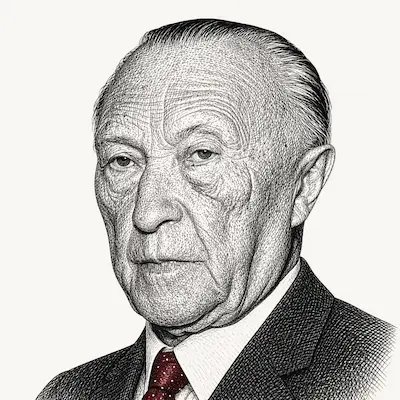
European integration was designed to make war impossible; reversal requires returning to this foundational logic.
Schmidt is correct that institutions require maintenance, but he understates their fundamental durability. In 1952, when I negotiated the Coal and Steel Community with Monnet and Schuman, we designed institutions precisely to outlast individual political leaders and their fluctuating will. The genius of European integration is that it creates irreversible economic interdependencies that make political reversal increasingly costly. Even Britain, in leaving, discovered this.
The current crisis reflects not institutional weakness but institutional success operating under new conditions. The EU has prevented war between European powers for seventy years — the foundational achievement. What we face now are governance problems of prosperity and democratic legitimacy, not existential questions of war and peace. The solution is not to abandon the institutional architecture but to complete it: European fiscal union, European political union, European defence union.
The member states resist these steps because they have forgotten why European integration was necessary. They treat sovereignty as something to be hoarded rather than pooled. But pooled sovereignty is the only sovereignty that matters in a world of continental-scale challenges.
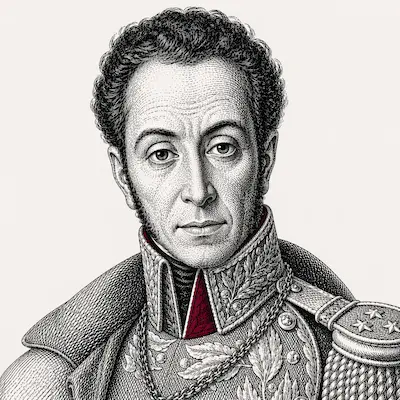
Continental unions fragment when member states' immediate interests diverge from shared long-term interests.
Adenauer speaks of European integration as irreversible, but Gran Colombia was also built on economic interdependence and shared institutions. It collapsed within eleven years because the centrifugal forces were stronger than the centripetal ones. In my 1815 Carta de Jamaica, I predicted that Spanish America would fragment into separate republics rather than unify, despite sharing language, religion, and colonial experience. Geography, economic interests, and local elites pulled harder than continental solidarity.
The EU faces the same structural problem I confronted: member states benefit from the union collectively but face different costs individually. When the Greek debt crisis required fiscal transfers, Northern European taxpayers asked why they should pay for Southern European fiscal irresponsibility. When migration flows concentrated in particular countries, national governments prioritised domestic political survival over European solidarity. This is not institutional failure — it is the predictable behaviour of sovereign states under pressure.
The EU can only survive if it develops what I failed to create: a European political identity stronger than national identities. Without this, European institutions become instruments that member states use when convenient and abandon when costly. My constitutional designs for Gran Colombia were sophisticated, but they could not overcome the fact that Venezuelans, Colombians, and Ecuadorians identified primarily as Venezuelans, Colombians, and Ecuadorians.
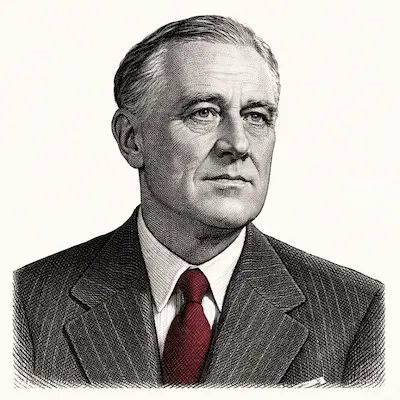
Political unions survive by delivering visible benefits to constituent populations and maintaining elite commitment.
Bolívar's analysis is penetrating, but he underestimates the power of institutional design to shape political identity over time. The American union survived the Civil War not because Americans had stronger continental identity than Latin Americans, but because our federal system allowed sufficient state autonomy while concentrating essential powers at the federal level. The EU's problem is that it has concentrated regulatory power while leaving fiscal and political power fragmented.
During the Depression, I had to convince individual states that New Deal programmes served their local interests while building a national recovery. The key was delivering visible benefits — jobs, infrastructure, social security — that people could see and feel. The EU's benefits are largely invisible: peace, trade, regulatory harmonisation. These are real, but they don't generate the political loyalty that survives crisis.
The EU needs its own "New Deal moment" — a crisis that allows European institutions to deliver direct, visible benefits to European citizens. The COVID recovery fund was a step in this direction, but it was temporary. Permanent European fiscal capacity, European unemployment insurance, European infrastructure investment — these would create constituencies for European integration among ordinary citizens, not just among political elites.
The alternative is managed fragmentation: keeping what works (trade, travel, some regulation) while accepting that political union was premature. Sometimes the best way to preserve what you have is to stop trying to build what you cannot yet sustain.
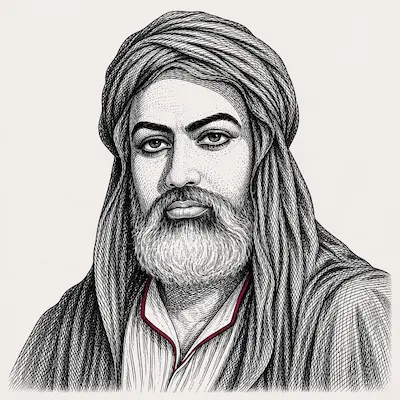
The EU's crisis follows predictable patterns of institutional decay, but renewal requires rebuilding the solidarity that created it.
Roosevelt speaks of delivering benefits, but he misses the deeper structural pattern. In the Muqaddimah, I documented how political unions rise through shared struggle and decline through prosperity. The EU was forged by the shared trauma of two world wars and the shared threat of Soviet power. These external pressures created what I call asabiyya — group solidarity strong enough to override particular interests. As those pressures faded, so did the solidarity.
The EU's founders — Adenauer, Monnet, Schuman — possessed the asabiyya of men who had lived through catastrophic state failure. Their successors inherited institutions without inheriting the existential understanding that created them. European integration became technocratic management rather than political necessity. This is the classic pattern of dynastic decline: the third generation manages what the first generation built and the second generation consolidated, but they do not understand why it was built.
The current crisis — migration, economic divergence, democratic backsliding in Hungary and Poland — represents what I call the testing phase. External pressure reveals whether the union's asabiyya remains strong enough to overcome centrifugal forces. The COVID response suggests it does, barely. Brexit demonstrated the cost of departure. But the fundamental question remains: can European solidarity be renewed without external threat, or does it require crisis to regenerate?
History suggests that institutional renewal requires either external pressure or internal transformation of the elite. The EU may need both: a external challenge serious enough to remind Europeans why unity matters, and a generation of leaders willing to complete the political union that economic union requires.
The convergence note
Where the council converges:
All members agree that the EU's institutional architecture remains fundamentally sound but requires active political management and renewal to survive current pressures.
Where it divides:
Schmidt and Adenauer believe institutional maintenance and completion can preserve European integration; Bolívar and Ibn Khaldun argue that deeper structural forces—competing national interests and declining solidarity—make fragmentation likely without external pressure to regenerate unity.
For a policymaker to decide on:
Whether to pursue deeper political integration (fiscal union, political union) at the risk of triggering nationalist backlash, or accept managed fragmentation while preserving economic integration and hoping external pressures eventually regenerate European solidarity.