The Long Council
Who was selected, and why
Is it possible to reverse the downfall of empire like the EU?
The central tension
Whether institutional decay in complex political unions can be arrested through reform or whether the forces driving fragmentation (sovereignty claims, democratic deficits, economic divergence) are structurally irreversible.
Selected members
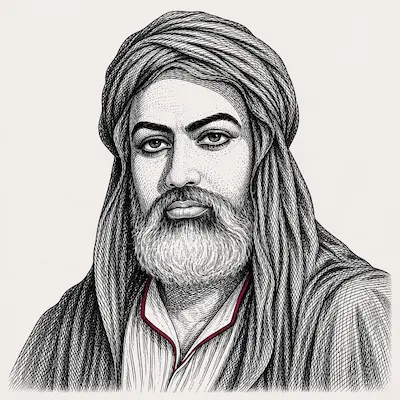
Ibn Khaldun
Will argue: That the EU's current crisis follows predictable patterns of institutional decay, but renewal is possible if the union can rebuild the solidarity (asabiyya) that created it, likely requiring external pressure or internal crisis as catalyst.
His asabiyya theory and dynastic cycle framework directly address why political unions fragment and the conditions under which institutional decay can be reversed.
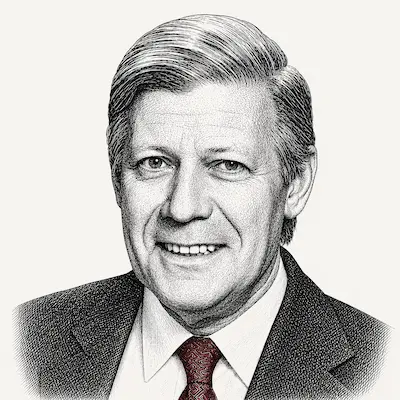
Helmut Schmidt
Will argue: That European integration requires constant political will and crisis management; institutions decay without active maintenance, but the EU's core structures remain salvageable through pragmatic coalition-building among key member states.
As a founding architect of European economic integration and the EMS, he has documented experience building and preserving European institutions under crisis conditions.
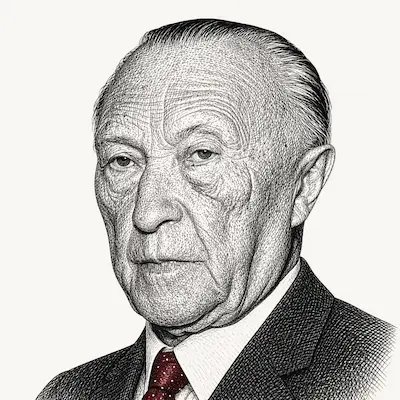
Konrad Adenauer
Will argue: That European integration was designed to make war impossible through economic interdependence and shared institutions; reversal requires returning to this foundational logic and accepting constraints on national sovereignty as the price of peace and prosperity.
The founding father of European integration who anchored West Germany to European structures and designed institutions to outlast individual leaders.
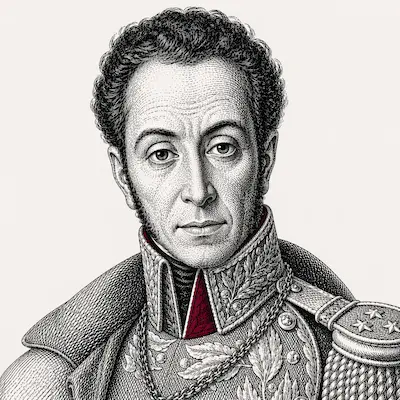
Simón Bolívar
Will argue: That continental unions fragment when member states' immediate interests diverge from shared long-term interests; reversal is possible but requires either external threat or strong executive authority that current EU structures lack.
His experience with the fragmentation of Gran Colombia provides the closest historical parallel to a continental political union dissolving due to centrifugal forces.
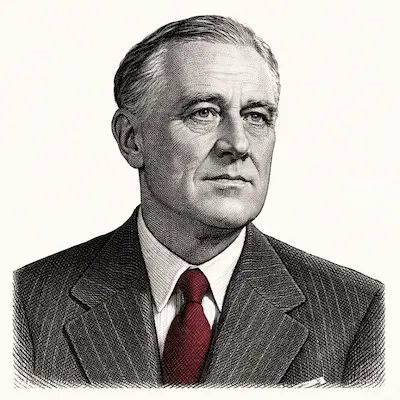
Franklin D. Roosevelt
Will argue: That political unions survive through delivering visible benefits to constituent populations and maintaining elite commitment; the EU crisis reflects failure on both dimensions but institutions can be reformed if leaders prioritize union survival over short-term national advantage.
His experience managing coalition governments and designing post-war international institutions relevant to questions of complex political union management.
Considered but not selected
Hayek: His spontaneous order framework could address EU institutional evolution, but he was explicitly skeptical of European political integration and would likely argue the EU is an artificial construction that should be allowed to dissolve - Deng Xiaoping, His experience with political union (China) is too different structurally from the EU's voluntary supranational character - Margaret Thatcher, Her documented Euroscepticism would provide valuable counterpoint but she was an advocate of EU fragmentation rather than institutional repair