Built from documented writings, speeches, decisions and historical records. Council members argue from documented positions, applied to today's question.
The EU faces an irreducible trade-off between institutional effectiveness and territorial scope that cannot be resolved through technical fixes or gradual reform.
Adenauer and Schmidt argue that deeper political integration must precede expansion to prevent institutional dilution, while Thatcher contends that cooperation among sovereign nations provides sufficient framework for managing economic and security challenges without surrendering democratic accountability. Maathai demonstrates that formal democratic procedures without genuine popular legitimacy import governance problems rather than solving them. Ibn Khaldun warns that expansion beyond absorption capacity destroys the solidarity that enables collective action.
The fundamental split concerns whether pooled sovereignty strengthens or weakens European democracies — a question that depends on irreconcilable views about the nature of democratic legitimacy in the modern state system.
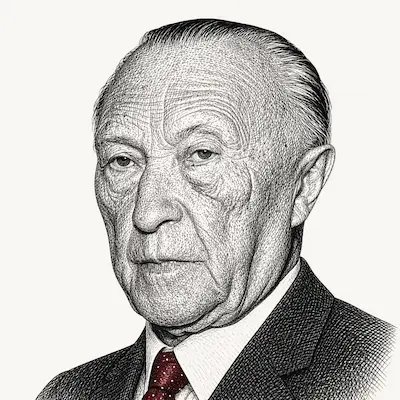
European integration requires institutional depth before territorial width to prevent the dilution of commitment.
My approach to European integration was built from the rubble of 1945 — when the choice was not between ideal arrangements but between Western anchoring or national isolation. The Élysée Treaty with de Gaulle in 1963 demonstrated that reconciliation requires patient institution-building among core partners first. We created the Coal and Steel Community with six nations, not sixteen, because deep integration among committed states produces durable structures that cannot be easily dismantled by future governments. The Franco-German partnership became the foundation because we invested fourteen years in personal diplomacy and binding agreements.
Expansion can strengthen European integration if it follows this principle — institutional deepening before territorial widening. New members must be fully absorbed into existing structures rather than those structures being weakened to accommodate new members. The European project succeeds when it makes states more secure through shared sovereignty, not when it becomes a diluted free-trade area. Each enlargement must reinforce the core commitment to supranational institutions rather than reverting to intergovernmental cooperation.
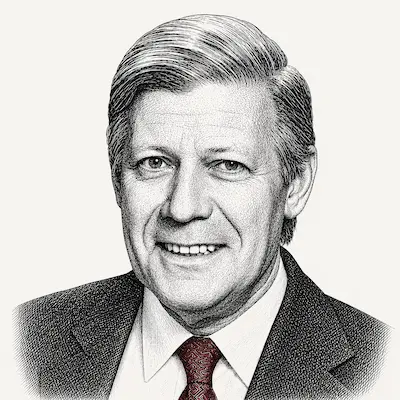
Institutions must deepen before they widen — a wider but shallower Europe serves neither European nor candidate country interests.
Adenauer correctly identifies the sequencing problem, but his timeline was more forgiving than ours. When I argued in my 1997 Die Zeit column that "institutions must deepen before they widen," I was observing the specific failure of the 1990s enlargement discussions — the European Union was absorbing new members without adequate fiscal architecture or democratic accountability mechanisms. The European Monetary System we created in 1978 required years of coordination between Bonn and Paris before it could function. Expansion without this preparatory deepening produces structural instability.
The absorption capacity question is not about excluding willing democratic countries — it is about ensuring that enlargement strengthens rather than fragments European institutions. Current EU structures already demonstrate democratic deficits and fiscal incoherence that enlargement will worsen rather than resolve. My opposition is not to new members but to the illusion that institutional problems solve themselves through expansion. They do not.
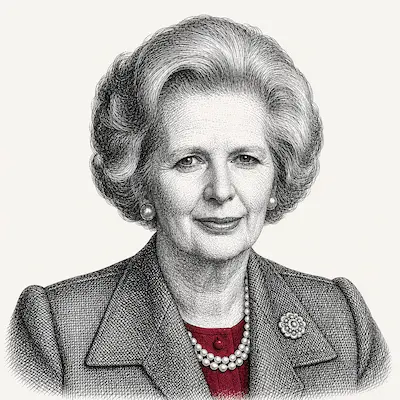
Europe must remain a Europe of independent nations cooperating freely, not a superstate exercising dominance from Brussels.
Schmidt's deepening-before-widening formula assumes that political integration is desirable — it is not. My Bruges Speech in 1988 outlined the correct framework: "We have not successfully rolled back the frontiers of the state in Britain only to see them re-imposed at a European level." The single market — the free movement of goods, services, capital, and people — delivers economic benefits without requiring the surrender of sovereignty that deeper political integration demands. Expansion should proceed on this basis: new members joining a community of independent nations, not joining a federal project.
The institutional capacity question Schmidt raises has a clear answer — NATO and bilateral cooperation among sovereign states proved more effective at managing security challenges than European political union could be. Economic challenges are best managed through market mechanisms, not bureaucratic coordination. Expansion that brings more market-oriented democracies into a Europe of sovereign nations strengthens the continent. Expansion that accelerates federalism weakens it.
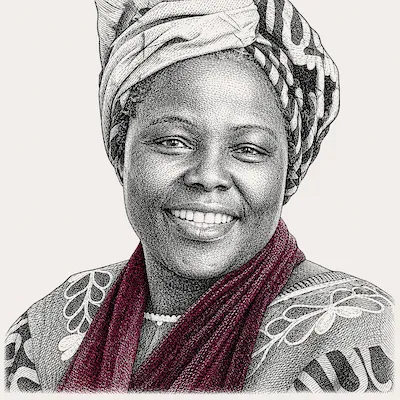
Expansion must ensure candidate countries have genuine democratic capacity, not just formal democratic procedures.
Thatcher's framework assumes that market mechanisms automatically produce accountability — my experience in Kenya under President Moi proves this is false. The European Union faces the same challenge that international donors faced in Africa: formal institutions that lack popular legitimacy become vehicles for elite extraction rather than genuine governance. Expansion based only on constitutional compliance, without verification of actual democratic practice, imports the problems rather than solving them.
The Green Belt Movement's three decades of work demonstrates that democratic accountability requires structural conditions: communities must control the resources they depend on, women must have economic independence, and there must be civic space for independent organisation. These conditions cannot be created through membership conditionality alone — they require sustained civil society development that precedes political integration. The EU's approach to candidate countries must address the structural foundations of democratic governance, not simply the procedural forms.
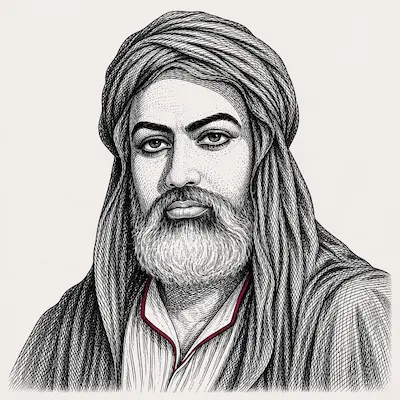
Rapid expansion beyond institutional absorption capacity destroys the asabiyya that enables collective action.
Maathai identifies the core structural problem — formal compliance without genuine commitment produces institutional decay, not integration. The European Union faces the same challenge I documented in North African dynasties: expansion that dilutes group solidarity weakens the capacity for collective action. The original six members of the Coal and Steel Community possessed strong asabiyya — shared commitment to the European project born from wartime experience and reconstruction necessity. Each subsequent enlargement has included members with weaker commitment to the central project.
My cyclical theory applies directly: institutions that expand beyond their absorption capacity fragment the solidarity that made them effective. The mechanism is observable — new members join for economic benefits while resisting political obligations, creating a community of interests rather than a community of commitment. When external pressure emerges — financial crisis, migration crisis, security crisis — the coalition fractures along the lines of unequal commitment. The EU's current structure already demonstrates this pattern. Further expansion without addressing the underlying erosion of solidarity accelerates rather than resolves the institutional decay.
The convergence note
Where the council converges All members accept that European integration must balance expansion with institutional effectiveness — growth without governance capacity produces failure.
Where it divides The division is fundamental: whether deeper political integration strengthens or weakens European states, and whether sovereignty can be genuinely pooled or is inevitably surrendered. Adenauer and Schmidt argue for deeper integration as the foundation of expansion; Thatcher argues for broader cooperation without deeper integration; Maathai and Ibn Khaldun focus on the structural prerequisites that expansion requires but may destroy.
For a policymaker to decide on The sequence question cannot be answered abstractly: whether to prioritise institutional deepening, pursue expansion with current structures, or accept that the EU has reached optimal size. This requires specific judgment about particular candidate countries and particular institutional reforms that theory cannot predetermine.