Built from documented writings, speeches, decisions and historical records. Council members argue from those positions, applied to today's question.
Britain's medium-power status requires institutional anchoring to exercise influence in a world of continental-scale competitors, but the council establishes that rejoining depends on resolving a fundamental question about British strategic identity that Brexit has sharpened rather than settled.
Thatcher argues that sovereignty once surrendered to supranational institutions requires principled independence, advocating comprehensive bilateral trade agreements over institutional membership. Schmidt counters that Britain's geopolitical vulnerability demands European anchoring, where pooled sovereignty strengthens rather than surrenders national capacity. De Gaulle maintains that Britain's Atlantic orientation makes stable European membership structurally impossible, preferring privileged partnership over institutional fiction. Adenauer contends that rejoining requires Britain to demonstrate that European integration enables rather than constrains effective sovereignty, following the path Germany took after its own strategic failure.
The irreducible split turns on whether British strategic culture can accommodate permanent European commitment, or whether any future membership would remain conditional and reversible when Atlantic alternatives prove more attractive.
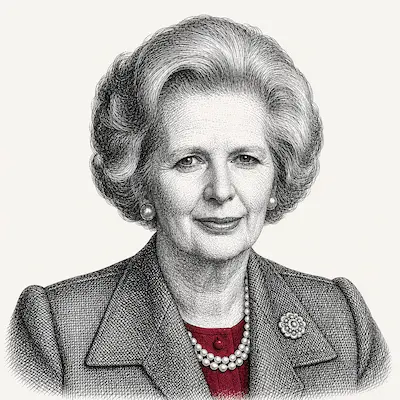
The UK's sovereignty was surrendered through European integration — reclaiming it requires principled withdrawal.
My experience with European integration taught me that once you surrender sovereignty to supranational institutions, getting it back requires more than negotiation — it requires the will to accept short-term disruption for long-term independence. When I signed the Single European Act in 1986, I believed we could have the economic benefits of the single market without the political costs of federalism. I was wrong. The European project is inherently political, not merely economic, and each step towards integration makes the next step inevitable.
Brexit created the opportunity that I did not have: a clean break that allows Britain to reclaim its fundamental governing capacity. The question is not whether to rejoin — the question is how to make Brexit deliver what it promised. We need comprehensive free trade agreements with individual European nations, not membership in a system designed to transfer decision-making from Westminster to Brussels. The economic adjustment costs are real but temporary. The sovereignty costs of rejoining would be permanent.

Britain's geopolitical vulnerability requires European anchoring — sovereignty pooled in European institutions is sovereignty strengthened, not surrendered.
Margaret, your Bruges Speech documented the problem but not the solution. Britain's strategic reality has not changed since 1973: you are a medium power in a world of continental-scale competitors. The United States is increasingly Pacific-focused; China is rising; Russia remains hostile. Alone, Britain cannot shape the rules of trade, technology, or security that govern its future. The sovereignty you defend is the sovereignty to be irrelevant.
My experience building the European Monetary System taught me that small and medium states gain power by pooling it in institutions they help design. Germany accepted constraints on the Bundesbank's independence to gain influence over European monetary policy. Britain's mistake was joining late — after the institutions were designed — then complaining about rules they had not helped write. Rejoining now means accepting even less influence than before, but the alternative is managed decline outside the world's largest trading bloc.
The economic costs of rejoining are manageable; the geopolitical costs of remaining outside are not. A post-Brexit Britain that cannot access European supply chains, participate in European technology development, or influence European responses to China will discover that formal sovereignty without practical influence is an expensive form of impotence.

Britain's Atlantic orientation makes European membership structurally impossible — better as partner than member.
Helmut, my objection to British membership was not personal but structural. Britain is not a European power — it is an Atlantic power that happens to be located off the European coast. Every major British strategic decision — from Suez to the nuclear deterrent to the special relationship — has been made in reference to Washington, not to Europe. Brexit simply acknowledged what should have been obvious from the beginning.
My experience of Anglo-French relations taught me that Britain enters European arrangements when it needs European support and exits them when American alignment is more advantageous. The European project requires permanent commitment to European autonomy. Britain's permanent commitment is to Atlantic partnership. These orientations are not compatible within the same institutional framework.
The question is not whether Britain should rejoin the European Union. The question is how Europe can work with Britain as what it actually is: a significant external partner with global reach but non-European strategic priorities. A privileged partnership — extensive cooperation without institutional membership — serves both sides better than the fiction of European identity that Britain cannot sustain and Europe should not depend on.

Rejoining requires acknowledging that European integration strengthens national capacity rather than undermining it.
Charles, your analysis of Britain's Atlantic orientation is historically accurate but strategically obsolete. The American commitment to European security is no longer unconditional — this change began during my tenure and has accelerated since. Britain's choice is not between European integration and Atlantic partnership. The choice is between European integration that enables continued Atlantic relevance, or isolation that guarantees Atlantic irrelevance.
My experience building the Federal Republic taught me that nations recovering from strategic failure — and Brexit was a strategic failure — must rebuild credibility through institutional commitment. West Germany gained sovereignty through accepting constraints. We anchored ourselves to institutions — NATO, the European Coal and Steel Community, and eventually the Common Market — that limited our freedom of action but restored our capacity for action. This is the path Britain must follow.
Rejoining the European Union requires Britain to demonstrate that its European commitment is permanent, not tactical. This means accepting that European integration is not a constraint on British sovereignty but the condition for exercising sovereignty effectively in a world of continental powers. The institutional design question — how to accommodate Britain's global connections within European structures — is solvable. The political question — whether Britain genuinely accepts European identity as its primary strategic orientation — remains to be proven through sustained commitment, not occasional convenience.
The convergence note
Where the council converges All members accept that Britain's medium-power status requires institutional anchoring to exercise influence effectively in a world dominated by continental-scale powers.
Where it divides They disagree fundamentally about whether British strategic culture can accommodate permanent European institutional commitment, or whether Britain's Atlantic orientation makes stable EU membership structurally impossible.
For a policymaker to decide on Whether Britain's post-Brexit experience has produced genuine acceptance of European identity as a strategic necessity, or whether any future membership would remain conditional and reversible when Atlantic alternatives become more attractive.