Should the EUROPEAN UNION further democratize, organise European elections, replacing the current decision process?
Built from documented writings, speeches, decisions and historical records. Council members argue from documented positions, applied to today's question.
The European Union faces an irreconcilable tension between the scale required for effective governance in an interconnected world and the conditions necessary for authentic democratic participation.
Adenauer argues that strong supranational institutions must precede democratic accountability, citing the successful construction of the Coal and Steel Community and Common Market as proof that effective governance creates the conditions for later democratic legitimacy. Thatcher counters that democracy requires a shared political culture that Europe fundamentally lacks, making European elections meaningless exercises that mistake bureaucratic competence for political legitimacy. Schmidt defends technocratic coordination as the only practical response to economic interdependence that has already made national democratic control largely fictitious. Arendt identifies European institutions as "rule by nobody" — bureaucratic administration that eliminates the spaces where citizens can act together in genuine political power.
The council divides on whether this tension represents a problem of institutional design or an unsolvable contradiction between democratic authenticity and continental governance.
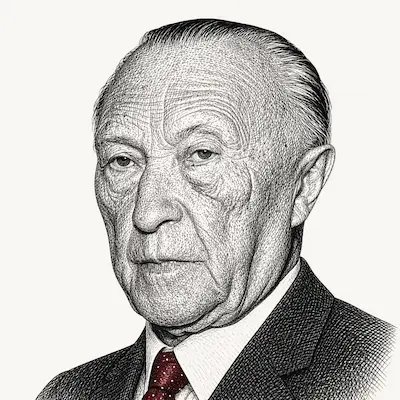
European integration requires strong institutions before democratic accountability — democracy follows successful integration, not the reverse.
In my experience founding the European project, the essential lesson is clear: institutional architecture must be constructed before democratic processes can function effectively at the European scale. When we established the Coal and Steel Community in 1951 and negotiated the Treaties of Rome in 1957, we did not wait for a European demos to emerge — we built supranational institutions that could function across national boundaries and created the conditions in which European identity could develop. The documented success of the Schuman Plan and the Common Market demonstrates that effective governance precedes popular legitimacy, not the reverse.
The current European Union suffers not from excessive democracy but from democratic expectations that outpace institutional capacity. European elections without genuine European political parties, a European public sphere, or shared political culture produce the illusion of accountability without its substance. My approach was to build working institutions first — the Commission, the Court, the Council — that could deliver tangible benefits to European peoples, creating the trust and identification necessary for genuine democratic participation.
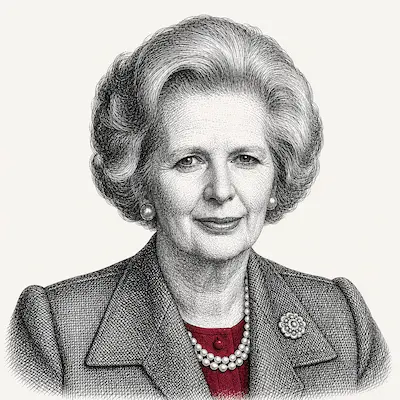
European democracy is impossible because there is no European demos — democracy requires a shared political culture that Europe lacks.
Adenauer's faith in institutions preceding democracy mistakes the cart for the horse. My experience in the Bruges Speech and the long battle over European integration taught me that democracy cannot be constructed through bureaucratic fiat — it emerges from genuine political communities with shared languages, histories, and loyalties. Europe has none of these. The European Parliament elections consistently demonstrate this failure: turnout is low, voters treat them as second-order national contests, and the results reflect domestic grievances rather than European choices.
The fundamental error of your institutional approach, Konrad, is that it assumes technical competence can substitute for political legitimacy. My confrontation with the European project in 1988 arose precisely because I recognised that "ever closer union" was creating rule without representation on a continental scale. The single market — a framework for voluntary cooperation among sovereign nations — succeeded because it respected democratic boundaries. European political union fails because it violates them.
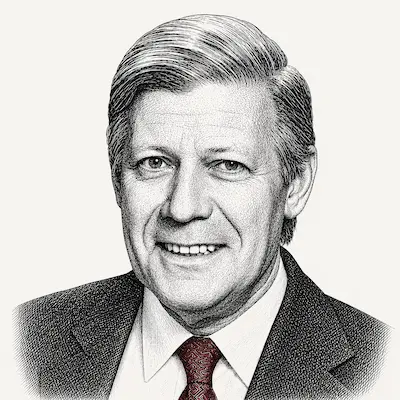
European decisions require speed and expertise that democratic processes cannot provide — technocratic governance is not ideal but it is necessary.
Margaret, your sovereignty objections ignore the documented reality that Margaret faced: economic interdependence had already made national democratic control largely fictitious by 1979. When I created the European Monetary System with Giscard d'Estaing, we were responding to the collapse of Bretton Woods and the impossibility of managing currency stability through national instruments alone. The alternative was not sovereign monetary policy — it was chaos that would have destroyed the economic foundations on which democracy depends.
Your Bruges position failed to grasp the essential paradox: in an interconnected economy, the choice is not between democratic sovereignty and technocratic rule, but between effective technocratic coordination and ineffective democratic gesture. When the 1973 oil crisis struck, no national parliament could vote the price of oil back down. When currency speculators attacked the lira or the franc, no democratic assembly could restore stability through debate. The EMS worked precisely because it removed these decisions from the political arena where they could not be resolved and placed them in an institutional arena where they could.
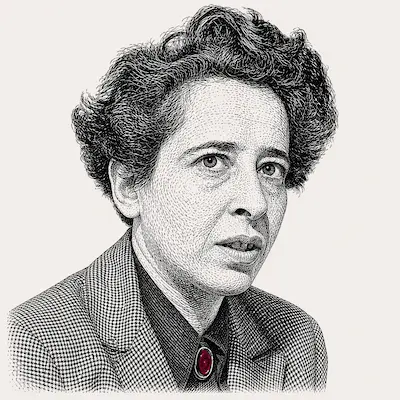
European institutions lack genuine political power because they are not grounded in spaces where citizens can act together — bureaucratic rule is "rule by nobody."
Schmidt, your defence of technocratic necessity misses the fundamental distinction between power and violence that I have documented. Power arises when people act together in concert; it disappears when they are prevented from doing so. The European institutions you and Adenauer built are perfect examples of what I call "rule by nobody" — bureaucratic administration that eliminates the spaces where citizens can engage in genuine political action while claiming to act on their behalf.
The European Union's democratic deficit is not an accidental oversight but a structural feature. The Commission cannot be a genuine government because it is not accountable to a political community that acts together. The Parliament cannot be a genuine legislature because European citizens have no space for the political interaction that would create a European public. The Council cannot be genuine deliberation because it represents national executives, not citizens acting in concert. What you have created is an administrative apparatus that manages the affairs of European populations without their political participation.
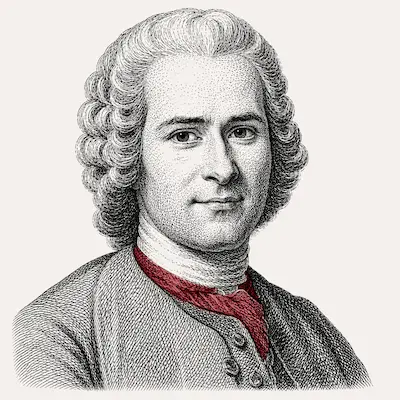
European democracy is structurally impossible — the general will requires a civic community small enough for genuine participation, which the EU cannot provide.
Hannah's analysis of European bureaucracy confirms what I demonstrated in the Social Contract: legitimate political authority requires citizens who can genuinely know one another and deliberate together about their common good. The European Union's 450 million inhabitants cannot constitute a political community in any meaningful sense — they share neither language, nor history, nor the possibility of direct democratic participation that genuine sovereignty requires.
The error that both Adenauer's institutionalism and Schmidt's technocracy make is imagining that representatives can will the general will on behalf of the people. This is impossible: the general will cannot be represented, only exercised. European elections are meaningless not because of low turnout but because the citizens voting have no capacity to form a common will across such vast distances and differences. Each national electorate may form a general will, but these separate wills cannot be aggregated into a European general will without destroying their authentic character.
The choice Europe faces is between genuine democracy within appropriately sized political communities — the member states — and the pseudo-democracy of continental administration. Continental institutions may be necessary for economic coordination, but they cannot be democratic. To pretend otherwise is to corrupt the very concept of popular sovereignty.
The convergence note
Where the council converges All members acknowledge that the current European Union suffers from a fundamental tension between the necessity of supra-national coordination and the requirements of democratic legitimacy.
Where it divides The irreconcilable disagreement is whether this tension can be resolved through institutional design (Adenauer), national sovereignty (Thatcher), technical efficiency (Schmidt), or whether it represents an unsolvable contradiction between democratic authenticity and continental scale governance (Arendt, Rousseau).