Does Europe really have an immigration crisis and if so how can it be solved?
Built from documented writings, speeches, decisions and historical records. Council members argue from documented positions, applied to today's question.
Europe faces institutional breakdown between migration volumes and integration capacity, but the council maps fundamentally different paths forward rather than reaching consensus on solutions.
Schmidt argues for managed integration with clear institutional limits based on Germany's guest worker experience, while Thatcher insists democratic sovereignty requires national control over admission numbers and criteria. Lee Kuan Yew proposes selective economic-based admission with measurable integration requirements, and Maathai contends that European resource extraction creates the displacement pressures that no admission policy can resolve. Arendt identifies the nation-state system itself as generating obligations to protect human dignity that it cannot fulfill for non-members.
The fundamental split centers on whether the solution lies in better national management of existing frameworks or structural transformation of how political membership itself is conceived.
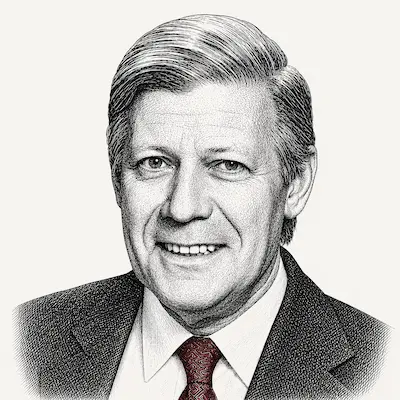
Immigration flows require managed integration with clear limits and institutional capacity.
Germany's experience with guest workers in the 1970s demonstrates both the necessity and the limits of controlled migration. When we welcomed Turkish workers beginning in 1961, the assumption was temporary labour for specific economic needs. By my chancellorship, it was clear this was permanent settlement requiring integration infrastructure — language training, housing policy, social services adaptation. The 1973 oil crisis taught us that uncontrolled dependencies become sovereignty vulnerabilities. Immigration policy is not fundamentally different from energy policy in this respect.
The question is not whether Europe faces pressures — the pressures are documented and ongoing. The question is whether European institutions have the capacity to manage integration at current volumes while maintaining social cohesion. My assessment: they do not. Current asylum frameworks were designed for episodic displacement, not structural migration. Current integration infrastructure assumes lower volumes and clearer economic rationale. The gap between institutional capacity and migration pressure is what produces crisis.
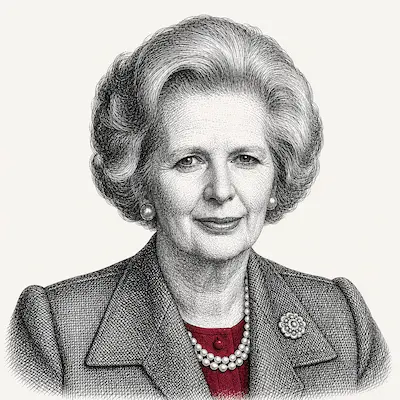
National sovereignty requires control over borders; excessive immigration undermines democratic institutions.
Schmidt is correct about institutional capacity but misses the fundamental point — this is a question of democratic self-determination. A nation that cannot control who joins its political community has ceased to be a nation. My government maintained that principle consistently: immigration must serve national interest, not humanitarian abstraction. We controlled our numbers precisely because we understood that social trust — the precondition for democratic institutions — requires manageable cultural change within clear legal frameworks.
The European Union's approach represents exactly the sovereignty transfer I opposed at Bruges. When Brussels determines refugee distribution quotas and member states lose control over their own admission policies, you have subordinated democratic accountability to bureaucratic process. The predictable result: popular revolt against the entire framework. Germany's 2015 unilateral decision to suspend Dublin procedures was an executive choice that imposed consequences on societies that never consented to them.
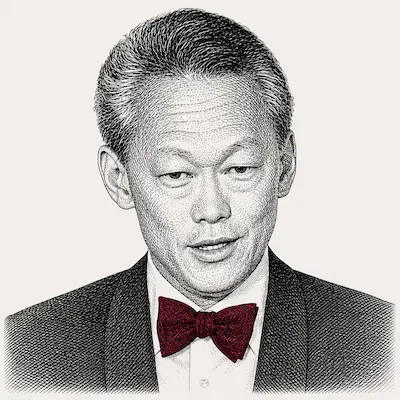
Successful immigration requires selective admission based on economic need and demonstrated integration capacity.
Thatcher frames this correctly as a sovereignty question, but sovereignty means having effective control, not just asserting rights. Singapore's immigration model works because we never pretended immigration is primarily humanitarian — it is economic policy that happens to involve people. We select for skills we need, require language competency, and make integration measurable through employment and civic participation. Failed integration means departure. This clarity serves immigrants and citizens equally.
Europe's crisis stems from mixing humanitarian obligations with economic needs without institutional mechanisms to distinguish between them. Asylum seekers, economic migrants, and integration policy are treated as the same question when they require different frameworks. The volumes become unmanageable because the categories are unclear. Germany could absorb significant numbers — their economy needs it — but not through systems designed for temporary humanitarian shelter.

European immigration pressures reflect governance failures and resource extraction in origin countries.
Lee Kuan Yew's framework ignores the structural relationship between European prosperity and the conditions that force migration. The "immigration crisis" is the consequence of resource extraction, debt arrangements, and governance interference that make large parts of Africa, the Middle East, and South Asia unlivable. Europe cannot manage migration flows while maintaining the political and economic relationships that generate them.
Climate change accelerates this pattern. Drought, desertification, and sea-level rise will displace millions more people from the Global South to the Global North. The question of European "capacity" assumes European societies can manage the effects while avoiding the causes. They cannot. Effective immigration policy requires European governments to address land grabbing, debt structures, and climate damage in origin countries — not as aid, but as preconditions for reduced migration pressure.
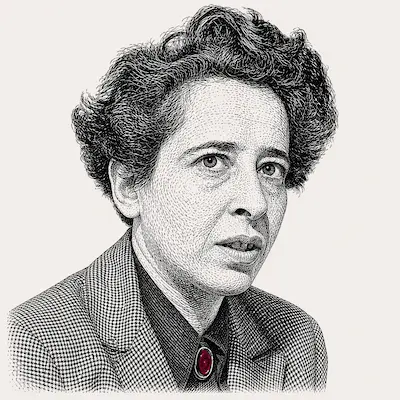
The immigration challenge reveals structural limits of the nation-state system.
Maathai identifies the global structural patterns correctly, but the immediate political question is what happens to people who are already displaced and stateless. My analysis of the "right to have rights" was based on lived experience — eighteen years without citizenship, watching how quickly legal protections disappear when political membership is withdrawn. Today's migration flows reproduce this condition at massive scale.
The nation-state system creates an inherent contradiction: it generates obligations to protect human dignity that it cannot fulfill for non-members. European governments face populations of people who exist within their territory but outside their political community — they have legal obligations but no political framework for integrating them as decision-making members. This is the statelessness problem reproduced as policy crisis. The institutional solutions — detention, deportation, permanent temporariness — convert administrative problems into humanitarian catastrophes because they treat political membership as purely national rather than fundamentally human.
The convergence note
Where the council converges Current European immigration volumes exceed existing institutional capacity for integration, and the institutional frameworks were not designed for permanent settlement of diverse populations requiring full political membership.
Where it divides Schmidt and Thatcher argue for restored national control through clearer limits and selection criteria, while Maathai and Arendt argue the nation-state framework itself creates the problems it claims to solve. Lee's Singapore model offers managed selection but may not scale to continental contexts.