Should the EU tighten its partnership with China in light of the deteriorating relations?
Built from documented writings, speeches, decisions and historical records. Council members argue from documented positions, applied to today's question.
Europe should deepen institutional unity first, then engage China economically while building independent strategic capabilities — but whether this balanced approach remains viable depends on forces beyond European control.
Adenauer insists European institutional unity must precede any China engagement to prevent divide-and-rule tactics, while Schmidt advocates strategic autonomy through economic partnership with defense preparedness. Lee Kuan Yew argues Europe can make itself useful to both superpowers simultaneously, and Deng emphasizes China's continued focus on development over confrontation, with Sun Tzu recommending strategic patience to avoid forcing binary choices.
The council cannot resolve whether great power competition will ultimately compel Europe to choose sides despite its preference for strategic autonomy.
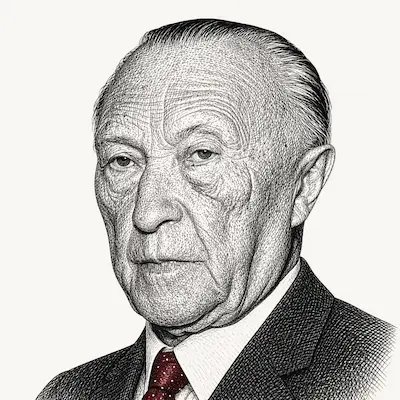
European unity through institutional deepening is the only defense against being divided by China.
My experience building West German sovereignty through Western integration offers the framework Europe needs now. In 1949, I chose to anchor Germany to European and Atlantic institutions rather than pursue neutrality between the superpowers. Critics argued I was sacrificing sovereignty — instead, I was building it through irreversible commitments that made Germany indispensable to Western security and prosperity.
Europe faces the identical choice today. Individual member states negotiating separately with China will be defeated by Chinese divide-and-rule tactics. France pursuing one China policy, Germany another, Italy a third — this fragments European leverage and invites Chinese manipulation. The Franco-German reconciliation I built with de Gaulle demonstrates that former adversaries can create unbreakable partnerships when they pool their interests in binding institutions. Europe must deepen before it can engage China effectively.
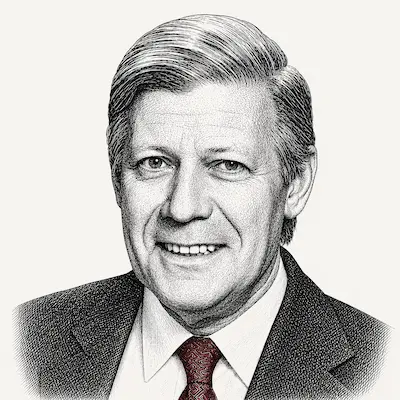
Strategic autonomy requires avoiding the binary choices that great powers impose on medium powers.
Adenauer is correct about institutional unity, but his approach assumes Europe must choose sides in US-China competition. My experience navigating between American and Soviet pressures during the Cold War suggests a different path. In 1981, when the US demanded I cancel the Soviet gas pipeline, I refused — not from anti-American sentiment but because energy dependence on any single source was a sovereignty risk. I maintained both the Atlantic alliance and energy diversification.
The EU should pursue economic partnership with China while strengthening European defense capabilities — what I called "détente with deterrence." This means accepting Chinese investment in non-strategic sectors while protecting critical technologies and infrastructure. The Americans will pressure Europe to decouple completely. The Chinese will offer economic inducements to fracture European unity. Both approaches serve great power interests, not European ones. Strategic autonomy means preserving options, not making premature choices.
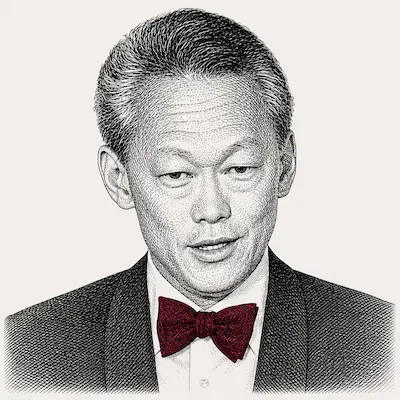
Make Europe indispensable to both powers while building independent capabilities they cannot threaten.
Schmidt understands the principle but underestimates its application to continental Europe. Singapore's strategy was not neutrality — it was active engagement with both US and China while building capabilities that neither could easily pressure. We hosted US naval facilities and became China's largest foreign investment destination simultaneously. The key was being useful to both for different reasons.
Europe has similar opportunities if it thinks strategically. China needs European technology, markets, and legitimacy. America needs European alliance solidarity and economic partnership. Europe should provide both — but on European terms. This means accepting Chinese investment in manufacturing while protecting quantum computing and artificial intelligence. It means supporting US regional security while refusing to participate in economic decoupling that serves American industrial policy, not European prosperity.
The Americans discovered after 2016 that trade wars are expensive. The Chinese are discovering that coercive diplomacy produces coalitions against them. Both will eventually need European partnership more than Europe needs to choose between them. But this requires European institutional unity — Adenauer's insight applied to 21st-century competition.
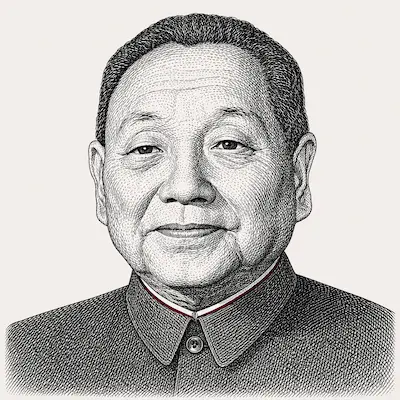
China's primary focus remains domestic development — partnership opportunities exist if Europe avoids treating China as an ideological threat.
Lee Kuan Yew understands China's actual priorities. Our fundamental interest is development, not confrontation with Europe. The assertiveness he references reflects defensive reactions to American containment strategies, not expansionist ambitions. When I launched China's opening in 1978, I established special economic zones to learn from foreign investment while maintaining Chinese sovereignty. This remains our model — selective engagement for mutual benefit.
Europe can engage China productively if it focuses on economic complementarity rather than systemic competition. We need European technology in green energy, advanced manufacturing, and urban development. Europe needs Chinese markets and supply chain integration. The Americans frame this as a zero-sum ideological struggle because they fear losing economic dominance. Europe should reject this framing.
The political systems will remain different — this is not a problem requiring resolution. When I negotiated Hong Kong's return with Thatcher, we created "one country, two systems" precisely because different systems can coexist within a framework of mutual respect. Europe and China can maintain different governance models while building economic partnership. The prerequisite is European strategic independence from American pressure to choose confrontation over cooperation.
The higher strategy achieves objectives without direct confrontation — forcing Europe to choose sides ensures Chinese defeat.
Deng speaks truly of China's development priorities, but the strategic environment has shifted beyond his framework. The Americans have successfully framed US-China competition as existential — making neutrality appear impossible and partnership appear betrayal. China's error was revealing strength before securing position.
The optimal Chinese strategy toward Europe requires strategic patience and deception. China should appear less threatening while building irreversible economic relationships. This means accepting European investment restrictions in sensitive sectors while deepening integration in civilian technology, green energy, and manufacturing. The objective is to make European-Chinese economic separation so costly that even alliance pressure cannot compel it.
Europe's optimal strategy mirrors this principle — engage China economically while preparing for potential confrontation. Build dependencies that serve European interests while maintaining capabilities China cannot threaten. Both sides benefit from this approach: China secures the development partnerships it needs, Europe preserves strategic autonomy, and direct confrontation becomes unnecessary because the stakes for both sides make it counterproductive.
The Americans cannot prevent this outcome through pressure alone — they must offer Europe better alternatives. Currently they offer alliance solidarity but demand economic sacrifice. This is an exploitable weakness in their position.
The convergence note
Where the council converges All members agree Europe must maintain institutional unity to engage China effectively — fragmented European approaches will be exploited by both superpowers.
Where it divides The fundamental disagreement concerns whether strategic autonomy is achievable in practice: Adenauer and Schmidt believe Europe can preserve options through institutional strength, while Lee Kuan Yew and Sun Tzu argue great power competition ultimately forces binary choices that smaller actors cannot avoid.