How can the EU avoid a full-blown trade war with America and China?
Built from documented writings, speeches, decisions and historical records. Council members argue from documented positions, applied to today's question.
Build what both superpowers need but cannot easily replace, then make them compete for access.
Schmidt demands technological sovereignty through deeper EU integration and strategic reserves. Lee Kuan Yew advocates regulatory dominance — force global compliance with European standards. Kissinger accepts compartmentalized dependencies while using economic leverage asymmetrically. Sun Tzu rejects dependency entirely — become the prize both powers compete for.
The council agrees Europe must stop negotiating from weakness and start restricting what America and China need.
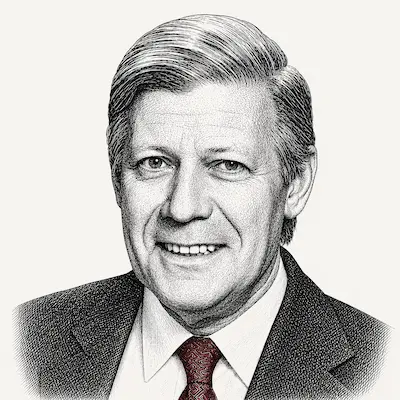
Trade wars destroy the institutional trust that makes prosperity possible.
The Americans lecture us about strategic autonomy while demanding we buy their LNG at triple the price. The Chinese offer partnership while stealing our technology patents. Both expect Europe to choose sides in their competition. This is the 1970s oil embargo repeated: external powers using economic dependency as political leverage. In November 1973 I told the Bundestag that energy dependence was a sovereignty question, not an energy question. The same logic applies to trade. A Europe that cannot produce its own semiconductors, rare earths, and critical technologies is not sovereign — it is a client.
The solution is not protectionism but institutional deepening. Finish the Banking Union, create a European industrial policy, build strategic reserves. Make ourselves indispensable to both superpowers through technological capability they cannot easily replace. Neither Washington nor Beijing can afford to destroy a Europe that controls critical supply chains in pharmaceuticals, precision machinery, and green technology.
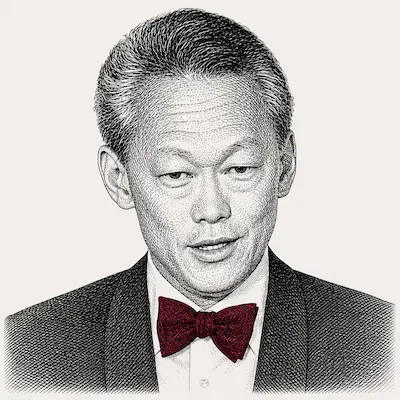
Small powers survive by making themselves useful to all sides, not by choosing sides.
Schmidt is right about technological indispensability, but he underestimates the speed at which great power competition is accelerating. In 1975 I told Deng Xiaoping that Singapore would never choose between America and China — we would make ourselves valuable to both. That strategy worked for forty years. Today it requires constant recalibration. The Americans want technology export controls that would cut our semiconductor industry. The Chinese want Belt and Road participation that would trigger American sanctions. The space for neutrality is shrinking.
Europe's advantage is scale. Singapore had to build indispensability through efficiency and geographic position. Europe can build it through market size and regulatory power. Your data protection rules already force American tech companies to change their global practices. Extend that logic: set global standards for AI, carbon pricing, digital currencies. Make compliance with European rules the price of accessing European consumers. Both superpowers will complain and both will comply.

Triangular engagement prevents the coordination of rivals against your interests.
Lee Kuan Yew correctly identifies the core challenge: Europe lacks the strategic autonomy to practice genuine triangular diplomacy. In 1972 I opened China while maintaining NATO precisely to prevent Soviet-Chinese coordination against American interests. Europe today cannot open independent channels to China while maintaining Atlantic solidarity — it has neither the military capability nor the diplomatic tradition for autonomous great power management. Schmidt's technological indispensability is necessary but insufficient. Technology without strategic independence is still dependency.
The EU's best strategy is asymmetric triangulation: use economic leverage where you have it, accept security dependence where you must. Threaten trade retaliation against American extraterritorial sanctions while accepting American security guarantees against Russia. Offer China market access in exchange for technology transfer while coordinating with America on military containment. This requires compartmentalization — keeping economic and security relationships in separate diplomatic channels. Difficult, but not impossible.
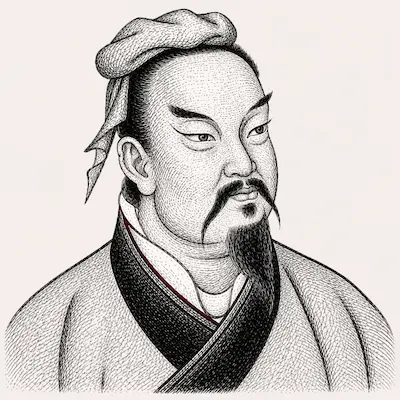
Appear committed to both relationships while building independent capacity.
Kissinger assumes Europe must choose between economic and security dependencies. This accepts the adversaries' framing. Supreme excellence is avoiding this choice entirely through strategic positioning. Europe's error is negotiating from weakness — pleading for exemptions from American sanctions, begging for Chinese market access. Instead, create conditions where both powers compete for European alignment.
Build capabilities both superpowers need but cannot easily replace. The Americans require European pharmaceutical manufacturing and precision engineering. The Chinese need European luxury brands and financial services. Threaten to restrict what they need while demanding access to what you need. When America imposes technology sanctions, restrict rare earth processing. When China threatens trade retaliation, limit luxury goods exports. Make the cost of economic warfare higher for them than for you.
Position yourself as the prize, not the battlefield. Let America and China exhaust themselves competing for European favor while Europe builds the autonomous capabilities that make such competition unnecessary. The state that others compete to influence is stronger than the state that must choose between influences.
The convergence note
Where the council converges: Europe must build technological and economic capabilities that make it indispensable rather than dependent.
Where it divides: Schmidt seeks institutional deepening within existing alliances. Kissinger accepts compartmentalized dependencies. Sun Tzu demands autonomous strategic positioning.
For a policymaker to decide on: Whether to prioritize Atlantic solidarity or strategic autonomy when American and European interests conflict on China policy.