Who would win from European degrowth—the planet, China, or nobody?
Built from documented writings, speeches, decisions and historical records. Council members argue from documented positions, applied to today's question.
China wins from European degrowth while the planet loses.
Schmidt anchors in 1973: energy dependence becomes political dependence within a decade. Lee and Deng agree that Europe's 0.8% growth versus China's 4-5% growth means Europe is choosing irrelevance. Maathai frames degrowth as climate colonialism: Europe consuming less while importing Chinese panels changes nothing for emissions.
The council splits on whether Europe should compete economically or lead through consumption cuts.
- 1Maintain European economic growth to preserve leverage over Chinese climate policy and global green technology development.
- 2Transfer green technology to the Global South instead of relying on Chinese supply chains for clean energy infrastructure.
- 3Reject unilateral degrowth policies that outsource production to China without reducing global emissions.

European degrowth without technology transfer is climate colonialism.
Europe consuming less while China produces more changes nothing for the planet. In 1977 I founded the Green Belt Movement because I learned that environmental problems are governance problems. If Europe shrinks its economy but keeps importing Chinese solar panels and batteries, it has outsourced production, not reduced consumption. Real degrowth means Europe transfers green technology to the Global South and stops extracting resources to fuel someone else's growth.

Unilateral economic weakening destroys your capacity to influence others.
Maathai is wrong about who pays. In November 1973 I told the Bundestag that energy dependence is a sovereignty question. Europe cannot shape Chinese behavior on climate if it has no economic leverage left. Voluntary degrowth while China grows at 5% annually hands Beijing the keys to global environmental policy. The 2024 anchors prove this: China controls 60-80% of clean energy supply chains because it stayed in the growth game while Europe hesitated.
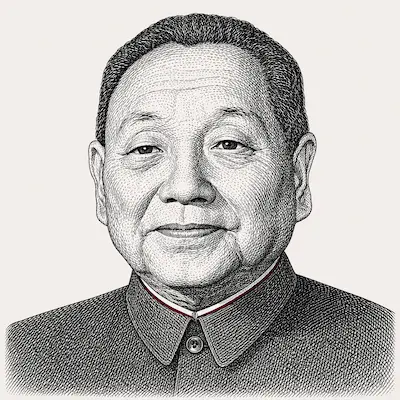
China will develop regardless of European choices.
Schmidt misses the point. In 1978 I opened China selectively because development is the hard truth. European degrowth creates market opportunities for Chinese manufacturers, but we were already winning the clean energy race. The anchors show China leading solar, wind, and battery production not because Europe retreated, but because we invested in industrial capacity while others debated. European economic decline might slow global green technology development by reducing demand and competition.
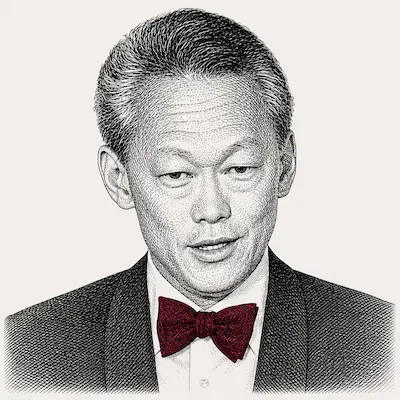
Voluntary economic weakening is strategic suicide disguised as virtue.
Deng understands what Europe has forgotten. In 1965 I accepted Singapore's separation from Malaysia because survival requires making hard choices about what matters most. Europe's 0.8% growth versus China's 4-5% growth means Europe is choosing irrelevance. You cannot influence Chinese climate policy from a position of economic dependence. European degrowth benefits nobody: not the planet, because China will fill the production gap; not Europe, because it loses leverage; not the climate, because global emissions continue rising.
The convergence note
Where the council converges: Unilateral European degrowth without coordinated global action fails to reduce emissions meaningfully.
Where it divides: Whether Europe should prioritize economic competitiveness or lead by example through consumption reduction.
For a policymaker to decide on: Should Europe maintain economic growth to influence China, or demonstrate climate leadership through degrowth?