Should the EU impose trade barriers against China to protect its economy?
Built from documented writings, speeches, decisions and historical records. Council members argue from those positions, applied to today's question.
Trade barriers will slow European innovation more than they protect strategic industries.
Schmidt anchors in the 1973 oil shock: economic dependence becomes political vulnerability when authoritarian states control supply chains. Mahathir counters with Malaysia's 1983 automotive policy: temporary protection can build capabilities that pure markets cannot create. Friedman and Hayek converge on the price mechanism: tariffs block the consumer signals and competitive pressure that drive innovation.
The split turns on timing. Schmidt and Mahathir accept short-term costs to build long-term capacity. Friedman and Hayek argue protection creates the industrial weakness it claims to prevent.
- 1Reject permanent trade barriers while maintaining temporary tariffs on sectors where China uses state subsidies to distort competition.
- 2Build European electric vehicle manufacturing capacity behind current tariff protection before removing trade barriers.
- 3Publish annual assessments of which industries require protection versus which benefit from Chinese competitive pressure.
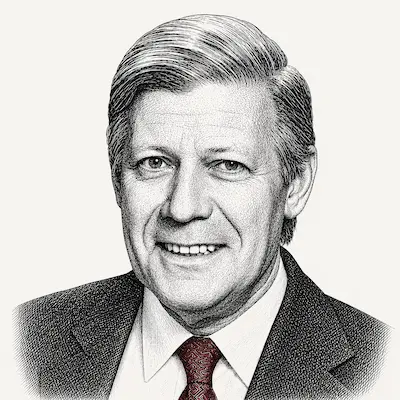
Trade barriers protect sovereignty when dependencies become vulnerabilities.
Europe faces the same choice I confronted during the 1973 oil embargo: accept dangerous dependency or build strategic autonomy. Germany exports €107 billion to China, but this trade flow masks asymmetric vulnerability. China controls critical supply chains while Europe provides markets. When I managed the oil crisis, I learned that economic interdependence becomes political leverage in the hands of authoritarian states. The EU's electric vehicle tariffs are not protectionism. They are industrial defense.
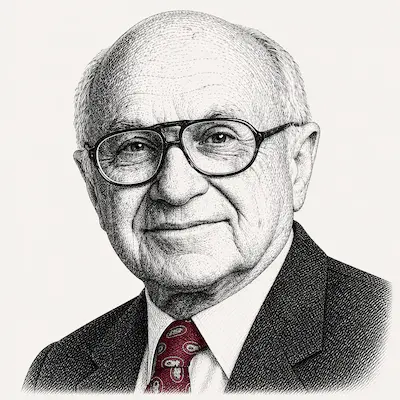
Trade barriers harm European consumers more than they protect European producers.
Schmidt mistakes the symptom for the disease. The real vulnerability is not Chinese competition but European inflexibility. In 1971 I watched Nixon impose tariffs to protect American steel. The result: higher costs for every industry that used steel, from automobiles to construction. European consumers will pay 35% more for electric vehicles while European automakers lose the competitive pressure that drives innovation. China will retaliate against German machinery exports, and both economies will shrink. Protection creates the weakness it claims to prevent.

Industrial policy and selective protection build capability that markets alone cannot create.
Friedman's free trade orthodoxy ignores the sequencing problem. In 1983 I launched Proton against every economist's advice because Malaysia needed to build automotive capability, not just import efficiency. The EU faces the same choice: build electric vehicle capacity now behind temporary protection, or surrender the industry permanently to Chinese state subsidies. When I imposed capital controls in 1998, the IMF predicted disaster. Malaysia recovered faster than Thailand or Indonesia. Europe's tariffs are not permanent walls but temporary shields while European industry learns to compete.
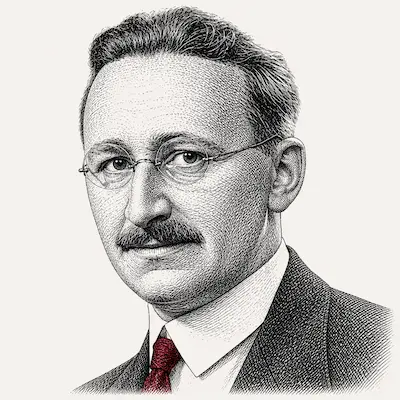
Government protection destroys the market signals that guide efficient resource allocation.
Mahathir confuses state direction with market discovery. When governments pick winners, they eliminate the price signals that tell entrepreneurs where resources create the most value. In my 1945 essay on knowledge, I showed that no central authority can possess the dispersed information that markets aggregate through prices. The EU's electric vehicle tariffs prevent European consumers from signaling their preferences and European producers from discovering their comparative advantages. Chinese subsidies distort their economy. European tariffs distort ours. Two wrongs create dependency, not strength.