Should the EU subsidize manufacturing industries to regain independence of China?
Built from documented writings, speeches, decisions and historical records. Council members argue from documented positions, applied to today's question.
Europe must build exit options from Chinese manufacturing through targeted subsidies, but not attempt full industrial autarky.
Deng and Schmidt show that strategic subsidies can rebuild industrial capacity when markets optimize for efficiency over security. Prebisch demonstrates how Chinese state-directed competition creates asymmetric trade relationships that pure markets cannot counter. Hayek warns that subsidies destroy price signals, while Lee argues for selective intervention within market frameworks.
The split centers on whether governments can identify strategic industries better than markets can price geopolitical risk.
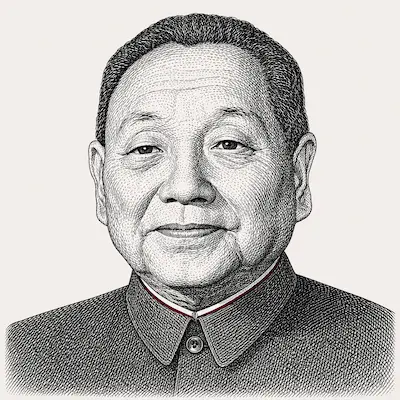
State-directed industrial capacity is the foundation of national independence.
When I launched China's reforms in 1978, we faced exactly this choice — remain dependent on Soviet industrial models or build our own capacity through selective opening. We chose to open our markets to foreign investment while maintaining state ownership of strategic industries. The Special Economic Zones were laboratories where we learned from foreign technology and management while keeping control of the commanding heights. By the Southern Tour of 1992, our manufacturing base had grown strong enough that foreign investors needed us more than we needed them.
The European Union's dependency on Chinese manufacturing did not happen overnight — it resulted from European companies choosing short-term cost advantages over long-term strategic autonomy. Now Europe faces what we faced in 1978: accept permanent dependency or pay the short-term costs of building independent capacity. Subsidies are not market distortions when they serve strategic purposes. China's state-directed industrialisation proved that patient capital and protective policies can build global competitive advantage within two decades.

Energy dependence taught us that economic efficiency without strategic autonomy is a dangerous illusion.
Deng understood this lesson from weakness — China had no choice but to build from scratch. Europe learned it differently. During the 1973 oil embargo, I told the Bundestag that "energy dependence is not an energy question — it is a question of sovereignty." We had optimised for efficiency, outsourcing our energy security to unstable regions. The lesson applies perfectly to manufacturing dependency on China. When supply chains become weapons, efficiency becomes vulnerability.
The European response to Chinese manufacturing dominance requires the same systematic approach we took to energy diversification. Not autarky — that would be economically ruinous — but building exit options from dangerous dependencies. Strategic subsidies for semiconductor fabrication, battery production, and critical materials processing are not protectionism but sovereignty insurance. The cost of maintaining industrial capacity is visible every day. The cost of losing it becomes visible only when you need it and cannot recreate it.
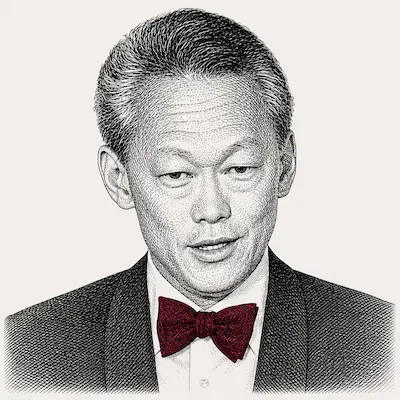
Schmidt misreads the strategic situation — deeper interdependence managed skilfully is stronger than attempted autarky.
Schmidt's energy analogy fails because energy and manufacturing operate under different strategic logics. Germany's energy suppliers were unstable regimes with few alternatives. China is not Saudi Arabia — it is a manufacturing superpower with enormous domestic markets and sophisticated supply chains built over three decades. Chinese dependency on European technology imports and market access creates mutual vulnerability, not one-sided European weakness.
Singapore's Economic Development Board strategy offers the superior model: make yourself indispensable through high-value specialisation while diversifying partnerships. Europe should deepen engagement with Chinese manufacturing while building parallel relationships with India, Vietnam, and Mexico. The goal is not to escape Chinese supply chains but to ensure China cannot weaponise them. Industrial subsidies that create protected, inefficient European manufacturers will fail against Chinese competitors who achieved global scale through genuine productivity gains.
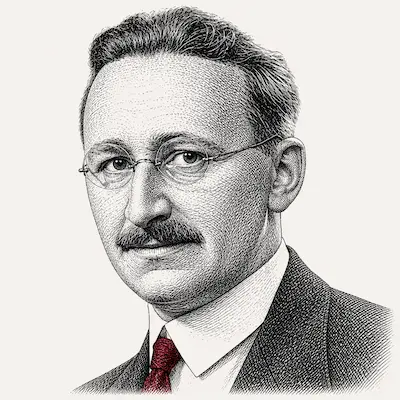
The market mechanism that created this dependency also provides the solution — if governments allow it to function.
Lee Kuan Yew makes my point precisely: European companies concentrated production in China because Chinese manufacturing offered genuine cost advantages through specialisation and scale. This represents the market's knowledge-aggregating function working correctly — millions of individual decisions about cost, quality, and efficiency produced an optimal allocation of productive resources. The "systemic risk" Schmidt and Deng identify is largely an ex-post rationalisation by governments seeking to justify industrial intervention.
The dependency concern contains a logical contradiction: if Chinese manufacturing capacity threatens European security, why would subsidising less efficient European manufacturers improve the situation? Subsidies destroy the price system's information function — European policymakers cannot know which industries truly merit protection versus which merely lobby effectively. The spontaneous order of global supply chains reflects real comparative advantages that government planning cannot improve upon. If geopolitical tensions genuinely alter the cost-benefit calculation, market participants will adjust without state direction — as they already are in semiconductors and critical materials.
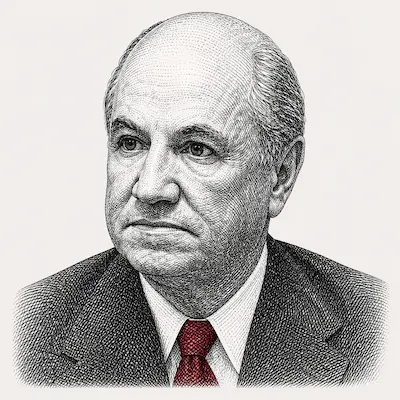
Europe now faces peripheralisation by Chinese manufacturing dominance — the same structural dependency I documented in Latin America seventy years ago.
Hayek's framework assumes trade between equals, but Europe-China manufacturing trade exhibits the same structural asymmetries I documented between Latin America and industrial powers in 1950. Chinese state-directed industrialisation created manufacturing capacity that European market mechanisms cannot match — not because Chinese productivity is superior but because Chinese firms operate under different rules. State subsidies, technology transfer requirements, and protected domestic markets built Chinese competitive advantage artificially.
My deteriorating terms of trade analysis applies directly: European high-tech exports to China face increasing Chinese substitution while European imports of Chinese manufactures grow. Europe risks becoming a commodity exporter — raw materials and agricultural products — to a Chinese manufacturing center, exactly the peripheral role Latin America played to European powers. The empirical pattern is identical: the center captures productivity gains while the periphery transfers real income through trade structure itself. Strategic subsidies for European manufacturing are not protectionism but the necessary corrective for asymmetric competition with a state-capitalist system that never operated under pure market rules.
The convergence note
Where the council converges All members accept that pure market dependency creates vulnerability when trade relationships become geopolitical instruments, and that some form of strategic industrial capacity is necessary for political independence.
Where it divides The fundamental disagreement is whether government intervention can improve on market outcomes: Hayek argues subsidies destroy essential price information, while Deng, Schmidt, and Prebisch contend that state direction can build strategic capabilities markets alone will not provide. Lee Kuan Yew occupies the middle ground, supporting selective intervention within market frameworks.
For a policymaker to decide on Whether the twenty-year costs of building European industrial capacity through subsidies justify the long-term security benefits — a judgment about the probability of supply chain weaponization that requires political assessment of Chinese intentions and capabilities beyond economic analysis.