Should European countries develop independent defence capabilities as a backup to US security guarantees?
Built from documented writings, speeches, decisions and historical records. Council members argue from documented positions, applied to today's question.
Europe must build independent defence capabilities while strengthening, not replacing, NATO structures.
Schmidt and Adenauer see capabilities as alliance insurance against American political shifts. De Gaulle demands sovereignty through autonomous defence capacity regardless of alliance costs. Thatcher warns that European divisions make pure autonomy impossible. Sun Tzu notes that dependence on any single protector creates vulnerability.
The council agrees Europe needs enhanced capabilities but splits on institutional design.
- 1Build European defence capabilities through NATO structures rather than parallel institutions that fragment Western security architecture.
- 2Strengthen burden-sharing arrangements that demonstrate European commitment while maintaining American engagement in continental security.
- 3Develop autonomous capacity quietly without forcing dramatic declarations that could weaken existing alliance relationships.

European defence capabilities are an insurance policy, not a declaration of independence.
In November 1973 I told the Bundestag that energy dependence was a sovereignty question, not an energy question. The same logic applies to defence. A Europe that cannot defend itself is not sovereign — it is a protectorate. But insurance is not the same as independence. The goal is not to replace American security guarantees but to ensure they remain credible by sharing the burden and demonstrating European commitment.
The dual-track decision taught me that alliance credibility requires European capability. When we deployed Pershing missiles, we needed American technology but European political will. Today's challenge is similar: maintain transatlantic bonds while building European capacity. The alternative — permanent dependence on American domestic politics — is strategically unacceptable for a continent of 450 million people.

No nation can permanently delegate its survival to another, regardless of alliance commitments.
Schmidt's insurance metaphor misses the essential point. Insurance implies that someone else bears the ultimate risk. In matters of national survival, there is no insurance — only the capacity to defend yourself or the certainty of subordination. France's withdrawal from NATO's integrated command in 1966 was not anti-American hostility but a recognition that sovereignty and dependence are incompatible.
The force de frappe was built precisely because American nuclear guarantees, however sincere, cannot substitute for French nuclear sovereignty. Would America sacrifice New York for Paris? The question answers itself. European strategic autonomy is not an option to be considered — it is a necessity that has been delayed too long. Alliance yes, dependence never.
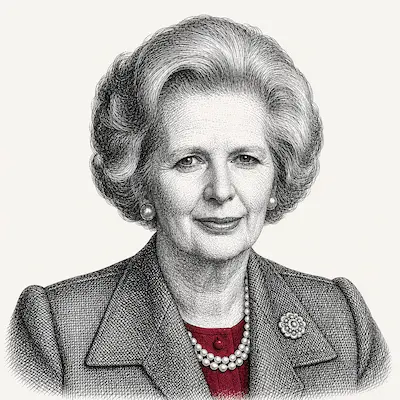
Independent capabilities must complement, not compete with, the Atlantic alliance that guarantees European security.
De Gaulle's sovereignty argument leads to strategic isolation. The Falklands taught me that independent capability matters — we fought alone because we had to. But that capability existed within, not outside, the Atlantic framework. American intelligence, logistics, and diplomatic support were decisive. Pure autonomy is a luxury small powers cannot afford.
European defence capabilities should strengthen NATO, not fragment it. The danger is not American unreliability but European divisions. A Europe that cannot agree on fiscal policy will not agree on defence policy. Build capabilities, yes — but within alliance structures that have kept the peace for seventy years. The alternative is not sovereignty but irrelevance.

European defence capabilities must be built through institutional integration that strengthens rather than weakens transatlantic ties.
Thatcher defends the alliance but misses the institutional dimension. The European Defence Community failed in 1954 because it was premature, not because it was wrong. Today's challenge is to build European defence capacity through institutions that bind us together rather than separate us from America. The Franco-German brigade points the way — common capabilities, common command, common purpose.
Westintegration succeeded because it made German strength European strength. The same logic applies today: make European strength Atlantic strength. Build European defence capabilities through NATO structures, not parallel to them. This requires institutional creativity, not institutional competition. America will welcome burden-sharing that strengthens the alliance, not European autonomy that weakens it.
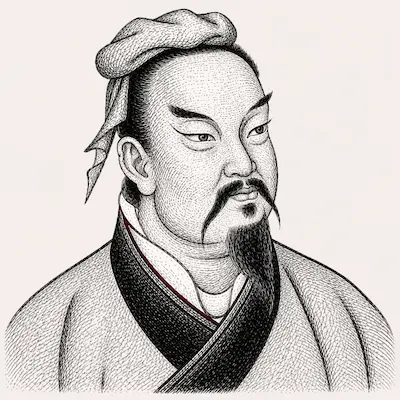
Dependence on any single protector creates strategic vulnerability; wise states maintain multiple options while avoiding provocative signals.
Adenauer's institutional approach assumes benevolent hegemons and permanent alliances. Neither assumption is reliable. The superior strategy is to build independent capability while maintaining alliance relationships — not to choose between them. A Europe that can defend itself strengthens its alliance position; a Europe that cannot defend itself has no position to strengthen.
The Americans face their own strategic pressures — China's rise, domestic constraints, competing priorities. A wise ally prepares for the possibility that those pressures will shift American attention elsewhere. This is not disloyalty but prudence. Build quietly, signal carefully, avoid forcing the hegemon to choose between alliance and empire. European defence capabilities should emerge as natural evolution, not dramatic declaration.
The convergence note
Where the council converges: Europe needs enhanced defence capabilities. American commitment cannot be taken for granted indefinitely.
Where it divides: Schmidt and Adenauer see capabilities as alliance insurance. De Gaulle sees them as sovereignty requirements. Thatcher prioritises alliance cohesion. Sun Tzu emphasises strategic flexibility.
For a policymaker to decide on: Whether to build European capabilities within NATO structures or as autonomous capacity. The institutional framework determines whether enhanced capabilities strengthen or fragment Western security architecture.