Built from documented writings, speeches, decisions and historical records. Council members argue from those positions, applied to today's question.
Europe can significantly reduce dependency on the US by systematically building autonomous capabilities in finance, technology, and energy while exploiting its position between competing superpowers. The path requires European integration at unprecedented scale — pooling sovereignty among Europeans to achieve the critical mass that no individual European state can reach alone.
Schmidt's energy crisis experience and Lee Kuan Yew's small-state strategy converge on making Europe indispensable to multiple powers while reducing critical vulnerabilities. Adenauer's integration method provides the institutional framework for building European financial infrastructure and technology platforms at competitive scale. Sun Tzu's strategic positioning suggests Europe should develop these capabilities quietly while maintaining public partnerships with both America and China.
The fundamental split concerns whether European autonomy can coexist with Atlantic alliance or requires accepting a break with American-led order — a judgment that depends on unknowable future intentions of competing superpowers.
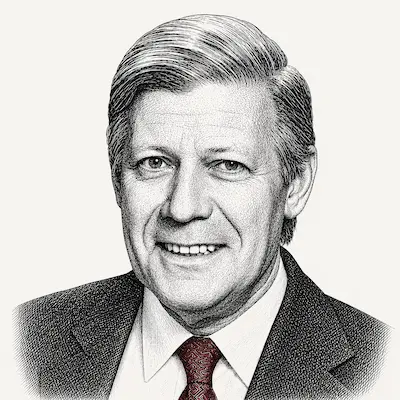
Energy dependency is sovereignty dependency — Europe must diversify from American financial and Chinese digital dominance.
My experience managing the 1973 oil embargo taught me that dependency is vulnerability, and vulnerability becomes crisis when your supplier has interests that diverge from yours. Today, Europe faces a more complex but structurally identical challenge. We depend on American financial infrastructure — SWIFT, dollar clearing, Fed liquidity — for basic economic function. We depend on Chinese manufacturing and American technology for digital infrastructure. Both dependencies create the same strategic exposure I documented during the energy crises.
The European Monetary System I created with Giscard was our answer to dollar volatility in the 1970s. Today's challenge requires the same logic at larger scale: European financial infrastructure, European technology standards, European energy networks. Not to oppose America or China, but to preserve our capacity for independent decision-making when their interests and ours diverge — as they inevitably will.

True sovereignty requires the capacity to say no to your most powerful ally.
Schmidt understands correctly that dependency breeds crisis, but he underestimates what genuine independence requires. I withdrew France from NATO's integrated command structure precisely because alliance membership without the right of refusal is not alliance — it is subordination. Europe today suffers from the same illusion that troubled French policy before 1958: that alignment with the dominant power is the same as having an independent policy.
The nuclear force we built was expensive and strategically modest compared to Soviet or American arsenals. But it served its essential purpose: no adversary could attack France without calculating that we possessed the autonomous capacity to make that attack unbearably costly. Europe needs equivalent instruments in the economic and technological domains — not to match American or Chinese scale, but to ensure that no external power can coerce European decisions through the threatened withdrawal of essential services.
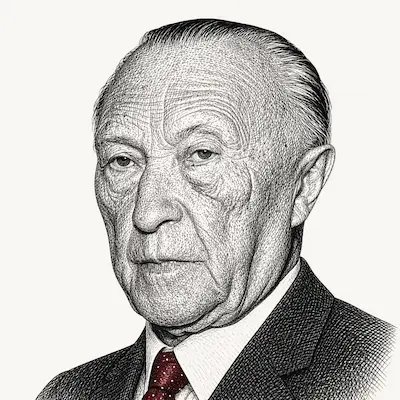
European integration must deepen before it widens — and sovereignty pooled among Europeans is sovereignty strengthened, not surrendered.
De Gaulle frames this correctly as a sovereignty question, but his national independence approach cannot solve a structural problem. No individual European state — not France, not Germany, not Britain — possesses the scale to achieve genuine strategic autonomy in competition with continental powers. The choice is not between dependence and independence; it is between dependence on external powers and interdependence among Europeans.
My method with the Coal and Steel Community, then the Treaty of Rome, was to pool sovereignty in specific domains where European states were too small to be effective individually. The same logic applies now at larger scale. European financial infrastructure, European technology platforms, European defense capabilities — these require the institutional capacity that only integrated European action can provide. The alternative is not national sovereignty but permanent subordination to powers whose interests we cannot influence.
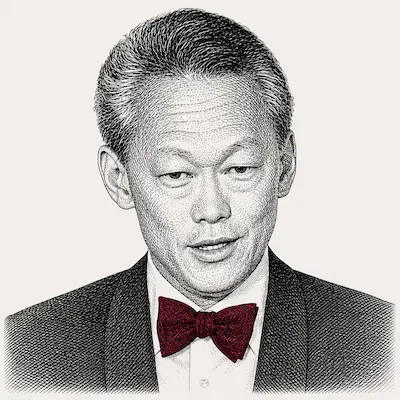
Europe must make itself indispensable to both superpowers while building independent capability — play the middle game, not the alliance game.
Adenauer's integration logic is correct for building capability, but Europe's fundamental strategic error is thinking it must choose between America and China. Singapore survived and prospered by refusing that choice — we made ourselves valuable to both superpowers simultaneously and irreplaceable to neither. Europe has far greater resources to play this strategy if it abandons the alliance mentality that constrains its options.
The key is asymmetric indispensability: be essential to both powers in domains where they cannot easily replace you, while building independent capacity in domains where they could coerce you. Europe's financial sector, its technological standards, its consumer market — these are assets that both America and China need. But Europe's energy dependence, its reliance on American payment systems, its technological dependence — these are vulnerabilities that must be systematically reduced.
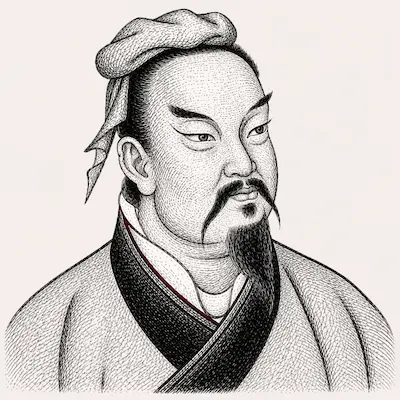
Superior strategy defeats the adversary's plan before the armies meet — Europe must position itself where neither superpower can afford to exclude it.
Lee Kuan Yew's strategic positioning is sound, but he understates the temporal dimension. When two great powers enter prolonged competition, they will eventually demand that intermediate powers choose sides — neutrality becomes impossible to maintain. Europe's advantage lies not in permanent neutrality but in making itself so valuable to both sides that the demand to choose comes as late as possible, under the most favorable conditions.
This requires what I call strategic deception — appearing weaker than you are to avoid triggering premature confrontation, while quietly building the capabilities that will determine your position when choice becomes unavoidable. Europe should develop independent financial, technological, and military capabilities while maintaining public commitment to partnership with both America and China. When the moment of choice arrives — and it will — Europe will choose from strength, not desperation.
The highest strategy is to shape the conditions under which your adversaries compete, not merely to survive their competition.
The convergence note
Where the council converges All members agree that Europe's current dependencies — financial, technological, and energetic — constitute strategic vulnerabilities that must be systematically reduced through the development of autonomous European capabilities.
Where it divides Schmidt and Adenauer prioritize maintaining the Atlantic alliance while building European autonomy; de Gaulle demands genuine independence even at the cost of alliance relationships; Lee Kuan Yew advocates strategic neutrality between competing powers; Sun Tzu suggests that neutrality is temporary and Europe should prepare for eventual alignment while maximizing its independent capabilities.
For a policymaker to decide on Whether European strategic autonomy can be achieved within the framework of Atlantic partnership, or whether genuine independence requires accepting a fundamental break with the American-led order — a calculation that depends on assessments of American and Chinese intentions that cannot be known with certainty.