Should the EU assist Trump's military to free the Strait of Hormuz?
Built from documented writings, speeches, decisions and historical records. Council members argue from documented positions, applied to today's question.
The EU should pursue energy security through diplomatic engagement rather than military support for American operations in the Strait of Hormuz.
Thatcher establishes that freedom of navigation serves European economic interests directly, making this a European security question rather than merely an American one. Schmidt warns that military intervention would guarantee the supply disruption it seeks to prevent, while de Gaulle argues for European solutions to European problems rather than junior partnership in American strategy. Sun Tzu demonstrates that Iran's isolation drives its brinkmanship, making economic integration more effective than military threats.
The council divides on whether alliance solidarity or strategic autonomy better serves European interests when military action risks the very energy flows Europe seeks to protect.
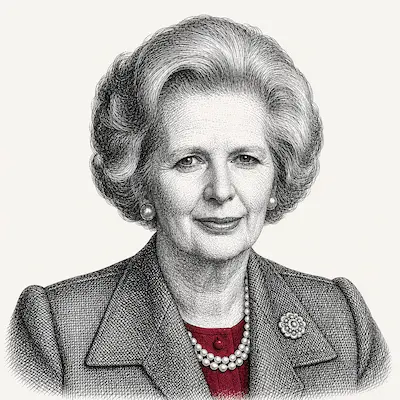
Freedom of navigation is the foundation of free trade and international order.
The Strait of Hormuz carries one-third of global oil traffic and twenty percent of all petroleum liquids. When a state threatens to close international waterways, it threatens the economic foundation of every trading nation. Iran's documented threats to mine or blockade the Strait represent exactly the kind of challenge that international law exists to prevent — and that military force exists to deter. I authorised the task force to the Falklands not because those islands were economically vital, but because the principle of sovereignty cannot be surrendered to aggression without inviting further aggression everywhere. The same logic applies here: if Iran can close the Strait with impunity, every chokepoint in global commerce becomes vulnerable to blackmail.
European energy dependence makes this a European security question, not merely an American one. The European Union benefits from freedom of navigation when global energy markets function; it suffers when they are disrupted by hostile state action. Military support for keeping the Strait open serves European economic interests directly. The alternative — accepting that authoritarian regimes can veto the movement of goods through international waters — would be the end of the rules-based trading system that has underwritten European prosperity since 1945.
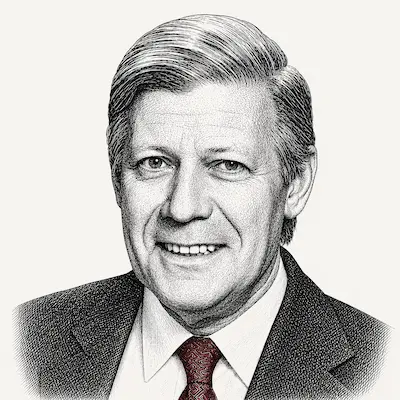
Energy dependence is not an energy question — it is a question of sovereignty.
Thatcher is right that energy security is a sovereignty question. But sovereignty requires choosing your dependencies, not eliminating them. In 1973, I learned that energy interruption can destroy a government faster than any external military threat. The lesson was not that we needed military control over every energy chokepoint — it was that we needed diversified supply sources and strategic reserves that would allow us to withstand temporary interruptions without economic panic or political collapse.
Military intervention in the Strait of Hormuz would achieve the opposite of energy security. It would guarantee Iranian retaliation — against shipping, against Gulf installations, against European interests throughout the region. The result would be exactly the supply disruption we seek to prevent, but now sustained and expanded rather than temporary and limited. I maintained energy relationships with the Soviet Union throughout the Cold War because economic interdependence, properly managed, creates stability through mutual vulnerability. Iran supplies energy to Europe and Asia; Europe and Asia supply technology and markets to Iran. This is not dependence — it is managed interdependence, which is more durable than military guarantees.

European independence requires European solutions to European problems.
Schmidt's logic is sound, but his conclusion is incomplete. Energy interdependence with Iran is indeed preferable to military intervention — but only if Europe negotiates that interdependence as Europe, not as a junior partner in American strategic planning. The United States frames this question as freedom of navigation because American naval power is the instrument; Europe should frame it as energy partnership because European technology, investment, and markets are our instruments. These are different strategies serving different interests.
The fundamental error is accepting that this is an American operation requiring European assistance. Iran's relationship with Europe is not identical to Iran's relationship with America — we have different histories, different interests, different leverage. A European initiative — offering Iran technological cooperation, investment frameworks, and long-term energy partnerships in exchange for guaranteed Strait access — would be more likely to succeed than American military pressure backed by European forces. The Iranians know they cannot fight the American Navy and win; they also know they can make American military intervention so costly that American domestic opinion will not sustain it.
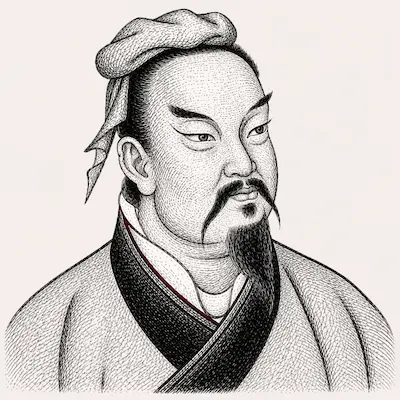
The supreme strategy is to break the adversary's resolve without direct confrontation.
De Gaulle identifies the correct approach but misses the deeper principle. This crisis exists because all parties are positioning for a confrontation no one can win. Iran cannot close the Strait indefinitely without destroying its own economy — forty percent of its government revenue comes from oil exports that must pass through the same waters. America cannot occupy the Strait without the continuous deployment of naval forces it cannot sustain. Europe cannot achieve energy security through any military instrument — energy security comes from having alternatives when any single supply line fails.
The strategic error is treating symptoms as causes. Iran's Strait threats are not the cause of instability but the consequence of Iran's isolation from the global economy that Europe and America created. An isolated adversary has nothing to lose from escalation; an integrated adversary has everything to lose. The superior strategy is to offer Iran what it values most — economic integration and technological cooperation — in exchange for what you require most: guaranteed energy flows and regional stability. This requires no military deployment and no sovereignty surrender.
Military threats generate the very behavior they seek to prevent. Threaten Iran's Strait access and Iran will develop asymmetric capabilities to threaten everyone else's. Offer Iran profitable alternatives to brinkmanship and the Strait becomes an economic asset Iran will protect rather than a strategic weapon Iran will deploy. The wise general creates conditions where the adversary's interests align with his own.
The convergence note
Where the council converges Energy security through the Strait of Hormuz affects European interests directly, not merely American ones, and maintaining commercial freedom of navigation serves European economic interests.
Where it divides Whether military support for US operations serves those interests or undermines them through escalation, and whether European energy security is better protected through alliance solidarity or independent diplomatic engagement with Iran.
For a policymaker to decide on The risk tolerance calculation: whether potential Iranian retaliation against European interests is more acceptable than continued vulnerability to Iranian threats, and whether European influence is enhanced or diminished by military participation in an American-led operation.