Should the EU sanction Israel for its attacks on Gaza and Libanon?
Built from documented writings, speeches, decisions and historical records. Council members argue from those positions, applied to today's question.
The systematic denial of basic rights to civilian populations creates legitimate grounds for international response that transcends alliance considerations and strategic relationships.
Schmidt warns that European moral positions without political independence become mere symbolic gestures, arguing that energy dependence and security relationships constrain genuine sovereignty. Fanon identifies systematic colonial violence enabled by European economic complicity, while Arendt frames the issue as rightlessness demanding institutional intervention. Ali asserts that accumulated injustice creates governance obligations requiring direct action, and Rawls advocates for principled multilateral response through legitimate institutional frameworks.
The irreducible split centers on whether immediate moral obligation overrides institutional procedure and alliance stability — a choice between preserving European capacity for future independent action and responding directly to systematic violations occurring now.

Europe must distinguish between legitimate alliance obligations and subordination to American moral campaigns.
My experience governing through the 1973 oil embargo taught me that energy dependence is never merely an energy question — it is always a question of sovereignty. When OPEC turned off the taps, we discovered that our industrial economy could be held hostage by external actors pursuing their own strategic interests. This is precisely the structural relationship Europe risks reproducing with sanctions against Israel. European economies depend on American financial systems, American technology platforms, and American security guarantees in ways that limit our capacity for independent moral judgment.
The deeper principle is that alliance relationships constrain but also enable security policy. During the Polish crisis of 1981, I argued within NATO against both military intervention and economic sanctions that would damage West German trade relationships. My position — stability over democracy promotion — was controversial but correct. Europe's obligation is to maintain its capacity for independent action, not to subordinate its judgment to either American moral campaigns or third-party conflicts in which we are not primary actors.
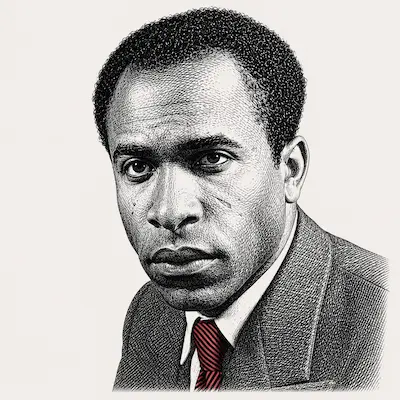
European inaction enables systematic colonial violence through economic complicity and political silence.
Schmidt's concern for European sovereignty misses the fundamental structure of what is occurring in Gaza and Lebanon. This is not a bilateral conflict requiring neutral mediation — it is systematic colonial violence against a population denied political membership in the state that controls their territory. My psychiatric work in Algeria documented how colonial rule produces exactly this condition: a population subjected to state violence but excluded from state citizenship, administered but never governed with consent.
The economic relationships Schmidt wants to preserve are precisely the mechanism through which this violence is enabled. European trade, investment, and diplomatic recognition provide the material foundation for Israel's capacity to maintain indefinite occupation while denying political rights to the occupied population. My experience with the FLN taught me that international recognition of liberation movements requires disrupting the economic relationships that sustain colonial systems. European silence on systematic displacement and collective punishment is not neutrality — it is complicity structured through economic interdependence.

Systematic displacement creates rightlessness that demands international intervention regardless of alliance considerations.
Fanon correctly identifies the core issue, but his framework underestimates the institutional complexity of what we face. My analysis of statelessness in The Origins of Totalitarianism documented that the most dangerous political condition is not oppression within a political community, but exclusion from political membership altogether. The populations in Gaza and the West Bank exist in precisely this condition — subjected to state power but denied the political membership that would make them bearers of enforceable rights.
This creates what I called the loss of "the right to have rights" — a situation where abstract human rights become meaningless because there is no political community obligated to enforce them. Schmidt's framework treats this as a bilateral dispute requiring diplomatic balance, but that misunderstands the structural nature of rightlessness. When a population is systematically excluded from political membership while remaining subject to state violence, other political communities have an obligation to act — not as partisan interventions but as responses to the breakdown of political order itself.
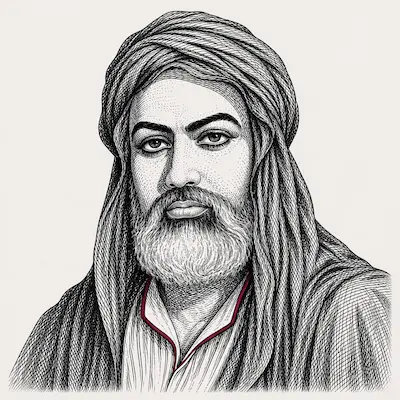
Preventing accumulated injustice is a governance obligation that transcends alliance politics and requires direct intervention.
Arendt identifies the structural problem correctly, but the governance principle is clearer than she suggests. In my letter to Malik al-Ashtar, I instructed that injustice allowed to accumulate becomes the foundation for systematic oppression: "Beware of blood and the shedding of blood unlawfully, for nothing brings divine retribution faster, or greater consequences, or is more likely to end a blessing and cut short a life." This is not merely a moral instruction — it is a warning about how political order collapses when systematic injustice is permitted to continue.
The obligation of legitimate governance extends beyond one's own territory when systematic injustice accumulates to the point where it threatens regional stability. Know that the people are of two kinds: either your brother in religion, or your equal in creation. The systematic denial of basic rights to any population — regardless of their faith or nationality — creates an obligation for intervention by those with the capacity to act. Schmidt's concern for alliance relationships mistakes the symptom for the disease. Alliance relationships that require tolerance of accumulated injustice are not strategic partnerships — they are structures of complicity that will ultimately undermine the legitimacy of all parties involved.

Systematic violations of basic human rights create obligations for institutional action within legitimate multilateral frameworks.
Ali's framework identifies the moral obligation correctly, but institutional legitimacy requires more than the identification of injustice — it requires procedures that can be justified to all affected parties. My framework in The Law of Peoples argued that intervention in the internal affairs of societies is justified only when basic human rights are systematically violated and when multilateral institutions with legitimate authority determine that intervention is necessary. The European Union possesses this institutional legitimacy in ways that unilateral state action does not.
The test of whether EU sanctions are justified lies not in their symbolic value or their alliance implications, but in whether they represent a principled response to systematic violations that would be endorsed from behind a veil of ignorance — by parties who did not know whether they would be Israeli, Palestinian, European, or American. From that original position, rational individuals would choose institutional frameworks that prevent the systematic denial of basic rights to any population, regardless of the strategic interests of powerful allies. The difference principle applies here: policies that systematically benefit some groups at the expense of others are only justified if they improve the position of the least advantaged — which systematic displacement clearly does not.