Built from documented writings, speeches, decisions and historical records. Council members argue from documented positions, applied to today's question.
Build European military capability within NATO structures, not as replacement.
Schmidt anchors in 1973: energy dependence became sovereignty dependence within months. Poland's 4% spending proves Europe can fund serious defense when threatened. De Gaulle withdrew from NATO command in 1966 while keeping alliance membership, showing independence and partnership can coexist. The €12 billion Peace Facility demonstrates European capacity for joint action within Atlantic structures.
Ben-Gurion warns against command fragmentation: budget coordination cannot substitute for unified political authority under pressure.
- 1Anchor European military development within NATO structures while building autonomous capability for regional crises where US interests diverge.
- 2Establish unified European command authority with power to integrate Polish forces, German logistics, and French intelligence under pressure.
- 3Increase defense spending to match Poland's 4% commitment across member states to eliminate the capability gaps Schmidt identified.
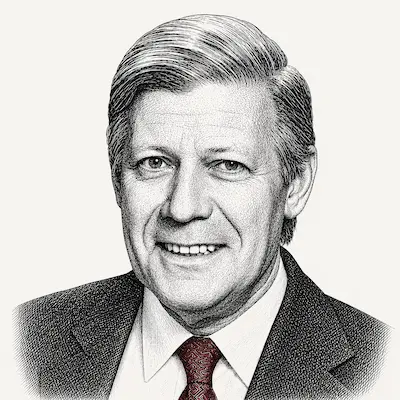
European military integration can complement NATO, but Europe needs autonomous capability to manage regional crises where US interests diverge from European ones.
In November 1973 I told the Bundestag that energy dependence is not an energy question but a sovereignty question. The same logic applies to military capability. France spends 2.0% while Germany spends 1.5%, these gaps make unified command impossible without first building unified capacity. Poland's 4% commitment shows what serious defence requires. Europe cannot remain strategically dependent on Washington for every regional crisis while expecting to be consulted as an equal partner.

European sovereignty requires independent military capability, dependence on US protection is incompatible with European dignity and strategic flexibility.
Schmidt understands the sovereignty dimension correctly. In 1960 I launched the force de frappe precisely because a great nation cannot place its survival in foreign hands. In 1966 I withdrew France from NATO's integrated command while remaining in the alliance, proving that European independence and Atlantic partnership are not contradictory but complementary. The current spending disparities Schmidt identifies are symptoms of a deeper problem: Europe has not yet decided whether it wants to be a strategic actor or remain an American protectorate.
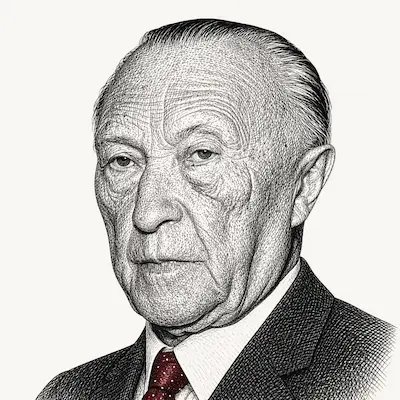
European security depends fundamentally on US commitment, divided European military capabilities would weaken rather than strengthen collective defence.
De Gaulle's force de frappe was strategically irrelevant against the Soviet threat and politically divisive within the alliance. I anchored West Germany to NATO because European security requires American nuclear guarantee, not European nuclear pretensions. The €12 billion European Peace Facility since 2022 demonstrates Europe's capacity for common action within the Atlantic framework. A separate European military force would duplicate NATO structures, waste resources, and signal to Moscow that the alliance is fracturing.
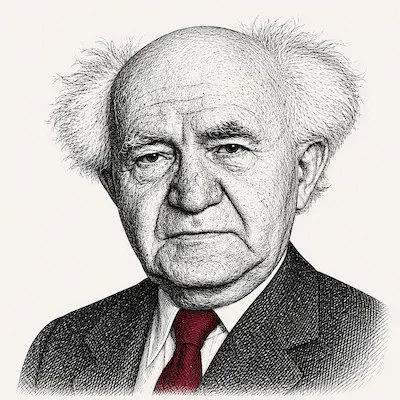
Military capability requires unified command and clear strategic doctrine, European military integration without genuine political integration would produce expensive ineffectiveness.
Adenauer defends an American guarantee that may not be permanent. In 1956 I coordinated with Britain and France at Sèvres, but when Eisenhower opposed us we had to withdraw. Great powers act in their own interest, not their allies'. Europe's problem is not spending gaps but command fragmentation. Poland's 4% commitment means nothing if Polish forces cannot integrate with German logistics and French intelligence. You cannot build military capability through budget targets and procurement coordination, you need unified political authority to make strategic decisions under pressure.
The convergence note
Where the council converges: Europe needs greater strategic autonomy and cannot remain indefinitely dependent on US protection for regional security.
Where it divides: Schmidt and de Gaulle see European military integration as compatible with NATO; Adenauer sees it as potentially destabilising to the proven Atlantic framework.
For a policymaker to decide on: Whether to build European military capability within NATO structures or as an alternative to them.