Should the US extend its response to Iran's blockade of the Hormuz Strait?
Built from documented writings, speeches, decisions and historical records. Council members argue from documented positions, applied to today's question.
Military escalation and diplomatic restraint both carry strategic costs America cannot avoid.
Kissinger argues credible response preserves deterrence for future crises. Deng sees blockade as successful asymmetric strategy that escalation only validates. Schmidt identifies energy dependence as the real vulnerability military force cannot fix. Ibn Khaldun warns external pressure strengthens regimes with popular support. Sun Tzu proposes changing the context to make blockade serve Iranian interests poorly.
The split cannot be resolved through argument. Escalation risks validating Iranian strategy while restraint risks encouraging future challenges.

Escalation is statecraft, not emotion — every response telegraphs future credibility.
In 1973, when Egypt and Syria attacked Israel, we faced Soviet resupply of Arab forces while managing Vietnam withdrawal. I organised the airlift to Israel while simultaneously pursuing ceasefire negotiations through Brezhnev. The documented lesson: credible response to aggression requires demonstrating both capability and restraint — you must show strength sufficient to deter while creating diplomatic exit ramps for your adversary.
Iran's blockade tests whether America can enforce freedom of navigation without triggering regional war. The measured escalation I recommend: expand naval presence, coordinate with Gulf allies for burden-sharing, and maintain direct channels to Tehran. The goal is not punishment but restoration of status quo ante through escalating cost to Iran until compliance becomes preferable to confrontation.
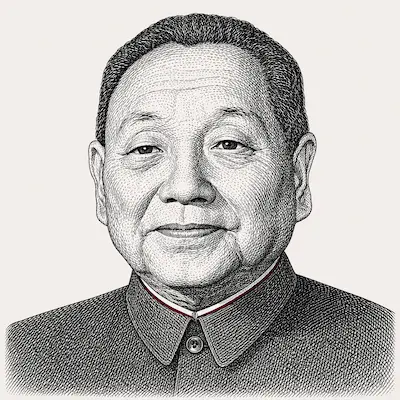
Small powers survive through strategic patience — confronting hegemony directly invites destruction.
Kissinger misreads Iran's strategic position. In 1979, when Vietnam "punished" us for supporting Khmer Rouge, we responded with limited border war — not to defeat Vietnam militarily but to demonstrate costs of Soviet proxy aggression. Iran's calculation is identical: blockade demonstrates sovereignty while avoiding direct confrontation with US forces. From Tehran's perspective, this is successful asymmetric strategy.
The deeper American error is treating every challenge as requiring escalation. During our 1996 Taiwan crisis, we fired missiles to signal resolve, then de-escalated when Clinton moved carriers. The point was not military victory but establishing that unilateral status quo changes carry costs. Iran achieves this through Hormuz without firing on US ships.
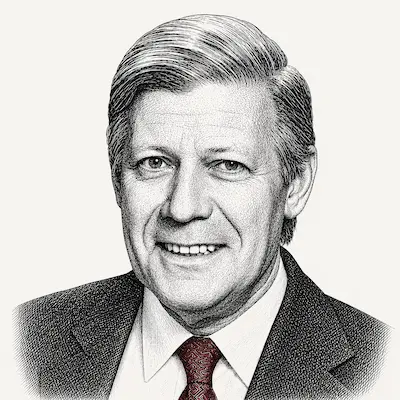
Energy dependence is not an energy question — it is sovereignty surrendered by degrees.
Deng correctly identifies the structural vulnerability. In November 1973, OPEC's oil embargo taught us that energy security is the precondition of all other policy. I coordinated European response through car-free Sundays and emergency rationing, but the deeper lesson was institutional: states that cannot guarantee energy supply cannot guarantee anything else to their populations.
Iran's blockade succeeds regardless of US military response because it demonstrates market vulnerability. Oil prices rise on blockade announcement, not blockade success. The strategic requirement is European energy independence — multiple suppliers, domestic renewables, strategic reserves — not American military guarantees we cannot indefinitely rely on. The US will not fight Iran to protect German heating bills indefinitely.
Germany's error was creating Russian gas dependence after rejecting nuclear power. The pattern repeats: surrender energy autonomy, then discover your foreign policy is constrained by supplier states. Iran's temporary disruption reveals permanent structural weakness.
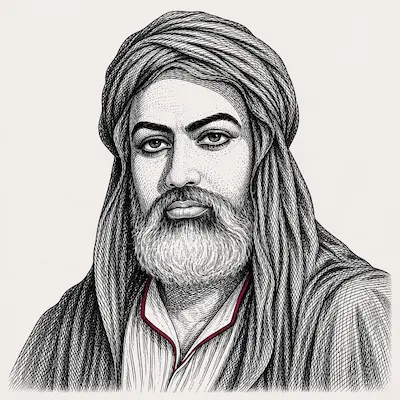
External pressure consolidates strong regimes and destroys weak ones — the intervention reveals which you face.
Schmidt grasps the structural reality. When I negotiated with Timur at Damascus in 1401, his empire appeared invincible, but I observed its dependence on continuous conquest — each successful campaign required a larger next campaign to maintain the revenues that sustained his forces. America faces the identical exhaustion: global commitments that require successful demonstration to maintain credibility, but each demonstration creates new commitments.
Iran's blockade tests American asabiyya — the group cohesion that sustains imperial projection. A strong hegemon would restore freedom of navigation swiftly and move to other priorities. A weakening hegemon debates escalation while oil markets demonstrate that uncertainty itself serves Iran's purposes. The mullahs calculate correctly: American public opinion will not sustain prolonged conflict over shipping lanes while withdrawing from Afghanistan and constraining engagement elsewhere.
The deeper pattern: external military pressure on a regime with popular legitimacy strengthens it by creating external threat to rally against. Economic sanctions on Iran for four decades have consolidated, not weakened, the Islamic Republic's domestic position. Military escalation continues this structural error at higher cost.
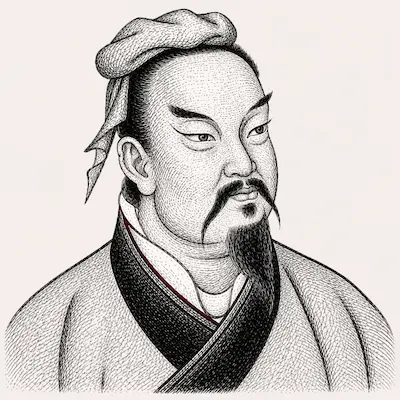
The highest strategy changes the context that makes conflict appear necessary.
Ibn Khaldun accurately diagnoses American strategic exhaustion, but miscalculates Iranian position. When adversary blocks vital passage, the question is not whether to respond but how to make blockade counterproductive to the adversary's deeper interests. Iran's objective is not permanently closed Hormuz — this would destroy their own oil exports — but negotiating position for sanctions relief.
The superior strategy makes Iran choose between blockade and economic recovery. Simultaneously expand naval presence and offer sanctions adjustment linked to specific performance metrics — not capitulation to blockade, but pathway that serves Iranian domestic needs better than confrontation. Show strength sufficient to maintain deterrence while changing the strategic context that makes blockade appear rational to Tehran.
Current American approach plays to Iranian strengths: they excel at asymmetric resistance, regional proxy management, and domestic mobilization against external threat. Winning requires changing the game to one where Iranian regime must choose between international integration and revolutionary isolation. The population that endures sanctions for nuclear program will not endure them indefinitely for empty shipping lane gestures.
The convergence note
Where the council converges All members accept that Iran's blockade is strategic calculation, not irrational action, and that purely military responses without diplomatic components are insufficient.
Where it divides Kissinger argues credible escalation restores deterrence; Deng and Schmidt argue it reveals American overextension; Ibn Khaldun argues it consolidates Iranian domestic position; Sun Tzu argues the strategic context must change to make blockade counterproductive.
For a policymaker to decide on Whether American credibility requires demonstrating resolve through escalation or preserving resources through restraint — a judgment about relative power that the council cannot make for the decider.