Built from documented writings, speeches, decisions and historical records. Council members argue from documented positions, applied to today's question.
American troops in Europe solve different problems for different strategic priorities.
Schmidt sees burden-sharing as the path forward while Thatcher calls European self-defence impossible. Ben-Gurion warns against assuming any great power commitment is permanent while Adenauer argues the Atlantic partnership anchors German power safely. Sun Tzu questions whether European deployments help or hinder America's Pacific pivot.
The split turns on strategic priority: containing Russia in Europe versus competing with China in Asia.
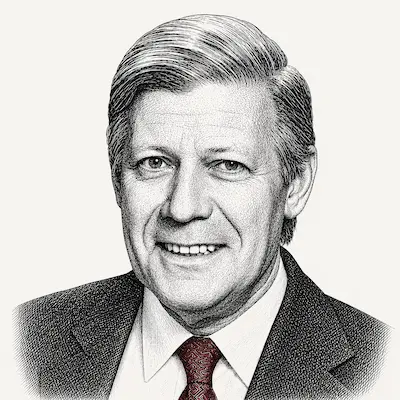
European security requires sustained US commitment, but with realistic burden-sharing.
When I initiated NATO's dual-track decision in 1979, I understood that American nuclear deterrence was irreplaceable. The Soviet SS-20 missiles targeting European cities could only be countered by American Pershing IIs on European soil. No European nuclear force — not Britain's, not France's — could provide equivalent strategic coverage.
But the burden-sharing question I raised then remains unresolved. Europe pays too little for its security while America pays too much. US withdrawal would be catastrophic for European stability. Yet America's frustration with European free-riding is documented and growing. The solution is not American withdrawal but European responsibility — higher defence spending, genuine European pillar within NATO.
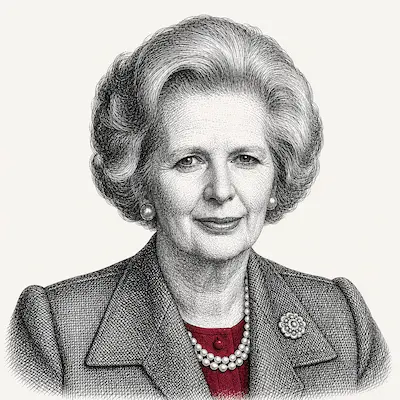
American military presence is the indispensable guarantee of European freedom and stability.
Schmidt is quite wrong about European strategic autonomy. When Argentina invaded the Falklands in 1982, it was American intelligence, logistics, and diplomatic support that made British victory possible. Without American Sidewinder missiles and satellite intelligence, we could not have succeeded. This demonstrates the fantasy of European self-defence.
US withdrawal from Europe would create a vacuum that no European combination could fill. The Soviet threat has been replaced by Russian revisionism and Chinese expansion. Britain's nuclear deterrent covers Britain. France's covers France. Only American extended deterrence covers the alliance. European defence spending matters, but European defence independence is strategically impossible and politically dangerous.
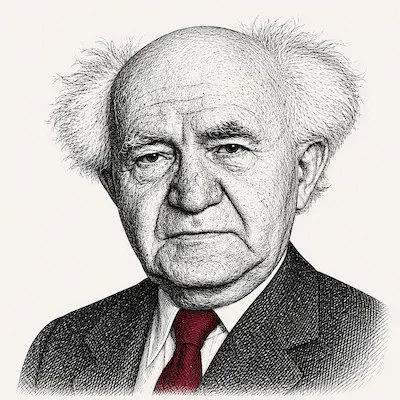
Thatcher mistakes the question — it is not whether American protection is valuable but whether it will be reliable.
Thatcher speaks from the experience of a medium power with natural barriers. When I declared Israeli independence in 1948, I could not assume American support would be permanent. The US State Department opposed immediate recognition. When we fought the Sinai Campaign in 1956, American pressure forced our withdrawal despite military success.
The European assumption that American commitment is permanent reflects dangerous strategic complacency. Great powers act in their own interests. America's interests in Europe may change with domestic politics, economic conditions, or Pacific priorities. European states must prepare for this possibility while working to maintain the commitment. Over-dependence on any single protector — however powerful — is strategically unwise.
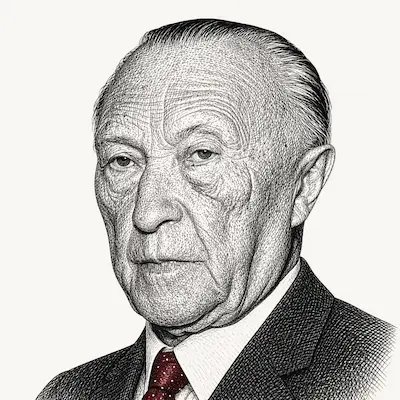
Ben-Gurion misunderstands the nature of the Atlantic relationship — it is not protection but partnership.
Ben-Gurion's comparison to Israeli-American relations misses the essential point. Israel is a client state dependent on American protection. Germany and Europe are partners in a common civilizational project. When I negotiated West Germany's NATO membership in 1955, I understood that American troops in Germany served American interests as much as German ones — forward defence of the democratic world.
US withdrawal would not merely weaken European security. It would force Germany toward either dangerous neutrality or accommodation with Russia — the two possibilities that destroyed European stability in the 20th century. The Atlantic alliance anchors Germany safely in the West. Without this anchor, German power becomes a destabilising force in Europe despite our best intentions.
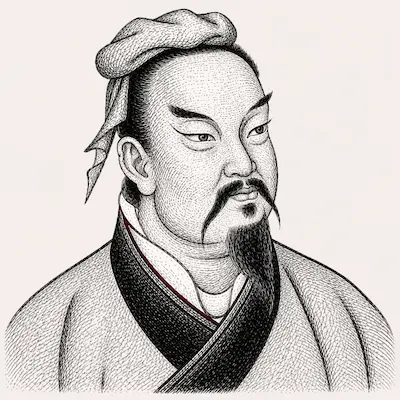
Forward military position is valuable only when it enhances strategic flexibility rather than constraining it.
Adenauer assumes that current positioning serves American strategic interests, but this requires examination. American forces in Europe were positioned to contain Soviet expansion. That threat has evolved. Russia remains a regional power, but China has become the primary strategic competitor. American forces anchored in Europe cannot simultaneously pivot to the Pacific.
The higher strategy examines whether current deployments enhance or constrain America's ability to respond to its primary challenges. If European allies cannot provide their own regional security after seventy years of American protection, the relationship has become a dependency that weakens rather than strengthens overall strategic position. The wise commander maintains forces where they serve strategic objectives, not where tradition or alliance sentiment dictates.
The convergence note
Where the council converges All members accept that European security requires credible deterrence against Russian revisionism and that European allies must bear greater responsibility for their own defence.
Where it divides Schmidt and Thatcher believe American military presence remains strategically necessary and that burden-sharing can preserve it. Ben-Gurion and Adenauer warn that American withdrawal would create fundamental instability. Sun Tzu questions whether current deployments serve America's evolved strategic priorities against China.
For a policymaker to decide on Whether America's strategic interests are better served by maintaining European commitments while pivoting to Asia, or by transferring European security responsibilities to Europeans while concentrating on the Pacific competition.