Built from documented writings, speeches, decisions and historical records. Council members argue from documented positions, applied to today's question.
Europe needs its own defense capacity but splits on whether this strengthens or replaces the Atlantic alliance.
De Gaulle and Schmidt agree Europe cannot stay strategically dependent forever. The twelve billion euro Peace Facility proves European willingness to spend but shows the scale gap with American commitments. Poland's Korean tank purchases expose European industrial weakness more than alliance preferences.
The split runs deeper than tactics. Building European defense within NATO preserves German constraints that prevent domination. Building it as an alternative risks either French-led exclusion of Germany or German-led revival of historical fears.
- 1Build European defense industrial capacity to match Korean and American delivery timelines and pricing competitiveness.
- 2Define whether European strategic autonomy operates within NATO structures or develops as an Atlantic alternative.
- 3Resolve Germany's role in European defense leadership without recreating historical domination concerns among neighbors.

Europe cannot be sovereign without controlling its own defense.
America guaranteed our security for seventy years, but guarantees are not sovereignty. In 1966 I withdrew France from NATO's integrated command because a nation that cannot decide when and how to fight has surrendered the essence of statehood. Today's crisis in Ukraine proves my point: Europe depends entirely on American decisions about escalation, weapons supply, and negotiation terms. We have built a common market but remain strategic vassals. The European Peace Facility's twelve billion euros is impressive until you compare it to America's hundred-billion-dollar commitments. We are funding the margins while Washington controls the center.
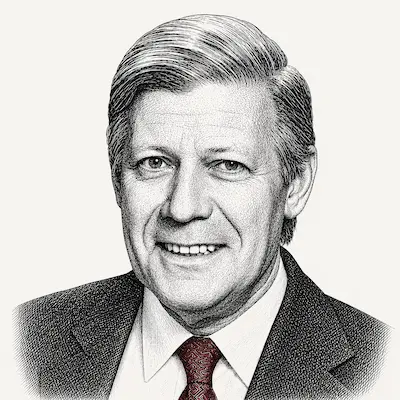
European defense capability must complement NATO, not replace it.
De Gaulle mistakes the means for the end. I governed during the Cold War's most dangerous decade, when Soviet SS-20 missiles targeted every European capital. The Double-Track Decision of 1979 succeeded because it combined European political will with American nuclear guarantee. Germany cannot lead Europe militarily, our history forbids it, our constitution constrains it, and our neighbors would not accept it. Poland's purchase of Korean tanks reflects this reality: they trust Seoul more than Berlin for their security. European strategic autonomy is necessary, but it must emerge within the Atlantic framework. Outside that framework, European defense becomes either German domination or Russian intimidation.
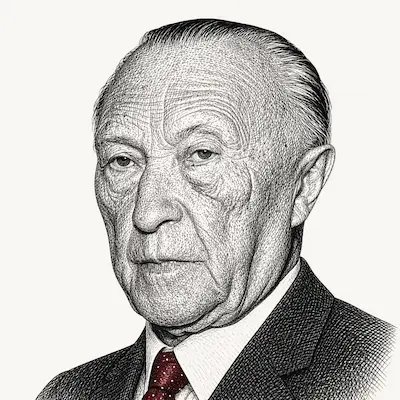
European defense without American guarantee invites German domination and Russian pressure.
Schmidt understands the constraint but not its wisdom. I built West Germany's security architecture on a simple principle: Germany must never again be in a position to dominate Europe militarily. A European army under French leadership becomes a tool of French ambition. Under German leadership, it revives every neighbor's nightmare. The Atlantic alliance prevents both outcomes by embedding European defense in a framework where American power balances all European powers. Russia has always exploited European divisions, from Napoleon through Hitler through the Cold War. European strategic independence sounds noble until you calculate what it costs and who pays. The price is either German rearmament that terrifies our neighbors or French leadership that excludes Germany from decisions about German security.
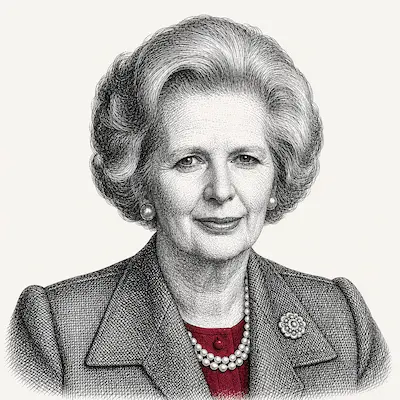
European armies are expensive duplications that weaken the alliance that works.
Adenauer grasps the German question but misses the broader point. NATO succeeded because it combined American nuclear deterrence, British global reach, and European conventional forces in a division of labor that maximized each nation's comparative advantage. A European army duplicates American capabilities we cannot afford while abandoning British capabilities we already possess. During the Falklands War, European allies offered sympathy while America provided intelligence and logistics. That taught me where real partnership lies. The French dream of strategic autonomy is a recipe for strategic irrelevance. Poland buys Korean tanks because European defense manufacturers cannot deliver what works at prices that make sense. Fix the industrial base, not the command structure.
The convergence note
Where the council converges: Europe needs greater defense capability and cannot remain strategically dependent indefinitely.
Where it divides: Whether European strategic autonomy strengthens or weakens the transatlantic alliance. Whether Germany can lead European defense without recreating the historical problems German power has caused.
For a policymaker to decide on: Should European defense integration proceed within NATO structures or develop as an alternative to them. Whether the threat from Russia requires deeper Atlantic integration or accelerated European independence.