The Long Council
Who was selected, and why
Should the EUROPEAN UNION further democratize, organise European elections, replacing the current decision process?
The central tension
Federal democratic legitimacy versus member state sovereignty, can the EU become more democratically accountable without destroying the national democratic systems that created it?
Selected members
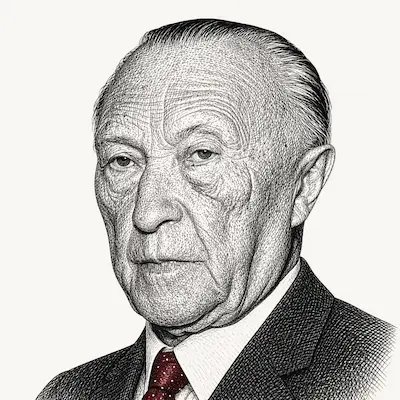
Konrad Adenauer
Will argue: That European integration requires strong institutions before democratic accountability, democracy follows successful integration, not the reverse.
As the founding architect of European integration, he designed the institutional framework being questioned and has documented positions on sovereignty pooling versus democratic accountability.
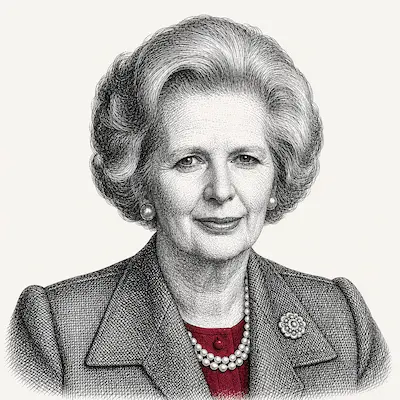
Margaret Thatcher
Will argue: That European democracy is impossible because there is no European demos, democracy requires a shared political culture that Europe lacks.
Her Bruges Speech and documented opposition to European federalism represent the sovereignty-first position that sees further EU democratisation as a threat to national democracy.
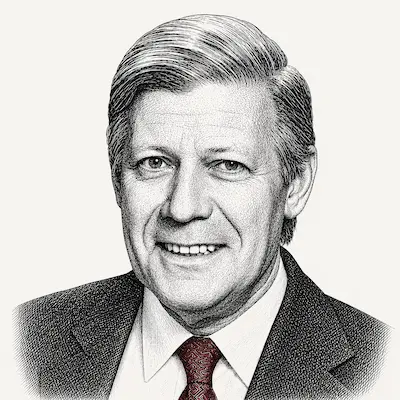
Helmut Schmidt
Will argue: That European decisions require speed and expertise that democratic processes cannot provide, technocratic governance is not ideal but it is necessary.
As co-creator of the European Monetary System, he experienced both the necessity and limits of European institution-building, with documented positions on democratic legitimacy versus technocratic effectiveness.
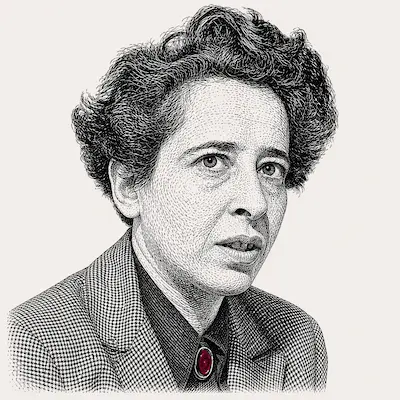
Hannah Arendt
Will argue: That European institutions lack genuine political power because they are not grounded in spaces where citizens can act together, bureaucratic rule is "rule by nobody."
Her theory of political power as arising from people acting in concert, and her analysis of legitimacy and authority, directly addresses whether supranational institutions can be genuinely democratic.
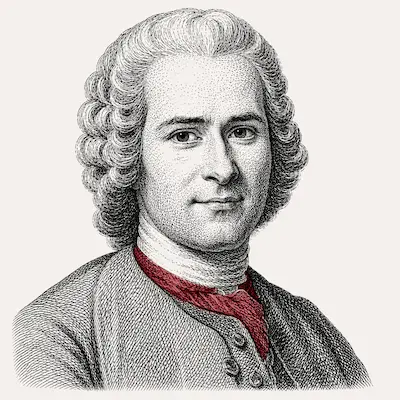
Jean-Jacques Rousseau
Will argue: That European democracy is structurally impossible, the general will requires a civic community small enough for genuine participation, which the EU cannot provide.
His theory of the general will and popular sovereignty provides the strongest theoretical framework for direct democracy, but his documented position that genuine democracy requires small communities challenges EU-scale democracy.
Considered but not selected
Jawaharlal Nehru: His non-alignment and post-colonial framework is not directly relevant to European institutional design, though his federal experience could inform the discussion.
Franklin D. Roosevelt: His institutional innovations were domestic rather than international; the EU question is specifically about supranational democracy.
John Locke: His consent theory is relevant but less specific to the federal/supranational question than Rousseau's more developed position on democratic scale.