Will China surpass the US in economic output and technological leadership?
Built from documented writings, speeches, decisions and historical records. Council members argue from documented positions, applied to today's question.
China will likely overtake US GDP by 2030, but internal cohesion and institutional management matter more than raw economic size.
Deng's patient development strategy delivered China's 1.6 million patents and $150 billion chip investment without triggering early containment. Schmidt warns that semiconductor dependency forces both powers to choose security over efficiency, making institutional cooperation harder. Ibn Khaldun identifies the deeper constraint: China's aging demographics and America's political divisions both threaten the internal cohesion that sustains external power.
The council splits on whether shared institutions can manage this transition or whether both sides will exit into parallel systems.
- 1Invest in domestic semiconductor production while maintaining selective technology cooperation with China to avoid complete decoupling.
- 2Build institutional frameworks for managing great power transitions before the GDP crossover occurs around 2030.
- 3Strengthen internal political cohesion to sustain external influence during the transition period.
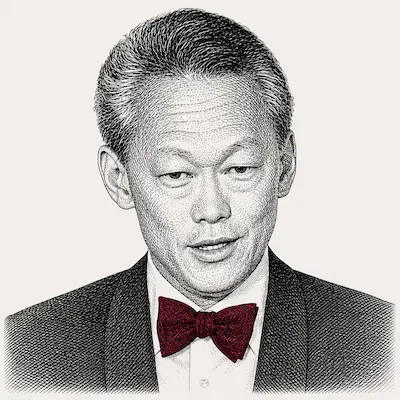
China's rise is structurally likely but not inevitable.
The numbers suggest China will overtake US nominal GDP by 2030, but GDP is not power. In 1965 I separated Singapore from Malaysia not because we wanted independence but because survival required it. Scale matters, but governance quality matters more. China's $150 billion chip investment shows state capacity, but TSMC's 90% market share shows that throwing money at technology doesn't guarantee results. The critical question is whether China's rise produces accommodation or conflict with America.
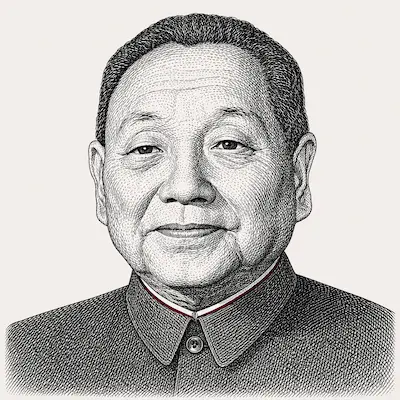
Hide your strength, bide your time until the foundation is unshakable.
Lee underestimates what patient development can achieve if managed carefully. In 1978 I opened China selectively: imported technology and capital while maintaining political control over the development process. The Four Modernisations named science alongside agriculture and defence because states fund what markets ignore. China's 1.6 million patents and $150 billion chip investment follow this model. America's CHIPS Act allocates $52 billion while China invests three times that amount. Patient accumulation of capabilities, not premature assertion of power.
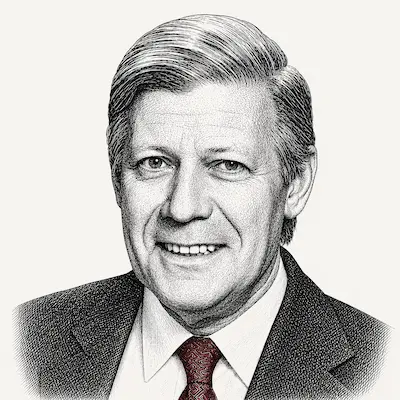
Great power transitions create dangerous instability unless managed through institutions.
Deng's patient approach worked when America felt secure, but resource competition changes everything. In November 1973 I told the Bundestag that energy dependence was a sovereignty question, not an energy question. Today's semiconductor dependency follows the same logic. When TSMC controls 90% of advanced chips, every major power faces an unacceptable vulnerability. China's rise forces America to choose between accommodation and containment. Without institutional frameworks to manage this transition, both sides will choose security over efficiency.
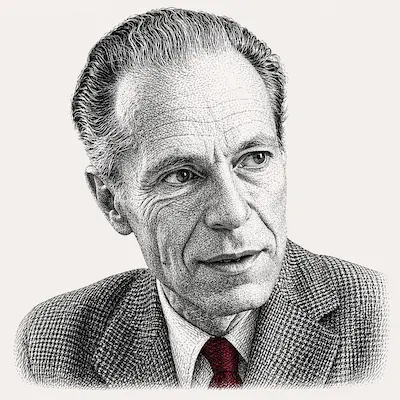
The key question is whether the transition allows voice or forces exit.
Schmidt is right that institutions matter, but my exit-voice framework shows why they may not hold. When China overtakes US GDP around 2030-2035, America faces a choice: voice within shared institutions or exit into separate systems. The semiconductor competition reveals the dynamic. China invested $150 billion to reduce TSMC dependency while America allocated $52 billion for domestic production. Both are choosing exit over voice. Making exit too easy suppresses the institutional cooperation that could manage this transition peacefully.

Both powers face internal cohesion challenges that may limit their external reach.
Hirschman's exit-voice framework applies, but he misses the deeper pattern. In 1401 I spent thirty-five days with Timur and learned that external conquest cannot substitute for internal social cohesion. China's demographic decline and America's political polarisation represent classic asabiyya erosion. China's one-child policy created an aging society just as prosperity should peak. America's political divisions weaken the group solidarity that enabled its global dominance. The power that maintains internal cohesion longer will prevail, regardless of GDP numbers.
The convergence note
Where the council converges: The transition will create dangerous instability requiring institutional management. Neither GDP nor patents alone determine geopolitical outcomes.
Where it divides: Whether patient development can avoid triggering containment (Deng vs Lee), and whether internal cohesion challenges will constrain both powers (Ibn Khaldun) or institutional cooperation can manage the transition (Hirschman vs Schmidt).
For a policymaker to decide on: Whether to build shared institutions for managing the transition or accept the risks of parallel economic systems and strategic competition.