Will China become the new hegemon power and will it replace the role of the United States over the next decades?
Built from documented writings, speeches, decisions and historical records. Council members argue from documented positions, applied to today's question.
China will become a major power equal to America, but whether it becomes the dominant hegemon depends on choices both powers have not yet made.
Lee Kuan Yew and Deng Xiaoping agree China's rise is inevitable but requires decades more development. Schmidt warns that hegemonic transitions create dangerous instability regardless of intentions. Ibn Khaldun sees America showing classic signs of imperial decay while China has not yet peaked. Sun Tzu argues both can achieve their core goals without one destroying the other.
The council splits on timeframe and outcome. Chinese restraint could create managed bipolarity, or American resistance could force zero-sum competition.
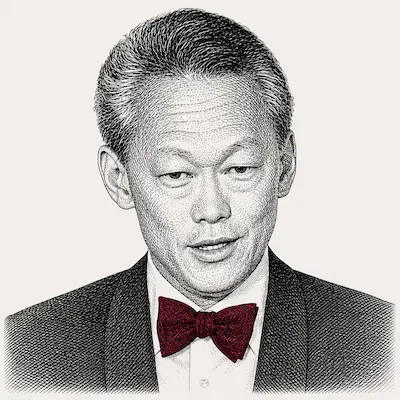
China's rise is inevitable but need not mean America's displacement.
When I first met Deng Xiaoping in 1978, China's GDP was smaller than Singapore's. By 2015, it was the world's second largest economy. This transformation was not accidental — it was the result of systematic decisions to prioritise development over ideology, to learn from others without losing identity, and to avoid premature confrontation while building strength. China's rise is the defining geopolitical fact of this century.
But size does not automatically translate to hegemony. America remains militarily dominant, technologically innovative, and allied with most developed nations. China faces internal challenges — ageing population, environmental degradation, the middle-income trap — that could slow its ascent. The real question is whether both powers can avoid the Thucydides Trap through managed accommodation rather than zero-sum competition.
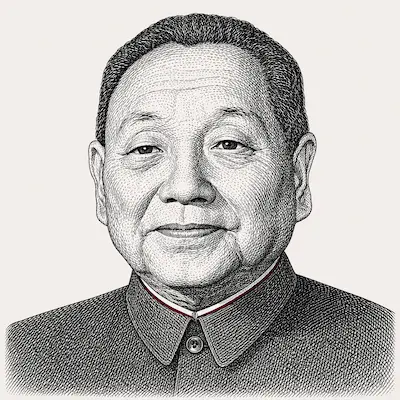
China must focus on development for decades before asserting global leadership.
Lee Kuan Yew correctly identifies the trajectory, but he underestimates the time required. When I launched reform in 1978, I told our people that development is the hard truth — everything else is secondary. China needed a century of peaceful development to become a moderately prosperous society. We are not even halfway through that century.
Premature hegemonic ambition would be strategically disastrous. China still has 600 million people living on less than $150 per month. Our technology remains dependent on Western innovation. Our military, while modernising, cannot project power globally like America's. Any attempt to challenge US hegemony now would unite the world against us and destroy the peaceful international environment our development requires.
Hide your strength, bide your time. This was not tactical advice for a decade — it was strategic doctrine for generations. China's rise is inevitable, but Chinese hegemony is neither inevitable nor desirable in this century.
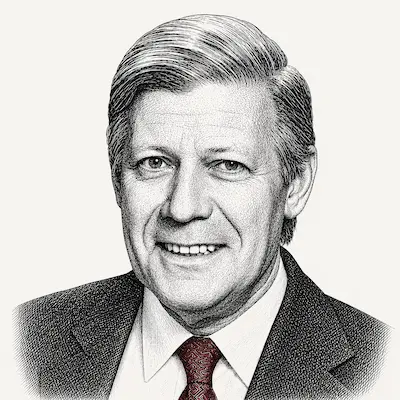
Hegemonic transitions create dangerous instability that only institutional frameworks can manage.
Deng's caution is wise, but both he and Lee underestimate the structural dangers. I governed during the Cold War's most unstable period — when Soviet power peaked but American resolve remained strong. The 1970s taught me that transitions between great powers create windows of maximum risk, regardless of anyone's intentions.
In November 1973, I told the Bundestag that energy dependence was a sovereignty question. Today's equivalent is technological dependence. Neither America nor China can allow the other to control critical technologies — semiconductors, artificial intelligence, quantum computing. This competition will intensify regardless of Chinese restraint or American accommodation.
The solution is not bilateral management between Washington and Beijing. It requires multilateral institutions that give middle powers agency and create buffers. Europe, Japan, India, and regional blocs must prevent the world from dividing into two camps. We learned in the 1970s that bipolarity is inherently unstable — every crisis becomes a test of the global balance.
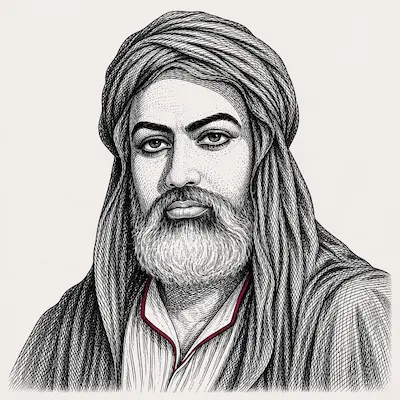
America shows the classic signs of imperial overstretch while China has not yet peaked.
Schmidt correctly identifies the structural danger, but misses the cyclical pattern. I have observed this transition many times — the Abbasids displaced by the Fatimids, the Almoravids by the Almohads. The dominant power always believes its decline is temporary, a policy problem to be solved. The rising power always believes its ascent is permanent, a destiny to be fulfilled. Both are wrong.
America exhibits the symptoms of late-stage imperial decay: internal division, fiscal overstretch, and the luxury trap. Its elites are more concerned with ideological purity than practical governance. Its military is designed for the last war, not the next one. Its taxation system extracts maximum revenue from a shrinking productive base — exactly the pattern I documented in declining dynasties.
But China has not yet reached its peak. Its internal cohesion remains strong, its leadership pragmatic, its people willing to sacrifice for collective advancement. The transition is inevitable, but it will take longer than Chinese optimists expect and happen faster than American realists prepare for. External pressure on America's weakening asabiyya will accelerate its decline. External pressure on China's strong asabiyya will consolidate its rise.
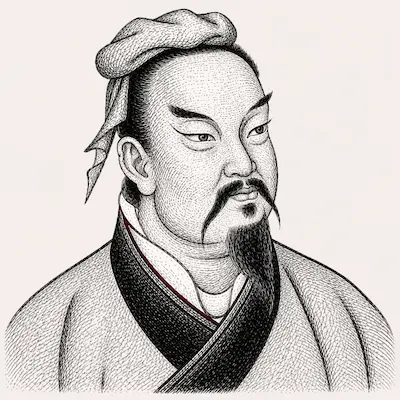
True strategic victory means achieving objectives without direct confrontation.
Ibn Khaldun sees the cyclical pattern correctly, but all speakers miss the essential point: this competition has already been decided by positioning, not by future confrontation. The question is not whether China will become hegemon, but whether either power understands that supreme strategic excellence lies in winning without fighting.
America's error is treating this as a zero-sum military competition when it is fundamentally about technological and economic positioning. China's error is believing that hegemonic status requires displacing America when it can achieve its core objectives — Taiwan, regional influence, technological independence — through patient positioning and the management of adversary perception.
Both powers should focus on creating conditions where direct confrontation becomes unnecessary. America should consolidate its alliance networks and technological advantages while allowing China space for development. China should secure its essential interests while avoiding actions that force America into desperate responses. The skillful strategist subdues the adversary's strategy without fighting the adversary's forces.
The winner will be whoever better understands that in nuclear-age great power competition, the objective is not victory over the opponent but the achievement of one's own goals. Both can succeed if neither seeks the other's destruction.
The convergence note
Where the council converges:
China's rise as a major power is inevitable and irreversible. The transition period creates structural instability that neither power can avoid through unilateral action.
Where it divides:
Whether this transition must result in Chinese hegemony, American decline, or a new form of managed bipolarity. The timeframe ranges from decades to a century.
For a policymaker to decide on:
Whether to prepare for managed coexistence between two great powers or to compete for singular global dominance. The choice determines whether the transition is peaceful or catastrophic.