Built from documented writings, speeches, decisions and historical records. Council members argue from documented positions, applied to today's question.
The council establishes that extreme wealth concentration fundamentally alters the relationship between economic and political power, creating governance consequences that extend far beyond individual tax burdens.
Roosevelt frames this as democratic legitimacy versus market dominance, drawing on Depression-era experience with concentrated private power. Piketty provides the empirical foundation, showing current concentration approaches historical levels that preceded institutional breakdown, while his r > g dynamic explains why inherited capital systematically outpaces productive economic activity. Hayek counters that wealth taxation destroys the price signals essential for efficient resource allocation and violates the property rights that make market coordination possible. Rawls argues that such concentration fails the difference principle because it harms rather than benefits the least advantaged through institutional corruption.
The irreducible divide centers on whether democratic institutions can effectively constrain wealth concentration without destroying the market mechanisms that generate prosperity in the first place.
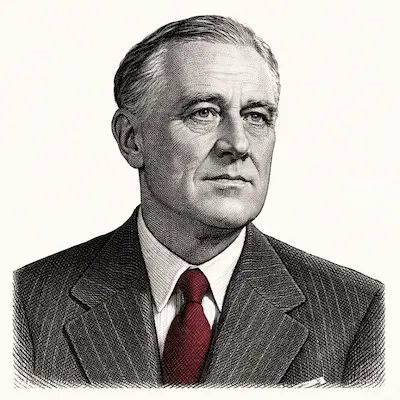
A billionaire tax is about democratic legitimacy, not just revenue — who governs, markets or elected officials?
The fundamental question is not economic but political: does a democracy permit the concentration of wealth on a scale that corrupts its own institutions? During the New Deal, we pushed top marginal rates above 90% precisely because excessive private accumulation undermines public capacity. I learned this not from theory but from governing through the Depression — when private investment collapsed, only public action could rebuild economic foundations. The wealthy who opposed this understood what was at stake: not just their tax burden, but their political dominance.
A billionaire tax represents the same principle applied to current conditions. When individual fortunes exceed the GDP of entire states, we face a structural threat to democratic governance. Such concentration enables the systematic capture of policy-making through campaign contributions, lobbying expenditures, and the revolving door between private wealth and public office. The question is not whether billionaires will pay more in taxes — they already pay whatever they choose through political donations. The question is whether elected officials or private accumulation will determine national priorities.

Extreme wealth concentration represents a return to patrimonial capitalism that threatens democratic institutions and economic efficiency alike.
Roosevelt correctly identifies the political dimension, but we need the empirical foundation. My analysis of wealth concentration dynamics over two centuries shows that we are witnessing a return to 19th-century levels of inequality — what I call the "new patrimonial capitalism." The top 1% now controls roughly 35% of total wealth in the United States, approaching Belle Époque levels. More critically, wealth inheritance is becoming the primary determinant of lifetime opportunities, undermining the meritocratic claims that justify market capitalism itself.
The r > g dynamic — where the return on capital systematically exceeds economic growth — means that inherited wealth grows faster than wages or economic output. This creates a self-reinforcing aristocracy of capital. A progressive wealth tax on large fortunes is not confiscatory redistribution but a mechanism to maintain capitalism's competitive dynamics. Without it, we face the documented historical pattern: extreme concentration leads to political capture, which produces economic stagnation, which generates social instability.
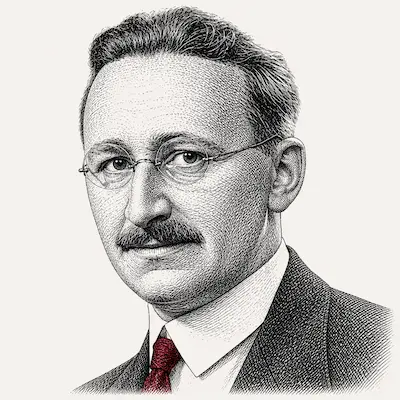
Wealth taxation violates property rights and cannot distinguish between productive and unproductive accumulation — it damages the market mechanisms that allocate resources efficiently.
Piketty's data on concentration is documented, but his interpretation ignores the essential function of capital accumulation in market economies. Large fortunes represent the savings of individuals who have either produced value directly or inherited from those who did. Taxation of wealth, as distinct from income, violates the fundamental principle that individuals should be free to dispose of their legitimately acquired property as they choose — including transferring it to their children.
The market mechanism depends on price signals that reflect genuine scarcity and value. A wealth tax necessarily requires government officials to determine the value of complex assets — businesses, real estate, intellectual property — in ways that distort these signals. The practical result is capital flight, the destruction of productive enterprises to raise tax payments, and the systematic misallocation of resources. No government possesses the knowledge to distinguish between "productive" and "unproductive" wealth concentration. The attempt produces arbitrary destruction of wealth and the substitution of political for economic decision-making.
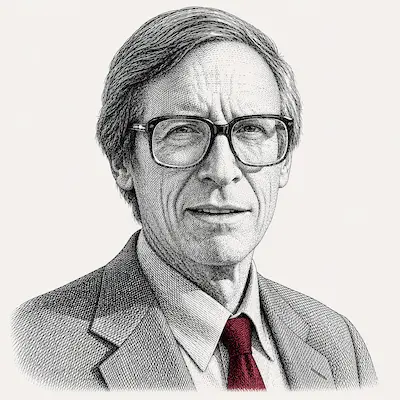
Extreme wealth concentration fails the difference principle test — such inequalities do not improve the position of the least advantaged and may actively harm them.
Hayek's concern about property rights misses the foundational question: under what conditions are property arrangements themselves just? Behind the veil of ignorance, rational individuals who did not know whether they would be born into wealth or poverty would not choose a system that permits unlimited accumulation while others lack basic necessities. The difference principle provides the standard: inequalities are justified only if they improve the position of the worst-off members of society.
Current billionaire-level wealth concentration fails this test on two grounds. First, it demonstrates that the basic structure of society is not arranged to benefit the least advantaged — extreme concentration coexists with poverty, inadequate healthcare, and educational underinvestment. Second, such concentration actively harms the worst-off by corrupting democratic institutions that could address their interests. When wealth translates directly into political influence, the least advantaged lose their equal standing as citizens.
A billionaire tax represents an institutional adjustment to ensure that the basic structure serves justice, not efficiency alone. The libertarian concern about individual choice misses the point: we are designing the framework within which individual choices operate, not overriding particular decisions. That framework must pass the test of justification to all citizens, including those born into disadvantage.
The convergence note
Where the council converges All members accept that extreme wealth concentration has political consequences that extend beyond the individuals who hold that wealth — whether through democratic legitimacy, capital allocation, or institutional capture.
Where it divides Roosevelt and Rawls argue that democratic institutions require wealth concentration to be managed through public policy; Hayek argues that such management destroys the market mechanisms that make wealth creation possible; Piketty argues that without intervention, wealth concentration undermines both democracy and capitalism itself.
For a policymaker to decide on The specific design of any billionaire tax — rates, thresholds, enforcement mechanisms, international coordination — and the political judgement about whether current levels of wealth concentration represent a governance crisis requiring immediate intervention or a market outcome requiring institutional protection.