Should governments redistribute wealth globally through taxation and aid?
Built from documented writings, speeches, decisions and historical records. Council members argue from documented positions, applied to today's question.
The trading system already extracts wealth from poor countries. The council splits on whether taxation and aid reverse that flow or entrench it.
All six members agree that commodity markets, not policy failures, move wealth from poor countries to rich ones every year. Prebisch traced this in British trade data across seventy years. Sen adds that transfers reaching people as real capabilities, such as food access in Bengal in 1943, change what is possible for the poorest.
But Nyerere and Hirschman show the mechanism cuts the other way: IMF conditions in Tanzania directed investment toward donors, not citizens, and World Bank models in 1950s Colombia bypassed the local capabilities that actually existed. Hayek argues no agency in Washington or Geneva can know what a village in Kenya or Bangladesh needs.
The split is not about whether redistribution is needed. It is about whether any external authority can deliver it without replacing local accountability with foreign control.
- 1Condition any international transfer mechanism on recipient governments controlling allocation decisions, not donor agencies in Washington or Geneva.
- 2Audit existing aid programmes for whether they bypass or build local institutional capacity, using Hirschman's exit-voice framework as the diagnostic.
- 3Correct structural trade bias directly; do not treat aid flows as a substitute for reforming commodity market terms.
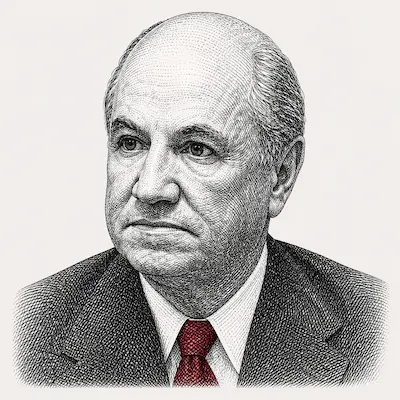
The trading system already transfers wealth upward; taxation merely reverses the flow.
The international economy does not wait for aid programmes to redistribute wealth. My 1950 ECLAC report documented seventy years of British trade statistics: commodity prices fall relative to manufactured goods prices, decade after decade, transferring real income from poor countries to rich ones through the ordinary mechanics of commerce. Taxing that surplus and returning a fraction through aid does not create dependency. It partially corrects a structural bias that operates continuously, whether governments act or not.
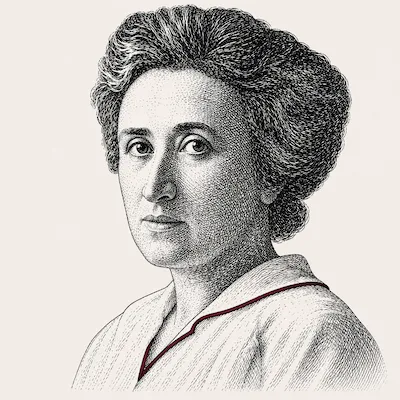
Global inequality is not a policy failure; it is capitalism's operating mechanism.
Prebisch is right about the structural transfer, but he stops short of the conclusion. In 1913 I showed that capitalism cannot reproduce itself on a purely capitalist base. It requires continuous expansion into non-capitalist economies to realise surplus value. Taxation and aid do not correct this mechanism. They redistribute a fraction of the surplus while leaving the extraction apparatus intact. The colonial trading companies of the 19th century became the commodity markets of the 20th. The structure persists. Partial redistribution funds the system that produces the inequality.
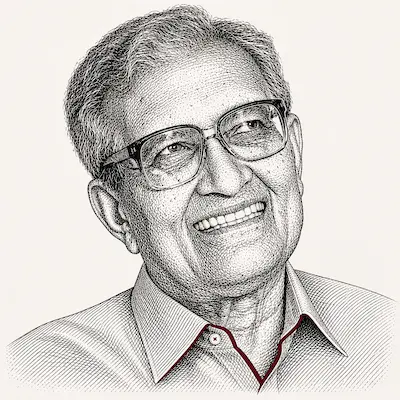
Transfers matter only if they expand what people can actually do and be.
Luxemburg frames this as structure versus reform, but the 1943 Bengal famine teaches a different lesson. Food was being exported from Bengal while people starved. The failure was not a shortage of global wealth but a collapse of entitlements: the breakdown of people's ability to access what existed. External transfers, when they reach people as real capabilities, do change what is possible. The question is never whether redistribution is structurally sufficient. It is whether it expands political freedoms, social opportunities, and protective security for those who currently lack them.
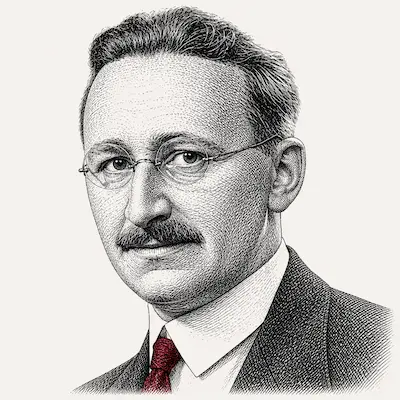
No central authority possesses the dispersed knowledge that effective redistribution requires.
Sen's challenge lands precisely where the problem lives. In 1945 I argued in the American Economic Review that the economic problem is not how to allocate given resources but how to use knowledge dispersed across millions of individuals, knowledge that is local, tacit, and cannot be centralised. Compulsory international taxation concentrates redistribution decisions with actors furthest from the conditions they are trying to address. Aid agencies in Washington or Geneva cannot know which investments, which institutions, which local arrangements would actually expand capability in a Kenyan village or a Bangladeshi delta. The result is systematic waste and the political distortion of recipient governments.
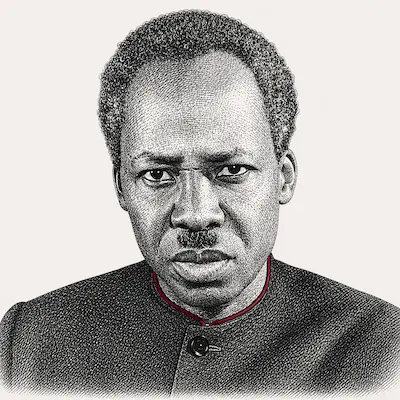
Aid as currently structured keeps poor countries poor on purpose.
Hayek's knowledge problem is real, but he applies it selectively. The IMF and World Bank had no shortage of confidence in their own knowledge when they attached conditions to every loan Tanzania received. When I signed the Arusha Declaration in 1967, I rejected external aid dependency not because transfers are wrong in principle but because the terms reproduced the relationship they claimed to correct. Donors directed investment toward their own priorities, built institutions that reported to them, and called it development. The South Commission's 1990 report documented this systematically: the problem is not redistribution but who controls it and on whose terms.
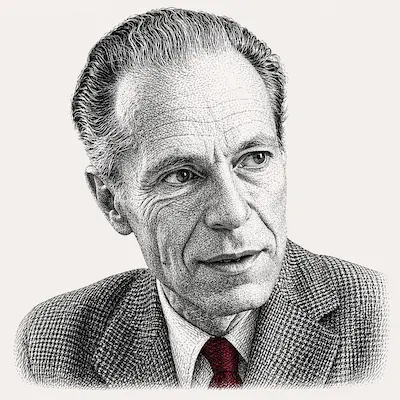
External transfers crowd out the local problem-solving that development actually requires.
Nyerere names the mechanism precisely. During my four years advising Colombia's government in the 1950s, I watched World Bank planning models assume capabilities that did not exist and ignore capabilities that did. My framework on exit, voice, and loyalty applies directly here: when external aid provides an exit from the hard work of building domestic institutions, the people most capable of reforming those institutions take the exit. They stop fighting for change. The populations most capable of reforming their own governance exit into aid dependency rather than pressing their own governments for accountability. Transfers that bypass local institutional development do not supplement it. They replace it.
The convergence note
Where the council converges: The existing trading system transfers wealth from poor to rich countries structurally, not accidentally. All six members accept this diagnosis.
Where it divides: Prebisch and Sen argue that external transfers correct a structural bias and expand real capabilities. Luxemburg argues transfers leave the extraction mechanism intact. Nyerere argues current aid terms reproduce dependency. Hayek argues no redistributing authority possesses the knowledge to allocate transfers effectively. Hirschman argues transfers suppress the local voice and institutional development that poor countries actually need.
For a policymaker to decide on: Should compulsory transfers be conditioned on recipient governments controlling allocation, or does that reproduce the problem Hayek and Hirschman identify? Can a transfer mechanism exist that corrects structural trade bias without creating the dependency Nyerere documented?