Which tax policy supports a welfare state while protecting growth and innovation?
Built from documented writings, speeches, decisions and historical records. Council members argue from those positions, applied to today's question.
High taxes can fund innovation or destroy it, depending on what they buy and whether citizens trust the system.
Lee and Ireland prove that low corporate rates attract capital that funds targeted welfare through growth. Schmidt and Denmark show that high taxes work when they build productive capacity that citizens can see. Friedman warns that redistribution crowds out the private investment that creates wealth to redistribute.
The council splits on whether welfare should be universal or targeted through individual accounts. Both camps agree that pure redistribution without growth fails.
- 1Anchor tax policy to specific public goods that demonstrably build productive capacity, not general redistribution.
- 2Publish annual audits showing which tax-funded investments generate measurable returns in innovation and growth.
- 3Define the exact threshold where tax rates begin destroying the incentives that create wealth to redistribute.
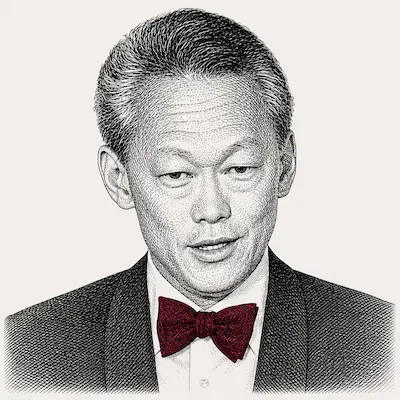
Targeted taxes with forced savings beats universal welfare.
Ireland's corporate rate proves my point. Low rates attract capital that funds what matters. In 1965 I built Singapore on 17% corporate tax, zero capital gains, and the CPF system. Workers save 20% of wages automatically. The state provides housing, healthcare, and retirement through individual accounts, not redistribution. Estonia's flat tax works because it funds services without destroying incentives. Universal welfare creates dependency. Asset-building creates stakeholders.
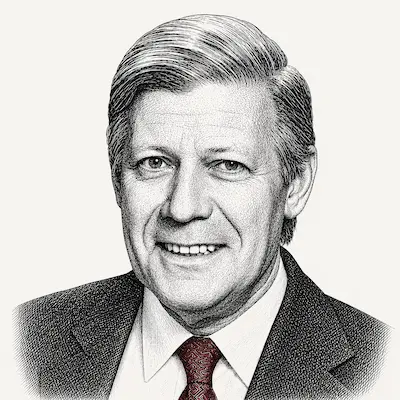
High taxes work when they fund productive capacity.
Lee underestimates what institutional trust can achieve. Denmark's 55.9% rate funds the world's tenth-best innovation system because citizens see returns. In 1975 I raised German taxes to fund vocational training, infrastructure, and R&D during the oil crisis. The social market economy survived because high taxes built the industrial base that generated growth. Estonia's model works for small states. Large economies need public investment in technology, education, and industrial capacity that only sustained revenue can finance.
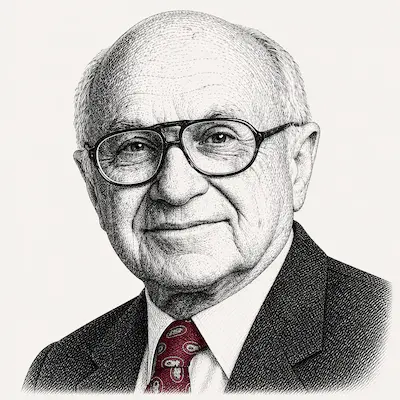
High taxes destroy the incentives that create wealth.
Schmidt confuses correlation with causation. Denmark innovates despite high taxes, not because of them. Ireland's $104B in FDI proves capital flows to low-tax jurisdictions. In 1981 Reagan cut top rates from 70% to 28% and triggered the longest peacetime expansion in American history. High taxes reduce the after-tax return to entrepreneurship, investment, and risk-taking. Government spending crowds out private investment. You cannot tax your way to prosperity.

Capability requires investment, not just low taxes.
Friedman mistakes the instrument for the goal. Estonia funds universal healthcare and education because human capability drives innovation more than tax rates. In Kerala I observed how public health and literacy produced development outcomes that pure market states could not match. Ireland's success depends on educated workers that public investment created. Denmark's innovation ranking reflects decades of investment in human development. Tax policy must fund the capabilities that make growth sustainable.
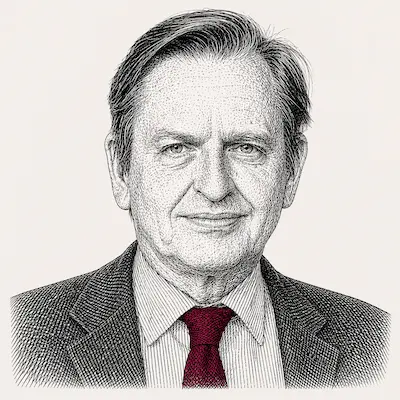
Equality builds the institutional trust that makes high taxes sustainable.
Sen is right about capability, but Friedman misses how equality creates efficiency. Sweden maintained 60% top rates while achieving full employment and rising productivity because citizens trusted the system. In 1973 I expanded active labour market policy during the oil crisis. High taxes funded retraining, mobility support, and universal childcare that kept employment high. Denmark's innovation success reflects institutional trust built over generations. Tax competition is a race to the bottom that destroys the public goods innovation requires.
The convergence note
Where the council converges: Tax policy must fund essential public goods. Pure redistribution without growth is unsustainable.
Where it divides: Whether high taxes destroy incentives or build the institutional capacity for innovation. Whether welfare should be universal or targeted.
For a policymaker to decide on: Which public goods justify high taxes in your economy. How much inequality your society can sustain.