Does a wealth tax work in the Netherlands, or does it lead to the exit of capital?
Built from documented writings, speeches, decisions and historical records. Council members argue from documented positions, applied to today's question.
The Netherlands' wealth tax failed because it was implemented unilaterally in a world of mobile capital, but the council divides on whether coordinated international wealth taxation would succeed or simply spread the same fundamental problems across borders.
Ostrom identifies the classic collective action problem requiring polycentric governance and international coordination. Hirschman argues that easy exit prevented wealthy taxpayers from using voice to improve the policy, suggesting better institutional design could retain capital while addressing inequality. Piketty contends that wealth concentration itself undermines democratic voice, making international coordination essential but politically difficult. Friedman maintains that wealth taxes attack the capital formation mechanism that creates prosperity, making failure inevitable regardless of coordination.
The split turns on whether capital mobility disciplines bad policy or enables wealthy veto power over democratic decisions—a judgment about the relationship between economic freedom and political equality that the evidence cannot resolve.

Wealth taxes face a classic collective action problem requiring careful institutional design.
Looking at the Netherlands' wealth tax experience, this is precisely the kind of governance challenge my commons framework addresses. The documented 2001 abolition following capital flight reveals what happens when one actor—the Dutch government—attempts unilateral action while others—neighboring tax jurisdictions—provide easy exit options. My research on common-pool resources shows that when "enough and as good" alternatives exist elsewhere, any single community's conservation efforts become unsustainable. Here, mobile capital behaves exactly like a resource that can migrate to less regulated environments.
The solution isn't to abandon the policy goal but to recognize it requires polycentric governance—multiple overlapping institutions at different scales. Success demands: clearly defined boundaries (which taxpayers are covered), congruence between rules and local conditions (tax rates that don't trigger excessive exit), collective choice arrangements (international coordination mechanisms), effective monitoring (information sharing between tax authorities), and graduated sanctions (coordinated responses to evasion). Most critically, it needs recognition by external authorities—meaning broader international legitimacy for the principle.
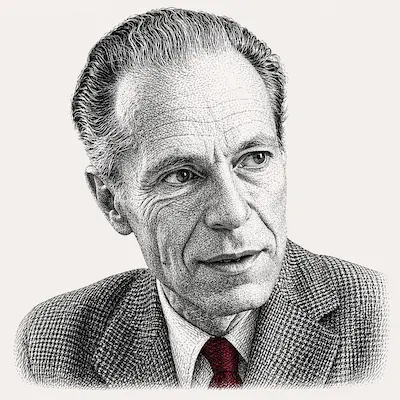
The Netherlands made exit too easy, but the solution isn't to trap capital—it's to make voice more attractive than exit.
Elinor's analysis is exactly right about institutional design, but we need to understand why the voice option failed so completely. My work on exit, voice, and loyalty explains this: when exit costs are low, the people most capable of improving the system—in this case, the wealthy who understand tax policy and have political influence—simply leave instead of staying to negotiate better implementation. The Netherlands lost precisely the taxpayers who could have helped design a workable wealth tax.
The documented evidence from my Colombia work shows this pattern repeatedly: when exit is too easy, you get a brain drain of problem-solvers. But the answer isn't to make exit impossible—that produces tyranny. It's to make voice more attractive. This could mean: transparent deliberation about wealth tax design with affected parties, credible commitments about how revenue gets used, and mechanisms for adjusting the policy based on experience. The wealthy need reasons to stay and improve the system rather than flee it.
The deeper insight is about sequencing: you need to build loyalty before you can implement policies that depend on voluntary compliance. A wealth tax in a society with low social trust and weak state capacity is premature—it's like imposing conservation rules on a community that doesn't yet see itself as sharing a common future.

Wealth taxation requires international coordination, but the underlying problem—capital's political power—won't solve itself through voluntary voice.
Albert, I appreciate the exit-voice framework, but I think it misses the power dynamics here. The documented evidence from my research shows that high wealth concentration doesn't just make exit easier—it makes exit a political strategy. When wealth becomes extremely concentrated, the wealthy don't need to engage in democratic voice because they can shape policy through other channels: lobbying, regulatory capture, media influence. The Netherlands wealth tax failed not because exit was too easy, but because concentrated wealth had enough political power to ensure that coordination with other countries never happened.
My analysis of the French wealth tax shows a similar pattern. The policy failed not because it was poorly designed, but because it operated in a context where international tax coordination was systematically prevented by the same wealthy interests who would benefit from that coordination. This is why I argue for automatic information exchange, minimum tax rates, and ultimately a global register of financial assets—institutional innovations that reduce the exit option for capital while building voice mechanisms for everyone else.
Elinor's polycentric governance insight is crucial, but it requires confronting the reality that wealth concentration gives some actors much more power to shape the rules of the game. The European Union's proposals for wealth tax coordination aren't just technical fixes—they're attempts to rebalance political power between capital and democratic institutions.
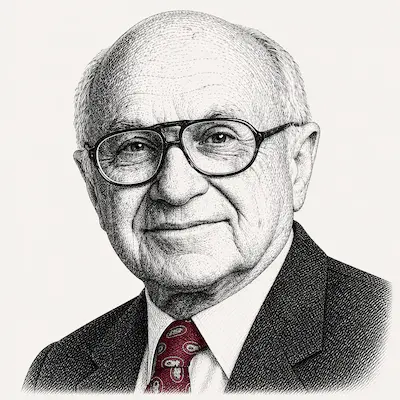
Wealth taxes fail because they're based on a fundamental economic error—they destroy the capital formation that creates prosperity for everyone.
Thomas, you've documented wealth concentration, but you've misdiagnosed the problem. The issue isn't that capital has too much political power—it's that wealth taxes attack the very mechanism that creates wealth in the first place. My research on tax incidence shows that capital is the most mobile factor of production. When you tax it heavily, you don't just get capital flight—you get reduced investment, lower productivity, and ultimately lower wages for workers.
The documented Netherlands experience confirms this. The wealth tax raised minimal revenue while imposing enormous distortions. Wealthy individuals didn't just leave—they took their businesses, their investment, and their job-creating capacity with them. The result was less tax revenue overall and fewer opportunities for everyone else. This isn't about the wealthy exercising political veto power; it's about economic reality asserting itself against bad policy.
Albert's voice mechanism might work in theory, but what voice tells you when a policy is fundamentally misconceived? The market already provides that voice—through prices, through location decisions, through investment flows. When capital flees a wealth tax, it's not being undemocratic; it's revealing the policy's true cost. Elinor's collective action framework misses this point: some problems exist precisely because the collective action would make everyone worse off.
The real solution to inequality isn't to tax wealth but to create conditions where wealth creation benefits everyone—through economic growth, entrepreneurship, and the expansion of opportunity.
The convergence note
Where the council converges All members agree that the Netherlands' unilateral wealth tax was poorly designed and that any successful wealth taxation requires careful attention to institutional design and international coordination.
Where it divides The fundamental disagreement is whether wealth taxation represents good policy poorly implemented (Ostrom, Hirschman, Piketty) or bad policy that inevitably fails when implemented (Friedman). This reflects deeper disagreement about whether capital mobility disciplins excessive government or enables wealthy veto power over democratic taxation.
For a policymaker to decide on Whether to pursue coordinated wealth taxation depends on a judgment about the relative value of equality versus economic growth that economic analysis alone cannot determine—it requires a political choice about what kind of society the Netherlands wants to build.