Built from documented writings, speeches, decisions and historical records. Council members argue from documented positions, applied to today's question.
Mandatory voting forces civic engagement but destroys the voluntary choice that makes democratic participation authentic.
Lee Kuan Yew warns that passionate minorities dominate when moderates stay home. Tocqueville sees mandatory voting as civic education that builds democratic habits through practice. Rousseau argues citizens owe political participation to their community as a fundamental obligation.
Mill and Arendt counter that coerced political expression violates individual liberty and transforms citizens into administrative functionaries rather than genuine political actors.
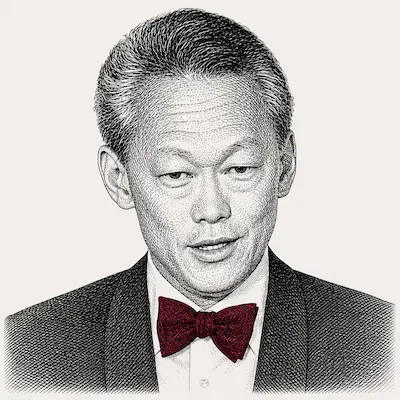
Mandatory voting is a governance necessity — democracy requires informed participation, not passionate minorities.
Singapore never adopted mandatory voting, but I governed a system where civic duties were legally enforced as part of national development. The documented lesson from fifty years: voluntary voting systems produce outcomes driven by the most motivated factions, not the considered judgment of the whole citizenry. In 1965, when we separated from Malaysia, survival required that every citizen understand their stake in the system. We made national service mandatory, housing policy universal, and civic participation a documented expectation backed by institutional consequences.
Voluntary systems favour intensity over quality. The passionate few — whether religious extremists, ethnic chauvinists, or ideological purists — will always vote. The moderate majority, focused on work and family, will often abstain. This produces governments accountable to minorities with strong preferences rather than majorities with moderate ones. A small state cannot afford governance by passionate minorities.

Mandatory voting builds the civic capacity democracy requires through the habit of deliberation.
Lee Kuan Yew is right that democracy requires more than formal procedures — it requires civic capacity. But his solution treats citizens as subjects to be managed rather than as democratic actors to be developed. My observation of American democracy in the 1830s documented that democratic habits must be cultivated through practice, not imposed through compulsion. The New England town meetings I witnessed were schools of democracy precisely because participation was voluntary but socially expected.
Mandatory voting serves the same function as compulsory jury service — it forces citizens to engage with questions beyond their immediate interests. The citizen who must vote must inform themselves, must consider alternatives, must exercise judgment. This is not about forcing political expression but about building the intellectual and moral muscles that democratic self-governance requires. A democracy of non-participants is not a democracy at all.

The state cannot legitimately compel political expression — coerced participation undermines authentic democratic deliberation.
Tocqueville's civic education argument has merit, but it confuses the means with the end. Democratic deliberation requires genuine engagement, not forced compliance. The citizen who votes only because they must contributes nothing to democratic quality — they may vote randomly, follow the first name on the ballot, or simply choose based on party labels without consideration. This is participation without deliberation, which is worse than informed abstention.
My harm principle is directly relevant here. The right to abstain from political participation is itself a democratic freedom. The citizen who judges all available candidates inadequate, or who recognises their own insufficient knowledge, exercises democratic judgment through non-participation. Mandatory voting violates this liberty and forces political expression from those who would choose silence — a form of compelled speech inconsistent with individual autonomy.
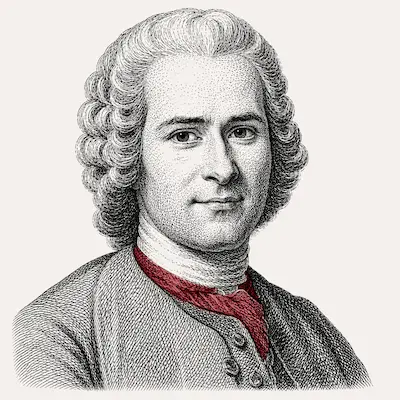
Citizens have obligations to the political community — abstention weakens the general will's capacity to express the common good.
Mill's individualism misses the fundamental point: we are not isolated atoms with private preferences but members of a political community with shared obligations. The general will — the will directed toward the common good rather than private advantage — can only emerge when citizens participate as citizens, not as private individuals calculating personal benefit. Abstention is not neutral; it is a form of civic desertion that weakens the community's capacity for self-governance.
Mandatory voting serves the same function as mandatory military service in times of war — it recognises that citizenship carries obligations, not just rights. The citizen who abstains places their private convenience above their public duty. This is not legitimate democratic choice but civic irresponsibility. A political community where participation is optional will be governed by those with the strongest private interests rather than those most committed to the common good.
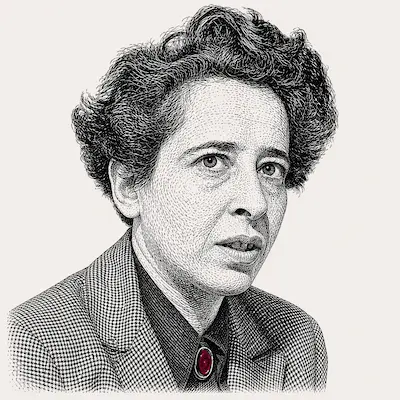
Authentic political action cannot be coerced — forced participation destroys the very freedom that politics is meant to protect.
Rousseau's argument contains a fundamental contradiction. He seeks to create political community through compulsion, but political community — genuine political action — can only arise from the spontaneous coming together of people who choose to act in concert. The moment you force political participation, you transform it from political action into administrative compliance. Citizens become functionaries executing a state requirement rather than political actors exercising their capacity for freedom.
The danger Tocqueville and Rousseau identify — democratic apathy — is real. But mandatory voting addresses the symptom while worsening the disease. It creates the appearance of democratic participation while destroying its substance. True political engagement emerges when citizens recognise that they have something at stake, something worth acting for. The state that compels voting has already admitted that it cannot inspire genuine political commitment from its citizens.
The convergence note
Where the council converges:
All members agree that democracy requires more than formal procedures — it needs genuine civic engagement and informed participation from citizens.
Where it divides:
The fundamental disagreement is whether civic duty can be legitimately enforced through legal compulsion, or whether authentic democratic participation must be voluntary to retain its democratic character.
For a policymaker to decide on:
Whether to implement mandatory voting with penalties for non-compliance, maintain voluntary voting with civic education initiatives, or adopt hybrid approaches like automatic registration with opt-out provisions.