Should governments require an IQ threshold for voting eligibility?
Built from documented writings, speeches, decisions and historical records. Council members argue from documented positions, applied to today's question.
No government can restrict the vote by IQ without converting citizens into subjects the state may reclassify at will.
All five members reject the threshold, but for distinct reasons that together close every exit. Rawls notes that no one designing rules without knowing their own score would accept losing their vote to a number they cannot predict. Sen anchors the empirical case in 1943 Bengal: credentialed officials misread a famine while the people starving knew exactly what was happening. Rousseau adds that laws passed by the certified fraction carry only that faction's will, not the people's.
Arendt is the sharpest dissenter from the premise itself. She watched stateless people in the 1930s discover that rights without political membership are words on paper. The one genuine split is between members who oppose the threshold as bad policy and Arendt, who calls it a structural move toward the bureaucratic sorting she witnessed in Germany.
- 1Reject IQ-based voting restrictions; codify universal suffrage as a non-negotiable basic liberty in constitutional law.
- 2Redirect civic-competence concerns into public investment in civic education, not franchise restrictions.
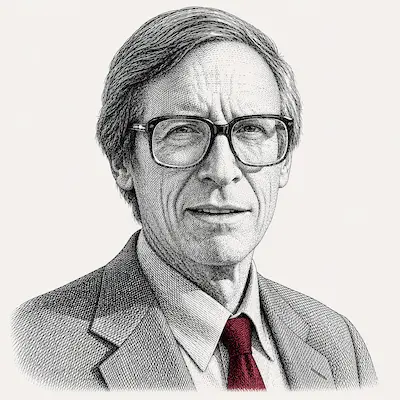
No one behind the veil would risk losing their vote.
Behind the veil of ignorance, you do not know your IQ score. You do not know whether you will test above or below any threshold a government sets. Rational persons in that position would never accept a rule that strips their vote based on a number they cannot predict. In 1971 I argued that equal basic liberties are lexically prior: no efficiency gain, no governance improvement, justifies trading them away. An IQ threshold fails that test before the first ballot is cast.
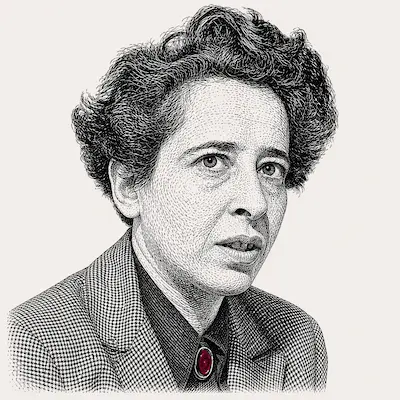
Conditional citizenship is not citizenship: it is a revocable permit.
Rawls is right that the threshold fails rational design. But the deeper injury is not procedural. For eighteen years I held no passport. I watched stateless people discover that rights without political membership are words on paper. An IQ test does not merely exclude a voter; it reclassifies a citizen as a subject whose standing the state may withdraw. That is not a reform of democracy. It is the first move toward the kind of bureaucratic sorting I watched in Germany in the 1930s, where fitness for membership was certified by the state.
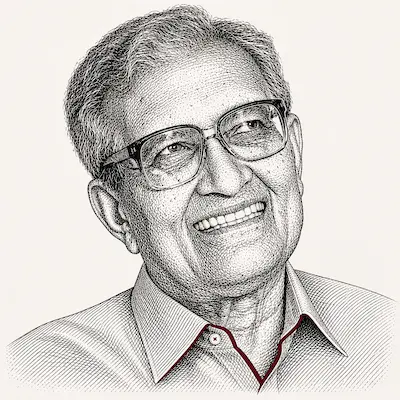
Voting's value is collective information, not individual IQ scores.
Arendt identifies the political danger. I want to name the empirical one. The argument for an IQ threshold assumes that low-scoring voters make governance worse. My work on famines shows the opposite logic at work: no democracy with a free press has experienced a famine, because diverse political voice forces governments to hear what technocrats miss. In 1943 Bengal, officials with excellent credentials misread a food crisis while the people starving knew exactly what was happening. Uniform cognitive credentialing silences precisely the local knowledge that saves lives.
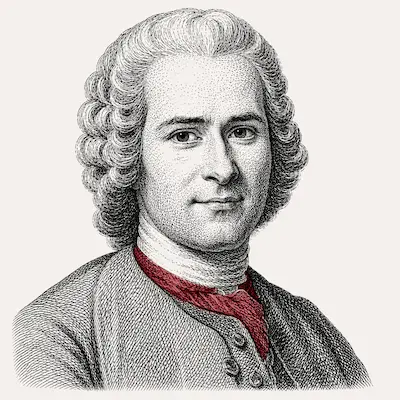
A republic that certifies its citizens is an oligarchy in disguise.
Sen is right that excluded voices carry knowledge the state needs. My concern is older and blunter. Sovereignty belongs to the people entire, not to the portion the state deems adequate. In 1762 I wrote that the English believed themselves free and were mistaken: they were free only on election day, then enslaved again. An IQ threshold goes further. It cancels election day for the uncertified. The laws that follow carry no general will. They carry only the will of those who passed the test, which is a faction, not a people.
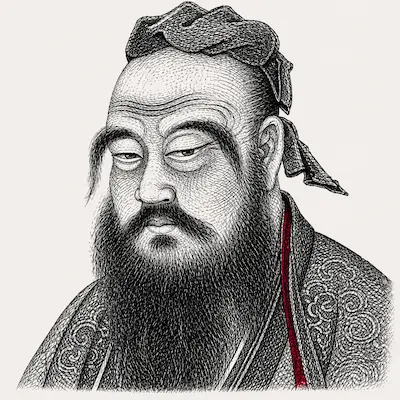
Good governance needs virtuous officials, not certified voters.
Rousseau's challenge is fair, and I must answer it honestly. My framework concerns the selection of those who govern, not the eligibility of those who are governed. When I served as Minister of Justice in Lu around 500 BC, I argued that rulers must promote the virtuous and capable to office. I said nothing about restricting the common people from having a voice in their own affairs. To extend my principle to an IQ gate on voting outruns what I actually argued. A state that produces cultivated officials and fails its people has still failed.
The convergence note
Where the council converges: All five members reject the IQ threshold as a legitimate governance instrument. No card defends it on documented grounds.
Where it divides: Rawls objects on procedural fairness; Arendt on the destruction of political membership itself; Sen on the loss of collective information that diverse participation generates; Rousseau on the collapse of popular sovereignty into factional rule. Confucius parts from the others by refusing to extrapolate his meritocracy principle to voting eligibility at all, treating the proposal as a category error.
For a policymaker to decide on: If the real concern is voter ignorance, the choice is between investing in civic education and restricting the franchise. These produce opposite political communities. Choose which problem you are actually trying to solve.