Built from documented writings, speeches, decisions and historical records. Council members argue from documented positions, applied to today's question.
Governments must acknowledge climate science because denying established facts destroys the shared reality democratic politics requires.
Roosevelt argues leaders must act on expert knowledge before public opinion catches up. Thatcher maintains that accepting science need not determine policy solutions. Maathai warns that environmental policies fail without democratic accountability. Arendt shows how systematic fact denial makes democratic deliberation impossible.
Confucius settles the deeper question: leaders who cannot name reality accurately forfeit moral authority.
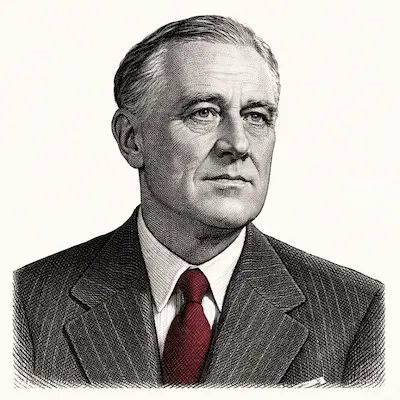
Democratic leaders must educate the public about difficult realities.
When I took office in March 1933, every banker in America told me not to close the banks. The orthodox economic view was that confidence required keeping them open. I closed them anyway for four days, used the time to separate the sound banks from the failing ones, and reopened only those we could guarantee. The public understood because I explained it directly in my first fireside chat. Sometimes leadership means acting on expert knowledge before the public is ready to accept it.
Climate science presents the same challenge. A democratic leader cannot simply announce that the science is settled and expect public support for difficult policies. You must build understanding step by step, connect the science to consequences people can see, and demonstrate that action is possible. The alternative is to let public ignorance drive policy, which serves neither democracy nor the climate.
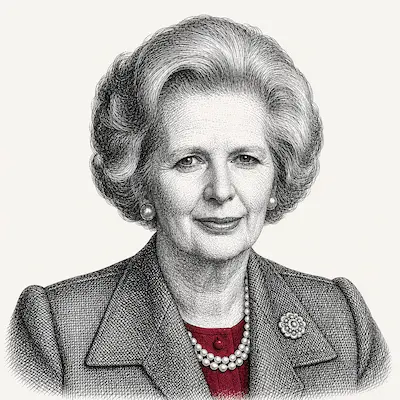
Acknowledging science does not predetermine the policy response.
Roosevelt assumes that accepting climate science requires accepting government-directed solutions. This is false. In 1988 I told the Royal Society that global warming was real and required action. But I also maintained that market mechanisms — not state planning — were the appropriate response. The science tells us what is happening. It does not tell us who should solve it or how.
Markets respond to price signals. If carbon emissions impose costs, price them properly through taxes or trading systems. If clean energy becomes profitable, private capital will flow there faster than any government programme. The error Roosevelt's approach invites is treating climate change as a justification for expanding state control over energy, transport, and industrial policy.
Governments must acknowledge scientific reality. They need not surrender economic policy to climate activists.

Environmental science without democratic accountability produces paper policies.
Thatcher's market mechanisms assume governments that will implement them honestly. My experience fighting the Moi regime taught me that environmental policies fail when the political system is captured by interests that profit from environmental destruction. When I challenged Moi's plan to build a sixty-storey tower in Uhuru Park in 1989, the issue was not just trees. It was whether a government could auction public resources to party cronies and call it development.
Climate science acknowledgment means nothing if the same governments that acknowledge it continue issuing logging concessions, mining permits, and fossil fuel subsidies to political allies. In 1992 I was beaten unconscious by police while protesting with mothers of political prisoners. Environmental protection and democratic accountability are the same struggle.
The question is not whether markets or states should lead climate action. The question is whether the people who will bear the costs have any voice in the decisions.
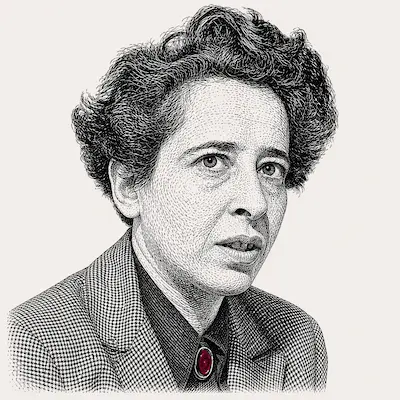
Systematic denial of factual truth destroys the common world politics requires.
Maathai grasps what the others miss. When governments deny established facts, they are not making policy choices. They are attacking the reality that democratic deliberation presumes. In my analysis of totalitarian movements, I documented how the destruction of factual truth precedes the destruction of political freedom. You cannot have genuine political argument about what to do if you cannot agree on what is happening.
Climate science denial creates what I called the "ideal condition for mob rule." When factual truth becomes a matter of opinion, politics degenerates into competing propaganda. Citizens lose the shared world of facts that makes democratic judgment possible. This is not about policy disagreement — Roosevelt and Thatcher can honestly disagree about solutions while accepting the same scientific reality.
The danger is deeper. Governments that systematically deny climate science are training their populations to reject the authority of factual truth itself. This makes democratic politics impossible.

A government that cannot name reality accurately has forfeited moral authority.
Arendt understands the fundamental issue. When I was asked what I would do first if given governance responsibility, I answered: rectify names. If names are not rectified, speech does not accord with truth. If speech does not accord with truth, affairs cannot be completed successfully. Climate science denial is a failure of name rectification. The climate is changing. Human activity is the primary cause. To call this uncertain or debatable when the evidence is clear is to corrupt the language that governance requires.
A ruler who governs by virtue needs no coercion because the people trust that their leader speaks truthfully about the conditions they face together. A ruler who denies obvious realities rules only through force and deception. Such rule cannot endure because it destroys the relationship between governor and governed.
The technical question of whether markets or states should respond to climate change comes after the moral question of whether leaders will speak truthfully about climate change. Without honest names for the problem, no solution is possible.
The convergence note
Where the council converges:
Legitimate government requires acknowledging established scientific facts about the conditions it governs. Climate science denial undermines democratic deliberation by destroying the shared factual foundation that policy debate requires.
Where it divides:
Whether acknowledging climate science obligates governments to direct economic responses, or whether market mechanisms can deliver necessary action while preserving economic freedom and democratic choice.
For a policymaker to decide on:
Whether to frame climate action as an emergency requiring government coordination of economic activity, or as a pricing problem requiring market mechanisms that make clean energy profitable.