Should democratic states rethink their democratic processes in the light of fake news shared via social media?
Built from documented writings, speeches, decisions and historical records. Council members argue from documented positions, applied to today's question.
Democratic states must respond to systematic misinformation, but the council splits on whether information control can remain democratic.
Roosevelt argues leaders must communicate directly through channels citizens actually use. Lee shows small diverse states need information controls to prevent social fragmentation. Arendt warns that government information control destroys the shared reality democracy requires. Eleanor Roosevelt seeks international standards enforced through accountable domestic institutions.
The split cannot be resolved through argument alone. Lee's Singapore survived through information control. Arendt's analysis explains how such control eliminates democratic deliberation itself.
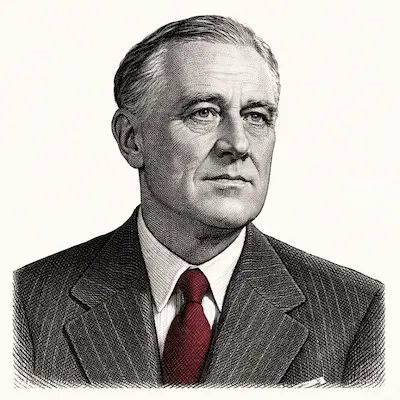
Democratic leaders must actively counter false information through direct communication, not passive correction.
The fireside chats were my documented response to hostile press coverage and economic panic during the Depression. I used radio to speak directly to citizens, explaining policy in plain language while newspapers spread fear and misinformation. When banks were failing in 1933, I didn't issue technical rebuttals to false rumors — I spoke directly to families in their living rooms, explaining why their deposits were safe. This rebuilt confidence faster than any economic measure. Democratic leaders who cede the information battlefield to hostile actors have already lost half the fight.
Today's social media creates the same challenge at digital speed. The solution remains direct engagement, not defensive responses. Citizens need authoritative information from leaders they trust, delivered through channels they actually use. But this requires presidential accountability through press conferences and institutional oversight — the democratic constraint that makes direct communication legitimate rather than propagandistic.
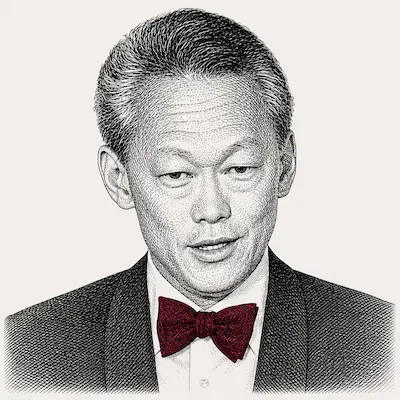
Survival requires controlling information flows that threaten social cohesion and state stability.
Roosevelt's fireside chats worked because America faced economic crisis, not existential fragmentation. Singapore in 1965 was a multiracial society expelled from Malaysia, surrounded by hostile neighbors, with no natural resources and communal tensions that could explode into violence. We used the Internal Security Act to detain those spreading racial hatred online and offline. We required internet service providers to block sites promoting religious extremism. We prosecuted politicians who used social media to incite ethnic divisions. These measures preserved the social peace that allowed democracy to function at all.
The Western model assumes a cohesive society that can absorb false information without fracturing. Small, diverse states don't have that luxury. We learned from the 1969 racial riots — misinformation kills people when communities are already divided. Better to restrict some speech than to rebuild from civil war.
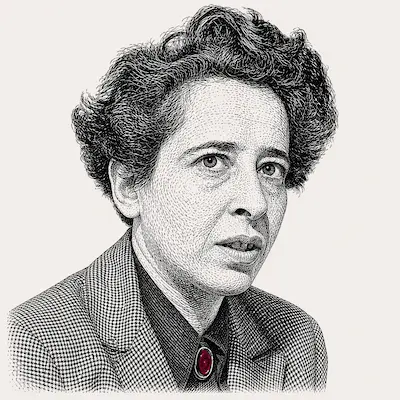
Misinformation destroys the shared reality that democratic deliberation requires.
Lee Kuan Yew's approach treats symptoms while accelerating the disease. When governments control information to prevent fragmentation, they eliminate the public realm where citizens can distinguish fact from opinion through collective judgment. This creates exactly the atomized, isolated individuals that totalitarian movements exploit. The 1969 riots he references were not caused by free speech but by the absence of genuine political institutions where racial tensions could be addressed through democratic deliberation rather than ethnic mobilization.
Misinformation succeeds when people have no shared institutional framework for testing truth claims together. The solution is not to restrict information but to strengthen the institutions — independent courts, free press, civic education — that enable citizens to think and judge collectively. Roosevelt's fireside chats worked because they operated within this framework, not instead of it.

Free expression must be balanced against the protection of democratic institutions themselves.
Arendt correctly identifies the danger of government information control, but Article 19 of the Universal Declaration was never absolute. We included Article 29's limitation clause: rights may be restricted when "necessary for meeting the just requirements of morality, public order and the general welfare in a democratic society." The question is not whether to limit misinformation, but who makes those determinations and through what process.
International institutions can establish standards for what constitutes systematic disinformation campaigns — foreign interference, coordinated inauthentic behavior, deliberate incitement to violence. But enforcement must remain with democratic institutions within each state, subject to judicial review and electoral accountability. The alternative Roosevelt and Lee represent — either passive response or authoritarian control — both fail because they cannot distinguish between legitimate political disagreement and systematic attacks on the democratic process itself.
The convergence note
Where the council converges: Democratic states cannot remain passive when systematic misinformation threatens institutional legitimacy and social cohesion.
Where it divides: Whether information control can be democratically legitimate (Lee) versus whether such control inevitably destroys democratic deliberation (Arendt).
For a policymaker to decide on: Which specific misinformation requires state response, through what institutions, with what accountability mechanisms and appeal processes.