The Long Council
Who was selected, and why
Should western democracies introduce mandatory voting?
The central tension
Whether low voter turnout represents a failure of democratic legitimacy that justifies state compulsion, or whether the right to abstain is itself a democratic freedom that mandatory voting would violate.
Selected members
John Stuart Mill
Will argue: Against mandatory voting as a violation of individual liberty, the state cannot legitimately compel political expression, and coerced participation undermines authentic democratic deliberation.
Mill's On Liberty and Considerations on Representative Government directly address the tension between individual freedom and collective democratic participation.
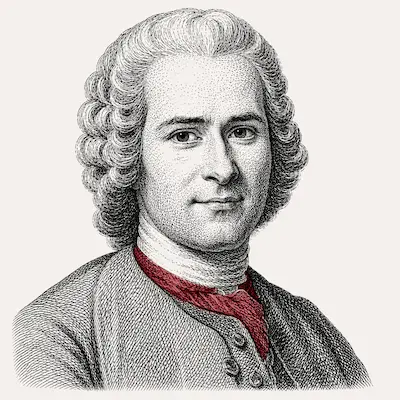
Rousseau
Will argue: For mandatory voting as necessary for legitimate democracy, citizens have obligations to the political community, and abstention weakens the general will's capacity to express the common good.
Rousseau's theory of the general will and popular sovereignty provides the strongest theoretical foundation for mandatory democratic participation.
Tocqueville
Will argue: For mandatory voting as a civic education instrument, democratic habits must be cultivated, and compulsory participation builds the civic capacity democracy requires.
Tocqueville's analysis of American democracy and the conditions for democratic vitality directly addresses civic participation and its relationship to democratic health.
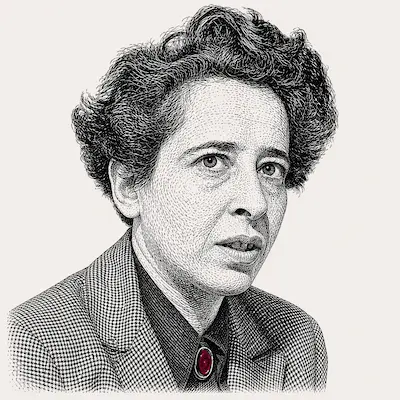
Hannah Arendt
Will argue: Against mandatory voting, authentic political action cannot be coerced; forced participation destroys the very freedom that politics is meant to protect.
Arendt's distinction between power and violence, and her theory of political participation as constitutive of freedom, is directly relevant to the question of coerced political participation.
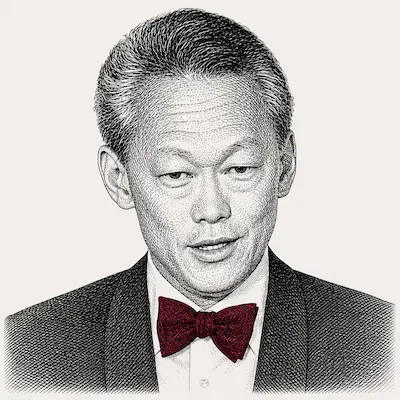
Lee Kuan Yew
Will argue: For mandatory voting as a governance necessity, democracy requires informed participation, and voluntary systems produce outcomes driven by passionate minorities rather than the considered judgment of the whole citizenry.
LKY implemented mandatory voting in Singapore and governed a system where civic duties were legally enforced as part of national development.
Considered but not selected
Madison: His framework focuses on institutional checks and balances rather than mass participation questions - Rawls: While relevant to questions of political legitimacy, his framework doesn't directly address the empirical question of compulsory voting - Hayek: His spontaneous order framework is more relevant to economic than political participation questions