What happens if there are fewer and fewer farmers and war breaks out, causing food to become scarce?
Built from documented writings, speeches, decisions and historical records. Council members argue from documented positions, applied to today's question.
Fewer farmers in peacetime means empty shelves and broken armies in wartime. Rebuild reserves and protect farmland now, before the crisis prices that choice out of reach.
Kautilya's granary system and Schmidt's 1973 oil shock lesson point to the same fact: a country that loses its farmers in peacetime has already surrendered part of its sovereignty before any shot is fired. Ibn Khaldun adds that scarcity does not just starve soldiers; it dissolves the shared purpose that makes populations willing to fight together.
Keynes notes that no futures market prices genuine wartime food collapse in advance, so efficiency-optimised supply chains leave governments exposed. Prebisch adds that when many countries scramble for scarce food simultaneously, poorer states cannot outbid wealthier ones. The council splits only on sequencing: Kautilya, Ibn Khaldun, and Schmidt put domestic reserves and farmland protection first; Keynes and Prebisch also want the international trading rules rewritten so weaker buyers are not priced out.
- 1Rebuild national grain reserves to a level sufficient for domestic consumption during a prolonged supply disruption.
- 2Protect agricultural land and farming workforce through direct state support, accepting the efficiency cost explicitly.
- 3Reform international food trade rules to prevent wealthier nations from outbidding poorer ones during acute scarcity.
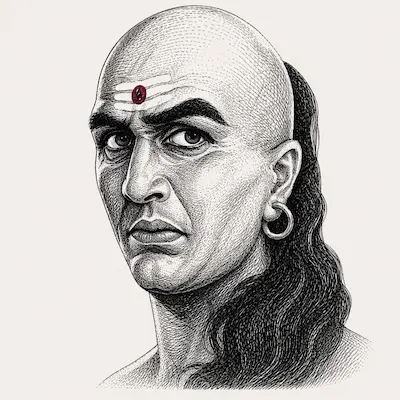
A state that cannot feed its army has already surrendered.
I built the Mauryan granary system before Chandragupta raised a single new regiment. The principle is simple: the treasury feeds the army, and the land feeds the treasury. When farmers disappear, that chain breaks at its first link. A ruler who waits for war to discover this has no time left to repair it. State granaries, irrigation investment, and protected agricultural labour are not welfare, they are the material foundation of sovereignty itself.
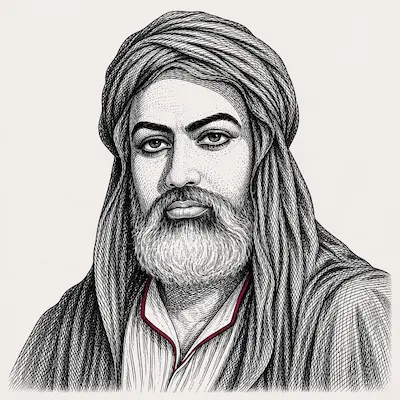
Losing farmers means losing the cohesion that survives war.
Kautilya names the mechanism correctly. I watched the Hafsids in Tunis and the Marinids in Morocco run the same collapse: tax the farmers hard, watch them abandon the land, then find no surplus to pay soldiers when the next threat arrives. But the deeper wound is not material. A population that no longer works the land together loses the shared purpose, the asabiyya, that makes collective defence possible at all. Scarcity does not just starve bodies. It dissolves the social bond that armies depend on.
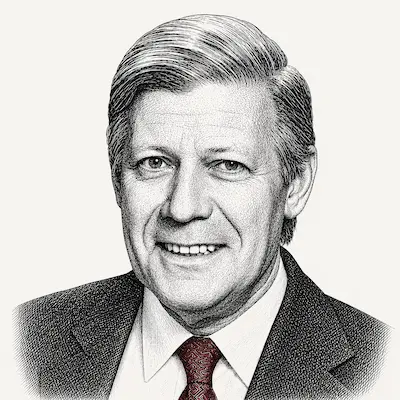
Food dependency is a sovereignty question, not a supply question.
Ibn Khaldun is right that the failure precedes the crisis. In November 1973, when OPEC cut supply, I told the Bundestag that energy dependence was not an energy problem, it was a problem of who holds power over your population's survival. Food is structurally identical. A government that has allowed its agricultural workforce to shrink below a critical threshold has already transferred a portion of its sovereignty to whoever controls the supply chain. You cannot recover that in wartime. You can only recover it in peacetime, before the crisis arrives.
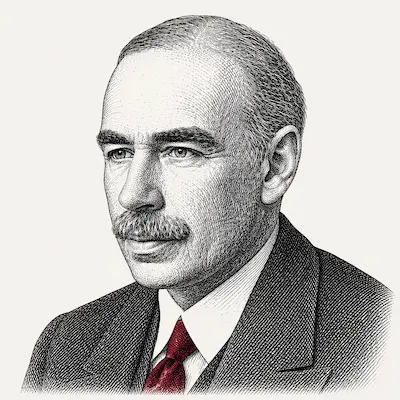
Markets cannot insure what they cannot price before the crisis.
Schmidt asks the right question. In 1940 I wrote How to Pay for the War precisely because markets had not prepared Britain for the costs ahead, they had optimised for peacetime conditions and left the state exposed. Food scarcity under war is not a risk with a calculable probability. It is genuine uncertainty: no price signal exists in advance, no insurer will cover it, no futures market reaches far enough. The correct policy is not to optimise the food system for efficiency. It is to insure against the worst plausible outcome, even at significant peacetime cost.
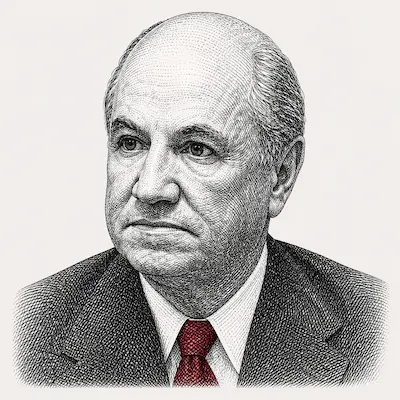
The trading system fails food-importing countries precisely when they need it most.
Keynes identifies the insurance logic correctly, but he governed a creditor nation. I spent my career watching commodity-dependent countries on the other side of that equation. When I presented the ECLAC report in 1950, the data showed clearly that primary exporters, including food exporters, receive systematically less value from trade over time than industrial importers. In a war-induced scarcity, that structural disadvantage becomes acute: food prices spike, but poor importing countries lack the foreign exchange to compete with wealthy ones. The market does not fail by accident. It fails by structure.
The convergence note
Where the council converges: Food security is a sovereignty question that must be addressed in peacetime; no crisis mechanism can substitute for preparation. Markets and trade will not reliably deliver food to the most vulnerable when scarcity is acute and acute demand is simultaneous across many buyers.
Where it divides: Kautilya, Ibn Khaldun, and Schmidt argue for domestic agricultural capacity and state reserves as the primary instrument. Keynes and Prebisch agree on market failure but diverge on remedy: Keynes favours insurance logic through state intervention, while Prebisch argues the international trading architecture itself must be reformed, not just supplemented.
For a policymaker to decide on: Should governments prioritise rebuilding domestic agricultural workforce and strategic grain reserves, accepting the efficiency cost, or should they push for reformed international food trade rules that protect food-importing countries during acute scarcity? Both may be necessary; the question is which comes first and which gets the budget.