If AI takes the jobs, who’s left to buy? What stops the collapse and who must act?
Built from documented writings, speeches, decisions and historical records. Council members argue from those positions, applied to today's question.
Government must create purchasing power directly when AI displaces workers faster than markets can absorb them.
Keynes and Roosevelt anchor in the 1930s: when private investment collapses, only government spending prevents demand spirals. Sen reframes the problem from employment to capabilities, but agrees entitlements must be maintained when productivity rises. Friedman accepts government transfers to preserve price signals; Hirschman trusts institutional adaptation but acknowledges markets need time.
The council splits on whether to preserve work through public employment or replace it with direct transfers.
- 1Create direct government purchasing power through public employment programs when private markets cannot absorb displaced workers.
- 2Establish universal income transfers that maintain purchasing power while preserving market price signals for new employment creation.
- 3Design benefit systems where recipients feel they have earned their support, not received charity.
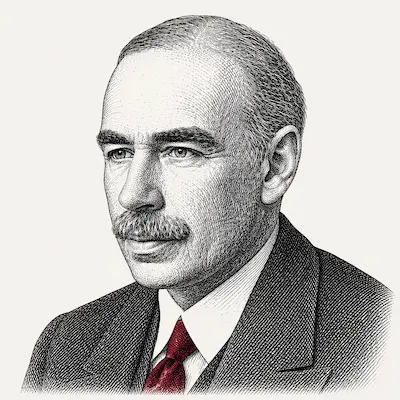
AI displaces demand faster than markets create it.
When technology destroys jobs faster than it creates them, we face genuine uncertainty, not calculable risk. Markets cannot self-correct because the feedback mechanism breaks down. In 1936 I showed that economies reach stable equilibria with mass unemployment when private investment collapses. Today's AI displacement creates the same dynamic: productivity rises while purchasing power falls. Government must become the employer and purchaser of last resort, creating demand directly through public works and guaranteed employment.
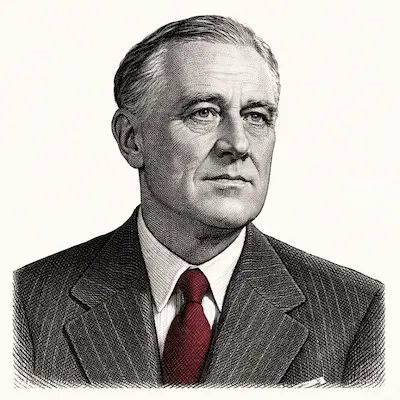
The state must create purchasing power when private markets fail.
Keynes is right about government action, but underestimates what democratic leadership can achieve. In March 1933 I signed fifteen major bills in one hundred days because visible action restores confidence as much as specific policies do. When AI takes the jobs, we need a new Social Security, universal basic employment through infrastructure, care work, and community services. I designed Social Security so beneficiaries felt they earned their benefits. The same principle applies: people need work and purpose, not just income.
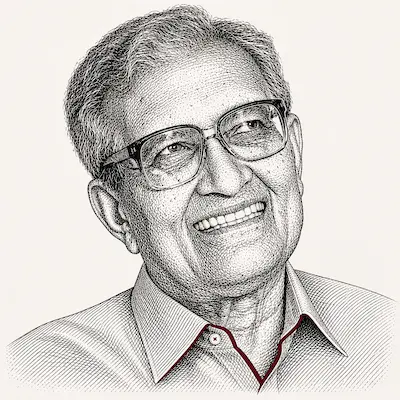
Technology should expand human capabilities, not contract them.
Roosevelt assumes work defines human worth, but that confuses means with ends. AI displacement is only catastrophic if we measure development by employment rather than by what people can actually do and be. In 1943 Bengal, people starved while food was exported because their entitlements collapsed. Today's challenge is similar: ensuring people retain access to goods and services regardless of employment status. We need institutions that distribute the productivity gains from AI, not policies that artificially preserve obsolete jobs.
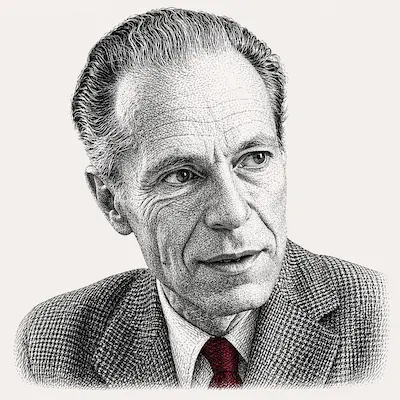
Disruption forces creative adaptations we cannot anticipate.
Sen's entitlement approach is sound, but gradual adjustment beats comprehensive planning for unknowable futures. In 1950s Colombia I learned that development planners systematically overestimated their knowledge and the state's capacity. AI displacement will create productive tensions that force institutional innovation, new forms of work, different ownership structures, novel distribution mechanisms. The hiding hand principle applies: if we knew how hard the transition would be, we might not attempt it. Sometimes bounded ignorance enables necessary action.
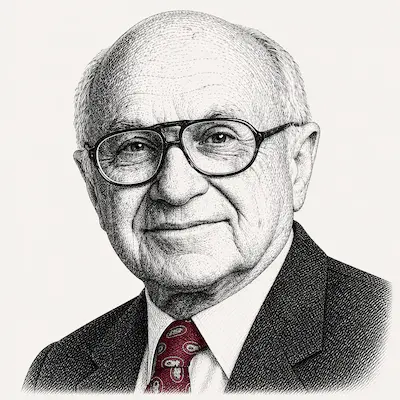
Markets adapt when price signals remain intact.
Hirschman is right about creative adaptation, but wrong about gradual adjustment. When crisis hits, rapid change works better than incremental reform. In 1975 I advised Chile on shock treatment because half-measures prolong adjustment costs. AI displacement requires a negative income tax, universal basic income that preserves work incentives while maintaining purchasing power. Government should provide the safety net, not create artificial jobs. Markets will generate new employment categories if we don't distort price signals through job protection schemes.
The convergence note
Where the council converges: Government must act when AI displaces employment faster than markets can adjust. Pure laissez-faire leads to demand collapse.
Where it divides: Whether the solution is public employment (Roosevelt/Keynes), capability-focused redistribution (Sen), institutional adaptation (Hirschman), or market-preserving transfers (Friedman).
For a policymaker to decide on: The speed of intervention and whether to preserve the employment relationship or replace it entirely.