During wartime, should a nation's political discourse give greater prominence to protecting cultural and democratic institutions alongside military defense, rather than letting military priorities dominate the conversation?
Built from documented writings, speeches, decisions and historical records. Council members argue from documented positions, applied to today's question.
Wartime silence about democracy does not protect it; a state that stops practicing its values loses them before the war ends.
Arendt, Roosevelt, and Confucius each point to the same mechanism: institutions erode through disuse, not just through defeat. Roosevelt named four freedoms in January 1941 as the war's purpose, then interned 120,000 Japanese Americans. That contradiction is the council's sharpest evidence: both sides of the argument live in the same presidency. Confucius watched Lu's rulers neglect governance rituals before military failure arrived; the neglect was the cause, not the symptom.
Ben-Gurion and Machiavelli accept constraints under genuine existential pressure, but neither endorses open-ended suspension. Ben-Gurion held elections in January 1949 under fire; Machiavelli's praise for Borgia ends precisely where severity becomes habit rather than instrument.
- 1Publish before any conflict begins a fixed list of institutions, elections, press freedom, minority rights, that no wartime emergency order may suspend.
- 2Hold elections on their scheduled date even during active military operations, as Israel did in January 1949.
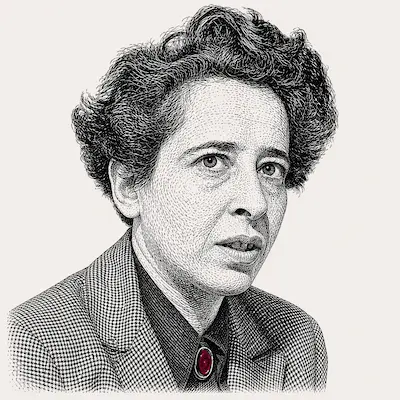
Wartime silence about democracy does not preserve it; it consumes it.
When Nazi Germany silenced its own public realm, it did not do so all at once. It did so incrementally, each emergency justifying the next suspension. What I observed across Europe in the 1930s was that political power, which arises only when people act together, cannot be stored. A democracy that ceases practicing itself in wartime does not retrieve itself afterward. It finds, when the guns stop, that the habit of collective self-governance has quietly died.
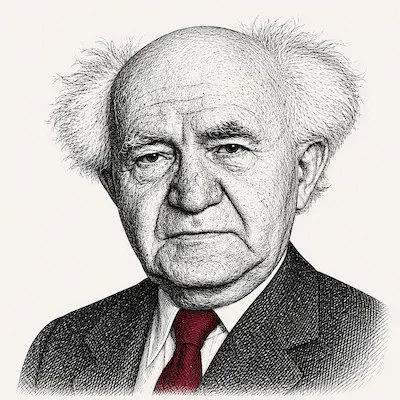
A democracy that loses its war loses everything it was defending.
Arendt asks whether a state can survive war without surviving as itself. I answer from experience, not theory. On May 14, 1948, I declared independence while five Arab armies were already moving. We held elections in January 1949, under fire, because democratic legitimacy was part of what we were building. But I also imposed military administration over Arab citizens for eighteen years. I am not proud of it. I am honest about why: a state that does not survive cannot later correct its errors.
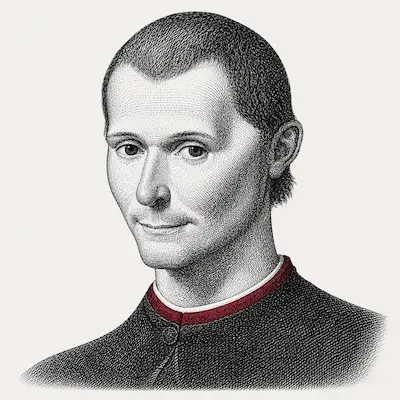
Necessity justifies hard measures; it does not justify forgetting what you fight for.
Ben-Gurion asks when necessity becomes a permanent excuse. The answer is: when the prince stops asking the question. I watched Cesare Borgia in 1502 use every instrument of force and cunning to build a new order in central Italy. His cruelty was concentrated, purposeful, and then stopped. What distinguished him from a mere tyrant was that he used severity to create conditions for governance, not to substitute for it. A republic that abandons its institutions to fight a war has handed the enemy a victory they could not win in the field.
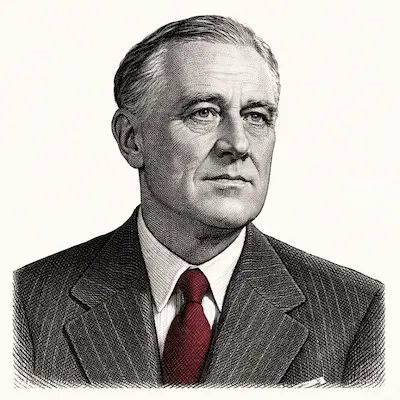
The content of what you defend must remain visible during the fight.
In January 1941, eleven months before Pearl Harbor, I stood before Congress and named four freedoms as the purpose of American power: speech, worship, freedom from want, freedom from fear. I did not offer these as postwar aspirations. They were the operative definition of what the war was for. We held a presidential election in November 1944, in the middle of the war, because democracy that suspends itself to survive has already decided survival matters more than the thing being survived. I then signed Executive Order 9066 and interned 120,000 Japanese Americans. I know what that contradiction costs.
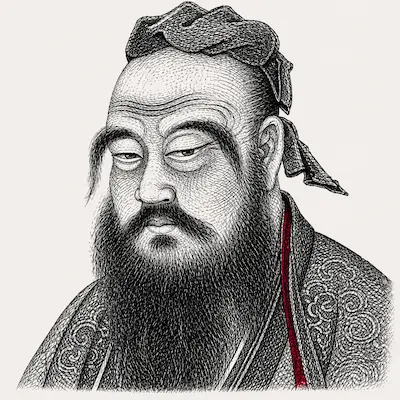
A state that abandons its rituals in crisis has already chosen what it values.
Roosevelt asks whether cultural continuity survives when the state stops modeling it. In the state of Lu I watched rulers neglect the rites of governance, the ceremonies of court, the education of officials, and then wonder why their authority eroded. The people did not lose faith because of military defeat. They lost faith before the defeat, because the ruler had already shown them what he truly valued. Around 500 BC I resigned from the Ministry of Justice in Lu when Duke Ding received dancing girls and neglected his duties for three days. That neglect was the governance failure. The rest followed.
The convergence note
Where the council converges: Every member agrees that wartime cannot be treated as a blank slate on which all prior commitments are suspended. Even Ben-Gurion, who places survival first, held elections in 1949 under fire.
Where it divides: Ben-Gurion and Machiavelli accept that democratic and cultural institutions may be constrained by genuine existential necessity. Arendt, Roosevelt, and Confucius argue that the moment a state stops practicing its values, it begins losing them, regardless of military outcome. Roosevelt's Japanese internment is the table's sharpest evidence for both sides simultaneously.
For a policymaker to decide on: Which institutions are non-negotiable during war: elections, a free press, minority rights, cultural education? The council cannot agree on the list, but every member agrees the list must exist before the crisis begins, not during it.