Fertility rate is dropping dramatically. What problems would we face with a diminishing population?
Built from documented writings, speeches, decisions and historical records. Council members argue from documented positions, applied to today's question.
Declining populations create fiscal crises, demand shortfalls, and political gridlock that policy tools cannot fix once the demographic shift accelerates.
Lee shows small states face immediate workforce collapse while Deng argues gradual reform can manage the transition. Keynes identifies how fewer people create deflationary spirals that resist normal stimulus. Schmidt warns social security systems become mathematically impossible without early restructuring.
Ibn Khaldun sees low birth rates as symptoms of civilizational decay that policy cannot reverse.
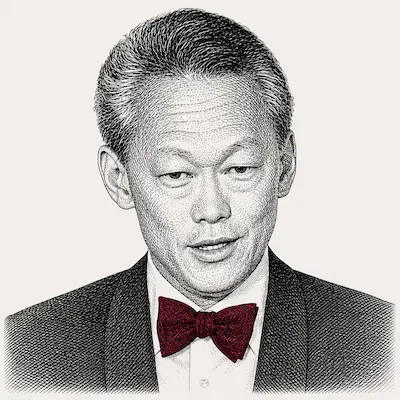
Demographic decline threatens small state viability more than large states.
Singapore's fertility rate fell from 3.5 in 1965 to 1.2 by 2015. I introduced the graduate mothers scheme in 1984 to reverse this trend — incentivising educated women to have more children. The policy failed spectacularly and cost the PAP votes in that year's election. But the underlying problem remains unsolved. Singapore now has one of the world's lowest birth rates and an aging population that threatens our economic model.
Small states cannot absorb demographic shocks the way large countries can. We lack the population buffer and territorial depth. When our workforce shrinks, we cannot simply relocate economic activity to younger regions — we have no other regions. Immigration helps but creates integration challenges that threaten social cohesion. The mathematics are brutal: fewer workers supporting more retirees in a city-state means fiscal crisis.

Population policy creates structural problems that outlast the leaders who design it.
Lee Kuan Yew is right to worry, but he underestimates the adaptive capacity that gradual reform allows. When I launched the One-Child Policy in 1979, China faced genuine resource constraints — we could not feed, educate, or employ the population we had. The policy worked: fertility dropped from 2.8 to 1.5. But policies designed for one era become problems in the next era, and smart governance means adjusting before the crisis hits.
China began relaxing the One-Child Policy in 2013 and ended it entirely by 2016. We saw the demographic transition coming and started preparing: raising retirement ages, expanding the rural pension system, investing in automation to offset labor shortages. The key is not to avoid demographic transitions but to manage them through institutional adaptation. Rigid population policies create rigid demographic outcomes.
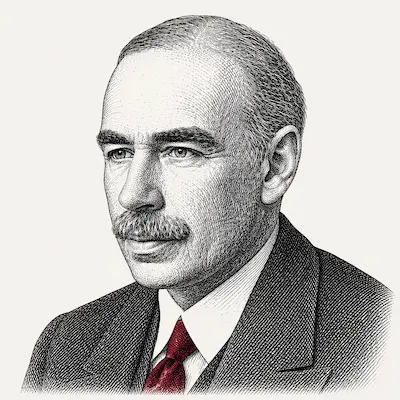
Demographic decline creates deflationary pressures that conventional policy tools cannot easily reverse.
Deng's institutional adaptation misses the deeper economic mechanism at work. Declining populations reduce aggregate demand not just through fewer consumers, but through reduced investment incentives. When businesses expect shrinking markets, they invest less. When workers expect smaller pensions, they save more and consume less. This creates deflationary spirals where falling prices discourage current spending, which reduces income, which reduces spending further.
During the 1930s I argued that economies could reach stable equilibria with mass unemployment. Demographic decline creates a parallel problem: stable equilibria with insufficient demand. The standard Keynesian response — deficit spending to boost demand — works in cyclical downturns but may be insufficient when the demand shortfall is structural and permanent.
Aging populations also change the politics of fiscal policy. Older voters typically oppose deficit spending that benefits future generations. The demographic groups who would benefit from stimulus lack political weight. This creates a trap: precisely when fiscal intervention is most needed, it becomes most politically difficult.

Demographic decline requires restructuring social contracts, not managing them.
Keynes correctly identifies the demand problem, but his fiscal solution creates the very dependency that makes demographic decline catastrophic. When I governed in the 1970s, West Germany's birth rate was already falling below replacement. The temptation was to use fiscal policy to paper over the structural adjustment. I refused. Better to force the adjustment early when you still have options.
Demographic decline means social security systems designed for growing populations become mathematically impossible. In 1981 I pushed through pension reforms against SPD opposition because the alternative was fiscal collapse when the baby boom generation retired. The Bundesbank's refusal to accommodate my spending requests was frustrating but ultimately correct — monetary accommodation delays necessary adjustments.
The real challenge is that demographic transitions happen slowly, then suddenly. Politicians avoid painful restructuring until crisis forces it. By then the adjustment is more severe and the options are fewer. Smart governance means accepting lower growth and higher savings rates before you are forced to. The countries that adapt their social contracts early will survive. Those that rely on fiscal tricks will face sharper collapse later.

Demographic weakness is both symptom and cause of civilizational decay.
Schmidt approaches this as a policy problem requiring technical solutions. But demographic decline reflects the deeper erosion of the social bonds — asabiyya — that enable collective action. When societies grow prosperous and comfortable, the martial virtues and group solidarity that built them weaken. Luxury and security reduce the willingness to sacrifice for future generations. Low birth rates are the natural result.
I observed this pattern across multiple North African dynasties. The Almohads conquered through strong tribal cohesion and high fertility. Their descendants, softened by urban prosperity, stopped having children and lost the capacity for collective defense. External pressure that would have strengthened a cohesive society instead destroyed a fragmented one. This is the civilizational cycle: strength creates prosperity, prosperity creates weakness, weakness invites conquest.
Modern states face the same dynamic. Declining populations signal declining confidence in the future — people who believe their civilization will endure invest in children. When they stop investing in children, they stop investing in the institutions and infrastructure their children would inherit. The fiscal crisis Schmidt describes is secondary to the social crisis. You cannot rebuild asabiyya through pension reform.
The convergence note
Where the council converges:
Demographic decline creates structural economic and political pressures that cannot be solved through short-term policy adjustments.
Where it divides:
Whether the solution lies in institutional adaptation (Deng), demand management (Keynes), early restructuring (Schmidt), or civilizational renewal (Ibn Khaldun).
For a policymaker to decide on:
Whether to accept demographic decline and restructure institutions around it, or attempt to reverse it through immigration and pro-natalist policies.