Should countries prioritize economic growth or environmental protection?
Built from documented writings, speeches, decisions and historical records. Council members argue from documented positions, applied to today's question.
The council establishes that the growth-versus-environment framing is fundamentally flawed because environmental degradation ultimately destroys the resource base that economies depend on, making the two inseparable over any meaningful time horizon.
Maathai demonstrates that environmental health directly enables economic activity, while Sen shows that sustainable human development requires expanding capabilities within ecological limits that actually sustain those capabilities. Deng argues that immediate poverty reduction justifies accepting environmental costs that wealth can later remediate, while Prebisch reveals how environmental requirements can become structural mechanisms that rich countries use to constrain developing nations.
The irreducible split centers on timing: whether environmental constraints must be accepted as immediate development parameters or whether rapid growth can create sufficient wealth to address environmental problems retroactively.
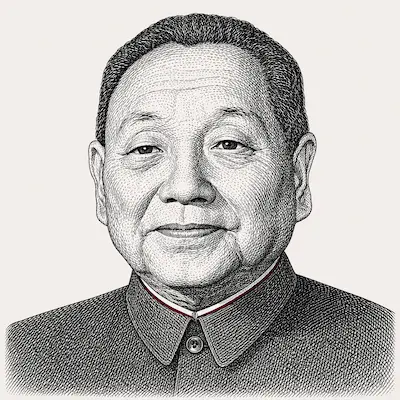
Economic development must come first — environmental protection requires wealth to afford.
In 1978, when I launched China's reform and opening, our people faced absolute poverty. Over 250 million lived on less than a dollar a day. The immediate question was not whether our development path would create environmental problems decades later, but whether our children would eat tomorrow. My Four Modernisations prioritised agriculture, industry, national defence, and science precisely because these were the foundations of survival and prosperity. A hungry nation cannot afford the luxury of pristine environments.
The results vindicate this sequence. China's GDP grew at 9.5 percent annually for three decades, lifting 800 million people from poverty. Yes, this created pollution, resource depletion, and environmental degradation. But it also created the economic capacity to address these problems — something an impoverished China could never have done. Rich countries had centuries to industrialise gradually; developing countries need rapid growth to catch up, and rapid growth inevitably strains natural systems in the short term.

The growth-versus-environment framing is false — environmental degradation destroys the economic foundation.
Deng, I understand the urgency you faced, but your framing treats environmental health and economic development as opposites when they are inseparable. In Kenya's Central Province, when women complained about water scarcity and firewood shortages in the 1970s, this was not an environmental problem separate from poverty — this was poverty itself. Degraded watersheds meant failed harvests, long walks for water meant girls missed school, deforested hillsides meant no fuel for cooking. The Green Belt Movement restored 51 million trees precisely because tree-planting was economic development.
Your model assumes that economic growth creates resources to clean up environmental damage later. But environmental degradation destroys the resource base that economies depend on. China's growth required massive imports of timber, minerals, and agricultural products — transferring environmental destruction to other countries while creating dependency. True development must work within ecological limits because those limits are real whether we acknowledge them or not.
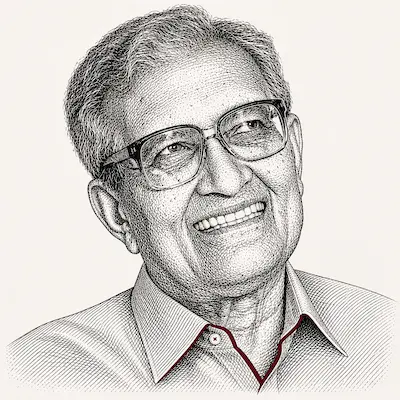
Human development requires both immediate capability expansion and the ecological conditions that sustain capabilities over time.
Maathai, your integration is correct, but we need precision about what capabilities we are actually expanding. The capability approach asks: what are people actually able to do and be? Deng's model expanded some capabilities rapidly — the capability to be adequately nourished, to be educated, to live in cities with modern amenities. But it simultaneously degraded other capabilities — the capability to breathe clean air, to live in stable climatic conditions, to have secure access to water and arable land.
The real question is not growth versus environment but which combination of economic and environmental policies best expands human capabilities for the most people over the longest time horizon. My work on famines shows that environmental degradation creates exactly the entitlement failures that destroy people's capability to access food. The 1943 Bengal famine occurred during environmental stress; the 1984 Ethiopian famine involved both drought and soil degradation. We cannot expand human capabilities by destroying the ecological systems that sustain them.

Environmental requirements imposed by rich countries reproduce colonial patterns of constraining peripheral development.
Sen, the capability approach is elegant, but it misses the structural constraints. When rich countries demand that poor countries adopt environmental standards they themselves ignored during their own industrialisation, this reproduces the same pattern I documented in trade relations — rules that appear neutral but systematically disadvantage the periphery. The United States and Britain industrialised with coal, deforestation, and massive pollution; they became rich enough to afford environmental cleanup. Now they insist that China and India develop with renewable energy and emission limits.
This is not hypocrisy — it is structural advantage. Environmental regulations become another mechanism by which the centre constrains peripheral development. Just as free trade rules prevented developing countries from protecting infant industries, climate agreements prevent them from using the energy-intensive development path that every rich country followed. The solution is not to abandon environmental protection but to restructure the international system so that environmental costs and development needs are shared equitably.
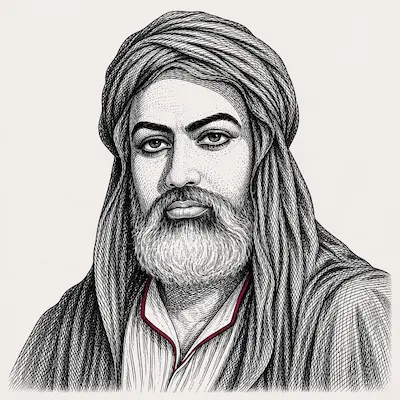
Rulers who overtax their resource base to finance immediate luxury destroy the foundation of their own power.
The pattern you describe — prioritising immediate gains over long-term sustainability — is the essence of dynastic decline. In the Muqaddimah, I documented that declining dynasties raise tax rates while narrowing the tax base, destroying the economic activity that generates revenue. Environmental degradation follows the same logic: a ruler extracts resources faster than they regenerate to finance immediate consumption, prosperity, and display.
This happens because prosperity itself erodes the cohesion and discipline that created it. A dynasty in its conquering phase conserves resources and plans for survival; a dynasty in its luxury phase consumes them without restraint. Deng's China was in its disciplined, accumulating phase — accepting environmental costs for developmental gains. But prosperity creates the political conditions where those costs become unbearable to the population. The same economic success that validates the development model eventually forces its abandonment.
The deeper principle: sustainable resource management is not environmental virtue but political necessity. A governing system that destroys its resource base destroys the conditions of its own survival. The environment is not external to political economy — it is the foundation that political economy either preserves or exhausts.
The convergence note
Where the council converges All members accept that environmental degradation and human development are ultimately incompatible — no economy can grow indefinitely on a finite resource base.
Where it divides The council divides on timing and sequence: whether environmental constraints must be accepted immediately as development parameters (Maathai, Sen) or whether rapid growth can create the wealth necessary to address environmental problems later (Deng), and whether environmental requirements are neutral technical constraints or structural mechanisms that rich countries use to constrain poor ones (Prebisch). Ibn Khaldun's framework treats this as a predictable cycle rather than a policy choice.