Built from documented writings, speeches, decisions and historical records. Council members argue from documented positions, applied to today's question.
Coordinate all oil importers to isolate the blocking power economically while offering them profitable alternatives to chokepoint control.
Schmidt demands unified purchasing by major consumers to eliminate the blocking power's leverage. Lee insists the controller must face complete isolation from all international economic relationships simultaneously. Deng argues economic interdependence makes permanent blockade irrational for any developing state. Sun Tzu targets the adversary's domestic vulnerabilities while maintaining diplomatic cover. Kautilya coordinates pressure across multiple powers while providing face-saving exits.
The council agrees military force escalates without solving the underlying control dynamic.
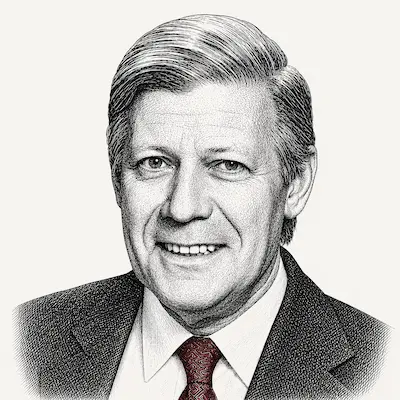
Energy chokepoints are sovereignty questions disguised as shipping problems.
In November 1973 I told the Bundestag that energy dependence is not an energy question but a sovereignty question. The oil embargo taught me that whoever controls the flow controls the consumer. The Strait of Hormuz is the same vulnerability multiplied — 20% of global oil, 30% of LNG, the entire Gulf energy supply compressed into a 21-mile chokepoint.
The solution is not military. It is coalition-building among consuming nations and immediate diversification. We coordinated car-free Sundays and strategic reserve releases in 1973. Today's version requires the US, Europe, Japan, India and Korea to act as one market — unified purchasing, shared reserves, synchronized alternative supply. The blocking power loses leverage when consumers present a unified front.
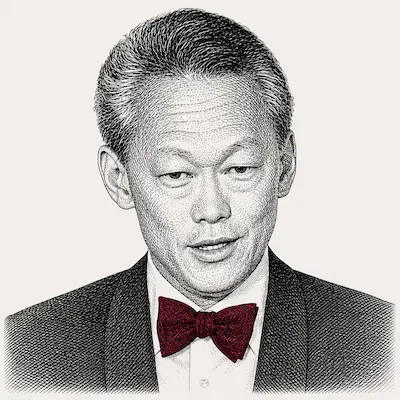
The blocking power must fear isolation more than they value the leverage.
Schmidt is right about consumer coordination, but he misses the chokepoint controller's calculation. When I managed Singapore's position on the Malacca Strait, I learned that controlling a chokepoint only works if you remain indispensable to multiple powers. The moment you become a pure obstructor, you become a target.
In 1965 Singapore separated from Malaysia and faced immediate existential pressure. I made us indispensable — to the US as a naval facility, to China as a trade hub, to everyone as a reliable transit point. The lesson for Hormuz: the blocking power must face complete economic isolation from all major economies simultaneously. Not just oil buyers — their banks, their technology suppliers, their food importers. Make the chokepoint controller choose between the leverage and their entire international economic relationship.
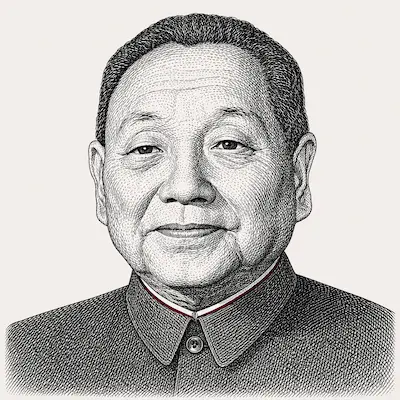
Economic interdependence makes permanent blockade irrational even for the blocking power.
Lee raises the key point about isolation, but he underestimates how economic logic disciplines even hostile powers. In 1979 I normalized relations with the United States precisely because ideological competition is less important than development. China and America both depend on Gulf energy flows — this creates natural cooperation even during strategic rivalry.
The blocking power faces the same calculation I faced in 1978: you cannot develop your economy while cutting yourself off from global markets. If Iran or anyone else blocks Hormuz permanently, they lose the oil revenue that funds their state. They become North Korea — isolated, impoverished, dependent on a single patron. No rational leadership chooses that path.
The solution is patient economic pressure combined with face-saving alternatives. Offer the blocking power something they value more than the chokepoint leverage — technology access, debt relief, security guarantees. Make cooperation more profitable than obstruction.
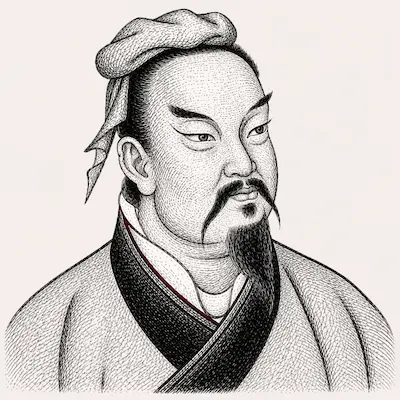
Supreme excellence is reopening the strait without fighting by attacking what the adversary cannot defend.
Deng assumes the blocking power is rational, but chokepoint closure often signals desperation, not calculation. A desperate adversary cannot be bought off — they must be outmaneuvered. The key is to attack where they are unprepared while appearing to negotiate.
The adversary expects military confrontation at the chokepoint. Instead, target their vulnerabilities elsewhere — their food imports, their financial networks, their domestic fuel distribution. Every state has supply chains they cannot defend simultaneously. Create multiple pressure points faster than they can respond. Meanwhile, publicly offer negotiations while privately accelerating alternative supply routes.
Intelligence is decisive here. Know which domestic constituencies the blocking power cannot afford to anger — urban populations facing fuel shortages, military units dependent on imported equipment, regional governors whose loyalty depends on economic performance. Apply pressure where it cannot be deflected while maintaining the appearance of seeking peaceful resolution.

Form a coalition of affected powers while offering the blocking state alternatives that preserve their dignity.
Sun Tzu correctly identifies the need for multiple pressure points, but he underestimates the coordination challenge. When I engineered the campaign against the Nanda dynasty, success required managing allies with competing interests — each needed different incentives to maintain unity.
The mandala principle applies here: the enemy of my enemy is my friend, but only temporarily. Create a coalition of all powers affected by the closure — oil importers, shipping companies, alternative suppliers, regional rivals of the blocking state. Each member contributes different capabilities — financial pressure, alternative routes, intelligence, diplomatic isolation. The blocking power faces coordinated pressure they cannot match.
But offer them a face-saving exit. No ruler accepts complete humiliation — that guarantees continued resistance. Provide alternatives that meet their core interests without requiring chokepoint control. Regional influence, economic development aid, security guarantees against their enemies. Make reopening the strait their choice, not their surrender.
The convergence note
Where the council converges:
Chokepoint closure requires coordinated economic pressure from all affected powers, not military confrontation.
Where it divides:
Whether the blocking power responds to economic incentives or requires systematic pressure across all their vulnerabilities simultaneously.
For a policymaker to decide on:
Whether to prioritize speed through direct pressure or sustainability through offering the blocking power face-saving alternatives to chokepoint control.