The Long Council
Who was selected, and why
What happens if there are fewer and fewer farmers and war breaks out, causing food to become scarce?
The central tension
Should governments protect domestic food production at the cost of economic efficiency, or trust trade and markets to manage scarcity when crisis hits?
The two poles
Domestic resilience first (food sovereignty, strategic reserves, protect farmers)
 Kautilya
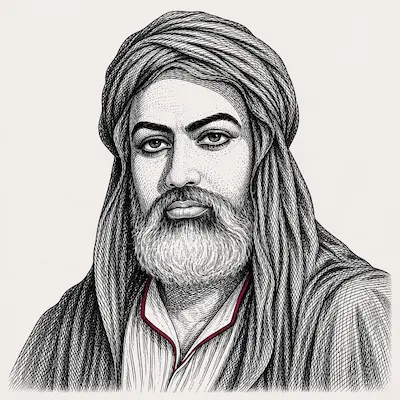 Ibn Khaldun
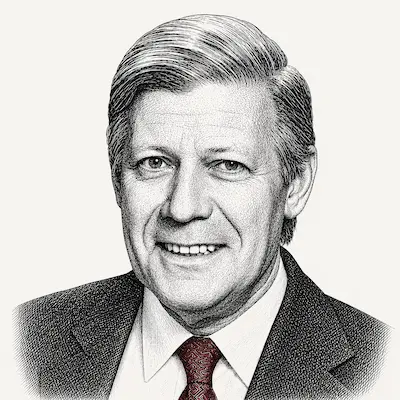 Helmut Schmidt
Markets and trade as the primary mechanism (comparative advantage, international coordination)
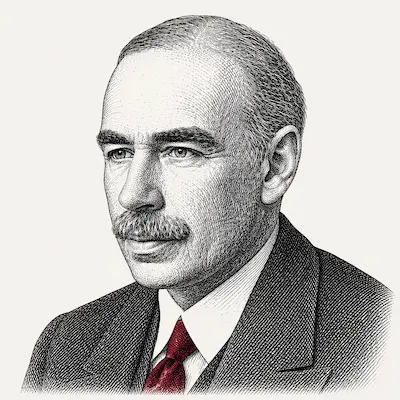 John Maynard Keynes
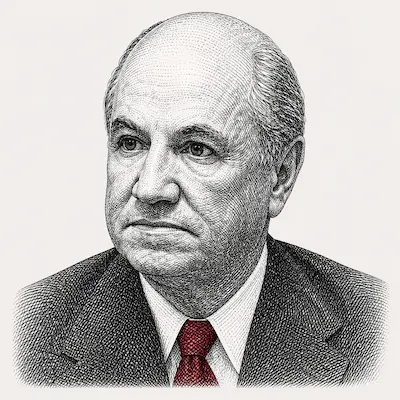 Raúl Prebisch
Selected members
Kautilya
Will argue: The state must maintain strategic grain reserves and protect agricultural capacity as a core sovereignty function before any other public expenditure.
He wrote the most systematic ancient treatise on state food reserves, agricultural investment, and famine prevention as sovereign obligations.
Ibn Khaldun
Will argue: A state that loses its agricultural base loses its asabiyya, the social cohesion that makes collective survival possible, and no military force can compensate for that collapse.
He documented how agricultural decline, over-taxation of farmers, and war interact to produce the dynastic collapses he studied across North Africa.
Helmut Schmidt
Will argue: Food dependency is structurally identical to energy dependency, a government that cannot feed its population in wartime has already lost a dimension of sovereignty it cannot recover under crisis conditions.
He governed through the 1973 oil embargo and built the doctrine that resource dependency is a sovereignty question, directly applicable to food dependency.
John Maynard Keynes
Will argue: Under genuine uncertainty, where the probability of a food crisis cannot be calculated, the correct policy is to insure against the worst plausible outcome, not to optimise for the most likely one; markets will not do this automatically.
His framework for managing acute scarcity through state intervention, his wartime How to Pay for the War analysis, and his insurance logic for worst-case scenarios are directly applicable.
Raúl Prebisch
Will argue: The international trading system will not reliably deliver food to the poorest countries in a war-induced scarcity, the terms of trade already disadvantage food-importing developing states, and crisis conditions will make that worse, not better.
He documented how countries dependent on commodity exports, including food, are structurally disadvantaged in global trade, and why the assumption that trade solves scarcity is wrong for food-insecure states.
Considered but not selected
Amartya Sen: His entitlement framework and famine analysis (Poverty and Famines, 1981) are directly relevant, but Keynes's insurance logic and Prebisch's structural trade critique together cover the demand-side and trade-access dimensions Sen would contribute. Adding Sen would create an imbalance toward the market-failure pole without adding a sufficiently distinct line of reasoning to justify a sixth member.
Eleanor Roosevelt: Relevant on the human rights dimensions of food scarcity and the obligations of international institutions to vulnerable populations. Excluded because this session's central tension is the structural economic and strategic question of how to build food resilience, not the rights-enforcement question. Roosevelt's framework would be essential in a session specifically about humanitarian law and food as a right.
Elinor Ostrom: Relevant if the question specifically addressed community-managed agricultural commons or shared water governance. The question as posed is at the national and geopolitical scale, war, scarcity, declining farm workforce, which is beyond the local collective-action scale where her framework is most documented. Excluded per the selection rule against using her outside genuine commons governance problems.