Can Vietnam position itself in a way to compete with China for manufacturing business from western countries?
Built from documented writings, speeches, decisions and historical records. Council members argue from documented positions, applied to today's question.
Vietnam can compete for manufacturing business, but only by building superior infrastructure first and accepting a complementary role to China rather than direct competition.
Lee Kuan Yew and Schmidt agree that Vietnam must front-load infrastructure spending and energy security before foreign investment arrives. Deng shows that Vietnam cannot match China's scale in existing manufacturing sectors, so it must focus on textiles, electronics assembly, and food processing where China is moving upmarket. Kautilya and Mahathir argue Vietnam should leverage its position between China and maritime powers to build relationships with Japan, South Korea, and India.
The split is whether Vietnam should accept permanent complementarity to China or risk confrontation for industrial autonomy.
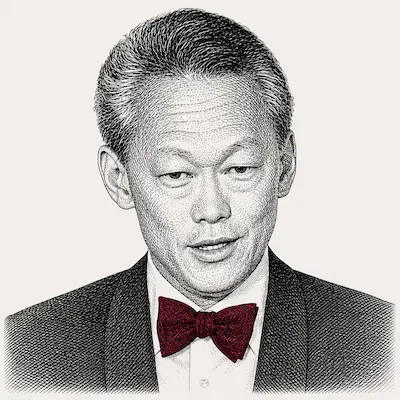
Vietnam must make itself indispensable through superior infrastructure and workforce quality.
In 1961, when Singapore launched the Economic Development Board, we faced the same challenge Vietnam faces now — competing with larger neighbors for foreign investment. We chose export-oriented industrialization over import substitution because we understood a basic truth: multinationals don't invest for your domestic market; they invest for your efficiency as a production platform. Vietnam has cost advantages over China, but cost alone won't sustain competitiveness. When Chinese wages were rising in the 1990s, we had already moved up the value chain through education and infrastructure investment.
The key insight planners miss is sequencing. Build world-class ports, power grids, and technical education before the foreign investment arrives. Don't build them with foreign investment revenue — that's too late. Vietnam's government must front-load infrastructure spending and create industrial parks that work better than China's, not just cheaper ones.
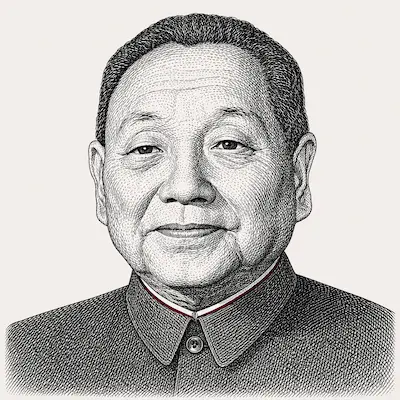
Manufacturing dominance requires decades of patient institutional development and careful great power management.
Lee Kuan Yew is right about infrastructure, but he underestimates the scale challenge. When I launched the Special Economic Zones in 1979, Shenzhen had 30,000 people. Today it has 13 million. Vietnam cannot replicate this transformation quickly enough to compete with China's existing manufacturing ecosystem. Our advantage isn't just lower costs — it's the density of suppliers, the trained workforce, and thirty years of institutional learning about export manufacturing.
Vietnam's path must be different. Focus on sectors where China is moving upmarket — textiles, basic electronics assembly, food processing. Accept that you will serve as a complement to Chinese manufacturing, not a replacement. The political challenge is managing this positioning without appearing subordinate to Beijing.
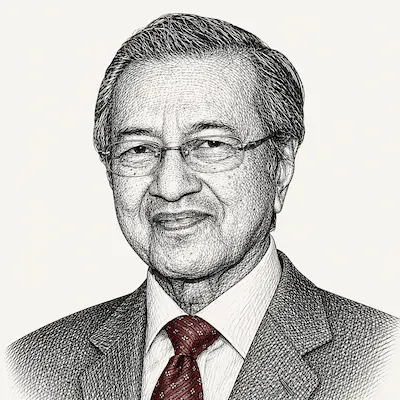
Vietnam must reject the false choice between Chinese dependence and Western alignment.
Deng's advice accepts permanent subordination to China — exactly the trap developing countries must avoid. When I launched Proton in 1983, Western economists said Malaysia lacked the scale to build cars. They were wrong about the economics and wrong about the politics. Industrial capability cannot be built through comparative advantage theory — it requires state protection, targeted investment, and the willingness to accept short-term inefficiency for long-term capacity.
Vietnam should pursue industrial upgrading through state-directed development while maintaining strategic non-alignment. Court Western investment without accepting Western conditionality. Build relationships with Japan, South Korea, and India to avoid dependence on any single partner. When the 1997 financial crisis hit, Malaysia's capital controls proved that small countries can defend their sovereignty against market pressure.

Vietnam needs long-term industrial partnerships and energy security before it can compete with China.
Mahathir's defiance worked for Malaysia because Malaysia had oil and palm oil — exportable resources that provided foreign exchange independence. Vietnam lacks this luxury. When I managed West Germany's response to the 1973 oil embargo, the lesson was clear: energy dependence is sovereignty dependence. Vietnam's manufacturing competitiveness depends first on reliable, affordable energy — and that requires either domestic resources or long-term supply agreements that don't create political vulnerabilities.
The practical path is regional partnership through ASEAN. Build integrated supply chains with Thailand, Malaysia, and Indonesia that create alternatives to Chinese manufacturing networks. This requires patient institution-building and the discipline to accept smaller gains over longer periods. Vietnam cannot shortcut its way to industrial power.

Vietnam must deploy asymmetric advantages while building multiple patron relationships to avoid dependence.
Schmidt correctly identifies energy as foundational, but he underestimates Vietnam's strategic position. In the mandala of regional power, Vietnam occupies the space between China and the maritime powers — this is an asset, not a constraint. The enemy of your enemy becomes your ally not from choice but from geometric necessity. Vietnam's challenge is to make itself valuable to multiple powers simultaneously without becoming dependent on any single patron.
Focus on sectors where Vietnam's geographic position creates natural advantages — logistics hubs for Southeast Asian trade, processing industries that serve both Chinese and Western supply chains. The state must invest in productive capacity before it can extract revenue from it. Build ports, power systems, and technical education as public goods that private manufacturers cannot provide for themselves. When multiple powers compete for access to your productive capacity, you gain the leverage to set terms rather than accept them.
The convergence note
Where the council converges:
Vietnam must front-load infrastructure investment and workforce development before foreign manufacturers arrive. Industrial competitiveness requires state-directed capacity building, not just market liberalization.
Where it divides:
Whether Vietnam should position itself as China's complement or competitor, and whether confronting Chinese dominance directly is strategically wise or economically suicidal.
For a policymaker to decide on:
Choose between accepting a subordinate role in Chinese supply chains with guaranteed growth, or pursuing industrial autonomy with greater risk and longer development timelines.