How can the EU protect its economy from heavily subsidized Chinese imports?
Built from documented writings, speeches, decisions and historical records. Council members argue from those positions, applied to today's question.
The EU must impose targeted tariffs to counter China's $57 billion subsidies while building its own industrial capacity.
Friedman frames Chinese subsidies as gifts to European consumers, but Schmidt and Mahathir anchor in sovereignty risks. Schmidt compares industrial dependence to the 1973 energy crisis that taught Europe diversification lessons. Prebisch identifies China's state subsidies as artificial comparative advantage that destroys genuine competition.
The split is temporal: Friedman prioritizes immediate consumer savings from cheaper Chinese EVs. The others accept higher short-term costs to prevent long-term industrial dependency and the loss of 800,000 German auto jobs.
- 1Impose targeted tariffs on Chinese EVs and other state-subsidized sectors to counter Beijing's $57 billion artificial advantage.
- 2Build European industrial capacity in automotive and strategic manufacturing to prevent dependency on Chinese supply chains.
- 3Diversify the EU's industrial base using the same sovereignty logic applied to energy after 1973.
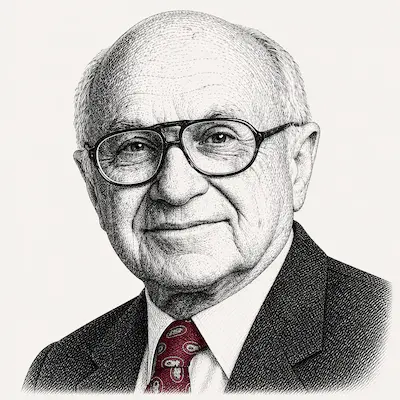
Chinese subsidies are gifts to European consumers.
European consumers benefit when Beijing subsidizes BYD and other manufacturers. The $57 billion China spent on EV subsidies in 2022-2023 transfers wealth from Chinese taxpayers to European car buyers. Protecting Volkswagen with 38% tariffs forces Europeans to pay higher prices for inferior products. In 1971 I testified that Japanese steel "dumping" was a gift to American consumers that we should accept gratefully. The same logic applies to Chinese EVs.
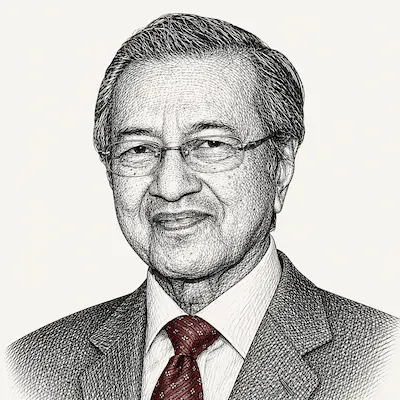
Industrial sovereignty requires defensive measures against predatory trade.
Friedman ignores what subsidized competition destroys. When China floods markets with artificially cheap EVs, it eliminates European competitors who cannot match state-backed pricing. In 1998 I imposed capital controls against every economist's advice because currency speculators were attacking Malaysia's sovereignty, not its fundamentals. The EU faces the same predatory logic. Once European auto manufacturing dies, China controls both supply and pricing. Short-term consumer benefits become long-term consumer dependency.
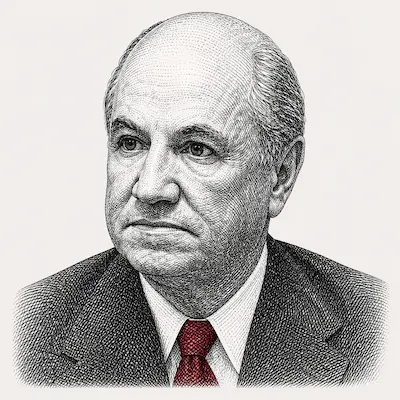
Free trade between unequal competitors produces divergence, not convergence.
Mahathir understands what Friedman misses: China's state subsidies create artificial comparative advantage that destroys genuine competition. In 1950 I documented how the terms of trade systematically favor industrial centers over commodity exporters. China now applies this logic in reverse, using state power to capture manufacturing while Europe becomes a luxury goods and services periphery. The EU's 38% tariffs are not protectionism but a corrective for China's structural distortion of market prices.
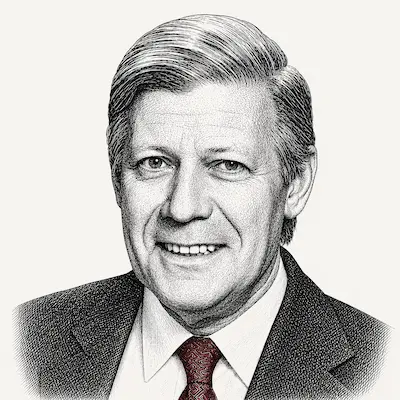
Industrial dependence creates the same sovereignty vulnerabilities as energy dependence.
Prebisch correctly identifies the structural problem. In November 1973 I told the Bundestag that energy dependence was not an energy question but a sovereignty question. Industrial dependence operates identically. When Germany's 800,000 auto workers face plant closures because China subsidizes competitors, this is not market competition, it is economic warfare. The EU must diversify its industrial base exactly as we diversified energy supplies after 1973. Temporary protection enables permanent capability.
The convergence note
Where the council converges: China's $57 billion subsidies distort genuine market competition. State-backed dumping creates artificial advantages that private competitors cannot match.
Where it divides: Friedman sees consumer benefits from subsidized imports. The others see strategic dependency and industrial destruction.
For a policymaker to decide on: Whether short-term consumer savings justify long-term industrial dependence. Whether the EU builds defensive capacity or accepts Chinese dominance.