Should the USA reduce its role as the world's security guarantor?
Built from documented writings, speeches, decisions and historical records. Council members argue from documented positions, applied to today's question.
No: not now, not without a named substitute force and a realistic timeline to build it.
Lee Kuan Yew and Ben-Gurion anchor the case: no allied force in the Indo-Pacific can replace US deterrence in any near-term window. Keynes adds that when the anchor power withdraws, the order does not rebalance; it breaks, and everyone pays more to rebuild than to maintain. Schmidt sharpens this: European NATO capacity took thirty years to construct, and Asia has not started.
Mahathir's objection is real. American guarantees have been selectively applied, and 1998 showed Washington using financial institutions as leverage against the states it claimed to protect. But his case for managed multipolarity assumes substitute institutions exist to manage it. They do not.
The council splits on whether dependency can ever be corrected without a crisis forcing it. Schmidt argues it must be; Lee Kuan Yew argues the correction kills the patient before the cure works.
- 1Name the specific theatre, the substitute command structure, and the realistic build timeline before announcing any US retrenchment.
- 2Fund allied capacity-building now; Schmidt's thirty-year European precedent shows no shortcut exists.
- 3Redesign existing security institutions to survive reduced US engagement without dissolving the rules-based order they enforce.
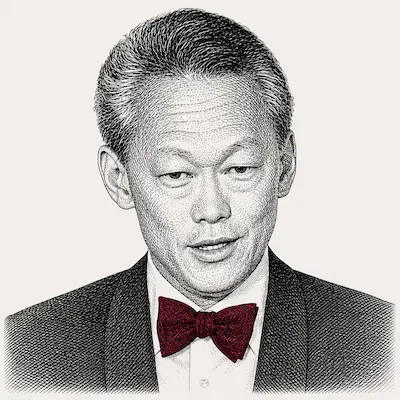
No substitute force exists for what America provides in Asia.
US withdrawal from the Indo-Pacific is not burden-sharing. It is abandonment. I invited American military access to Singapore after Britain left east of Suez in 1971 precisely because no regional substitute existed then, and none exists now. China watches every signal from Washington. When the US suspended military aid to Ukraine in 2025, Beijing read it. Small states from Seoul to Manila cannot build a credible deterrent in any timeline that matters. Miscalculation fills the space that retreating guarantors leave behind.
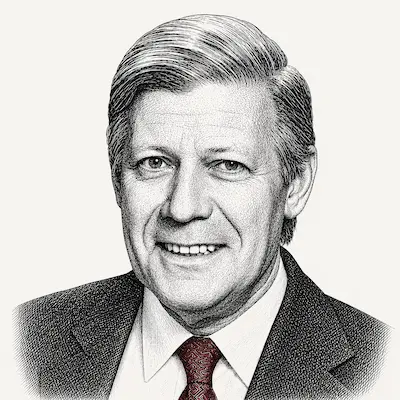
Allies who build nothing earn nothing when the guarantor wavers.
Asia cannot replicate what Europe took thirty years to construct, and Lee Kuan Yew is right that the timeline is the problem. But the lesson from Europe cuts both ways. In November 1977 I told the IISS in London that Europe could not outsource its security calculus to Washington indefinitely. The neutron bomb reversal in 1978 proved my point: Carter cancelled without consulting us, and I absorbed the political damage. Dependency without autonomous capacity is not an alliance. It is a client relationship. The answer is not American withdrawal; it is building the capacity that makes withdrawal survivable.
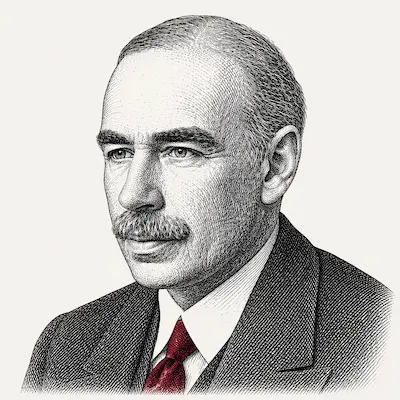
Withdrawing the anchor power does not redistribute order; it dissolves it.
Schmidt asks who pays, and the answer is: everyone pays more when the system collapses than when they fund it. I watched the Paris settlement of 1919 impose costs that the defeated power could not bear, and the result was not a stable redistribution of burdens. It was political catastrophe. The same logic applies here. When the dominant power withdraws from an international order it built, the order does not rebalance smoothly among remaining players. It destabilises in ways no one controls. The right question is not whether America should retrench but how to redesign the institutions so the order survives a less engaged America.
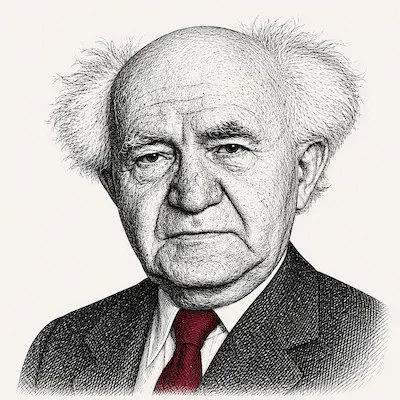
Small states cannot hedge their way to survival when the order collapses.
Keynes is correct that collapse is not rebalancing, and I learned this at Suez in 1956. We coordinated with Britain and France, destroyed Egypt's military capability, and then Eisenhower ordered us out. The great power guarantee evaporated overnight. That humiliation taught me one thing: no small state can rely on any single protector unconditionally. So we built Dimona. We pursued a peripheral strategy: alliances with Turkey, Iran, Ethiopia. We made ourselves useful to whoever held power. But all of that hedging rested on one condition: a functioning international order in which the rules still constrained the strongest players. Remove that order and the strong do what they wish. Ukraine in 2025 is the proof.
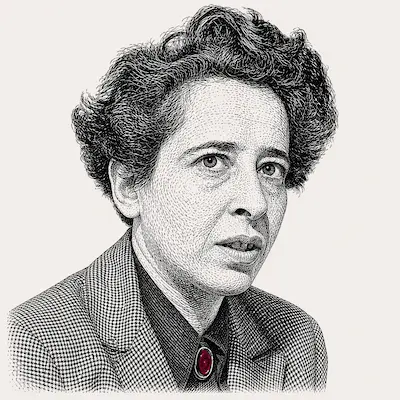
Power built on force alone is already lost before the troops leave.
Ben-Gurion asks what political order means without enforcement, and the answer is that enforcement is not what sustains order. Power arises when people act together in concert. It disappears when they stop. What the United States built after 1945 was not merely a military umbrella. It was a form of collective action: shared institutions, acknowledged rules, a public realm in which states could argue rather than simply fight. I was stateless for eighteen years, and I know what it means to lose the political membership that makes rights real. When the ordering power withdraws not just its troops but its commitment to the institutions it founded, what replaces it is not a more equal distribution of power. It is domination by whoever is least constrained by rules.
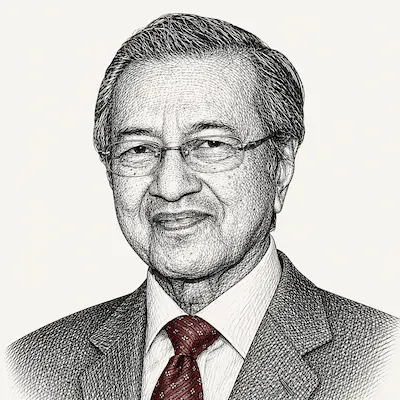
American dominance was never neutral; multipolarity is not the same as chaos.
Arendt asks whether sovereignty survives when the strong fill the vacuum, and I ask: which vacuum? The order she defends was not equally protective of all states. I refused IMF conditions in 1998 because Washington used financial institutions as instruments of strategic pressure, not neutral governance. Malaysian sovereignty was not abstract; it was the right to fix our own exchange rate when speculators attacked us for profit. A world less dominated by a single guarantor gives mid-size states room to build regional security arrangements they currently have no incentive to develop. The risk is real. But the answer is managed multipolarity, not permanent dependence on a patron that suspends commitments when its domestic politics shift.
The convergence note
Where the council converges: Abrupt US withdrawal creates vacuums that hostile actors fill before any substitute can be built. The order does not rebalance smoothly.
Where it divides: Schmidt and Mahathir argue that dependency without autonomous capacity is structurally unstable and must be corrected. Lee Kuan Yew and Ben-Gurion hold that no substitute force exists on any realistic timeline, making managed retrenchment indistinguishable from abandonment. Arendt and Keynes locate the deeper problem in the institutions themselves: whether the order can be redesigned to survive a less engaged America, or whether it dissolves the moment the anchor power withdraws its commitment.
For a policymaker to decide on: Does the US reduce its role gradually while funding allied capacity-building, or does any reduction signal to adversaries that commitments are conditional? Name the specific theatre, name the timeline, and name who commands the substitute force before announcing retrenchment.