What's in the best interest of the US: maintain current military presence in Europe, or redeploy troops to other regions?
Built from documented writings, speeches, decisions and historical records. Council members argue from documented positions, applied to today's question.
America gains credibility from visible commitment but loses flexibility from fixed deployment patterns.
Ben-Gurion and Schmidt argue that troops on European soil make American defense guarantees automatic and credible. Thatcher adds that European alliance prevents industrial capacity from shifting to competitors. Deng and Sun Tzu counter that fixed deployments create predictable constraints that adversaries exploit through indirect pressure.
The split turns on whether deterrence works better through certain response or uncertain positioning.
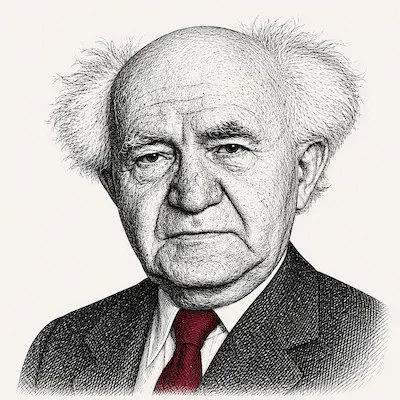
Security presence is credibility — withdrawal changes the strategic calculation for all parties.
In 1956 I made the decision to join France and Britain in the Suez operation against Egypt. The strategic window provided by Anglo-French interests aligned with Israel's security need. This taught me that military presence and political commitment are the same thing. When American troops are stationed in Europe, they do more than provide defense capability. They signal to adversaries that an attack on European allies would be an attack on America itself. The physical presence of forces creates the automatic involvement that turns a paper treaty into a credible deterrent.
Any redeployment signals strategic priorities and invites probing by competitors. When President Eisenhower forced us to withdraw from Sinai in 1957, every Arab leader understood that American pressure had real limits and that our French alliance had real value. Visible military presence is the difference between an alliance and a diplomatic statement.
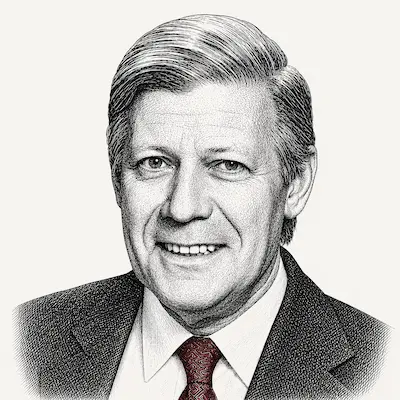
Alliance relationships constrain but enable security policy — presence cannot be detached from commitment.
Ben-Gurion is right about credibility, but he understands alliance management from the position of a small state seeking protection. I governed a medium state that was both protected and constrained by American presence. In 1979 I drove through NATO's dual-track decision against massive domestic opposition precisely because visible American commitment in Europe was the foundation of our security architecture. The deployment of Pershing II missiles on German soil made clear that European and American security were operationally inseparable.
The structure of deterrence requires this presence. Soviet planners understood that any conventional attack on Western Europe would automatically involve American forces stationed here. This removed the decision-point that might otherwise tempt an adversary to probe alliance resolve through limited action.
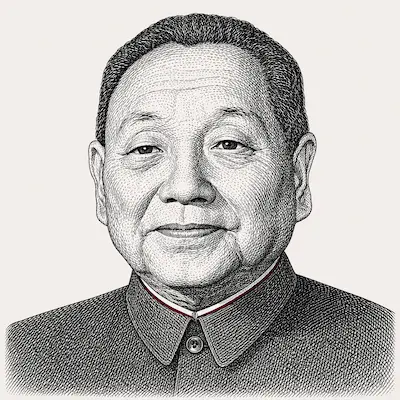
Schmidt assumes static conditions, but American global commitments create vulnerabilities that competitors will probe.
Schmidt's NATO experience occurred during a bipolar world where the Soviet Union was the single rival. Today's strategic environment is multipolar and dynamic. American military commitments in Europe constrain American responses elsewhere — precisely the pattern intelligent adversaries will exploit. In the 1970s I observed that American overextension in Vietnam created opportunities for other powers. The same logic applies to current deployments.
My doctrine was "hide your strength, bide your time" — wait for the stronger power to overcommit before revealing your hand. European deployment forces America to maintain expensive infrastructure while competitors build capability quietly. Every division stationed in Europe is a division not available for Indo-Pacific contingencies.
The deeper principle is resource allocation under strategic competition. Fixed commitments become predictable vulnerabilities. America's European presence tells every competitor exactly where significant American forces will be positioned, allowing adversaries to plan around known constraints.
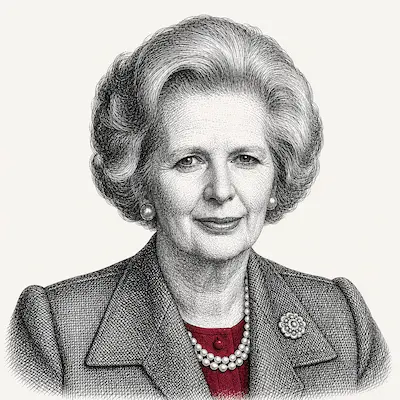
Deng treats alliances as constraints, but the Atlantic alliance has been the foundation of Western strategic success.
Deng's analysis treats NATO as American overextension, but this misunderstands what the alliance provides to America itself. During the Cold War, American presence in Europe was not charity — it was the mechanism that prevented European neutrality or accommodation with the Soviet Union. The troops were not just protecting us; they were ensuring that European industrial capacity and geographic position remained aligned with American interests rather than against them.
In 1983 I supported the deployment of American cruise missiles despite massive domestic opposition precisely because the presence of American forces made Soviet intimidation impossible. The alternative to American presence is not European independence — it is European vulnerability to pressure from whoever fills the vacuum.
Today's strategic competition with China makes European alliance even more valuable to America. Europe represents democratic industrial capacity, technology partnerships, and geographic position that America cannot afford to lose to competitors.
Strategic positioning requires adaptability — fixed deployments create predictable patterns that adversaries exploit.
Thatcher assumes that visible commitments strengthen deterrence, but this reveals the strategic position to the adversary. When deployment patterns are predictable, competitors can prepare counters. The higher strategy is to create uncertainty about where and how you will respond — forcing adversaries to prepare for multiple contingencies rather than planning around known positions.
Fixed European presence tells competitors exactly where American forces are and are not. This enables precise planning of probes where America is weak while avoiding confrontation where America is strong. The enemy who knows your dispositions can concentrate against your weaknesses.
The principle of strategic deception applies here. Appear weak where you are strong, strong where you are weak. Rigid alliance commitments make deception impossible — they announce your positions in advance. Flexible deployment preserves the adversary's uncertainty, which is itself a strategic weapon.
The convergence note
Where the council converges All members accept that military presence affects strategic calculations and that credible deterrence requires some form of commitment that adversaries believe will be honored.
Where it divides The specific disagreement centers on whether visible, fixed military presence strengthens deterrence through certainty of response (Ben-Gurion, Schmidt, Thatcher) or weakens it by creating predictable constraints that adversaries exploit (Deng, Sun Tzu). This reflects a deeper divide between alliance-based deterrence and flexible strategic positioning.
For a policymaker to decide on The decision between maintaining current European deployment patterns versus redeploying to address other theaters requires a judgment about whether America's strategic competitors will interpret redeployment as abandonment or as adaptation — a calculation the council cannot make.