Is it useful for the US to have military bases on every continent?
Built from documented writings, speeches, decisions and historical records. Council members argue from documented positions, applied to today's question.
America's 750 bases work when they serve host nations facing regional threats but become liabilities when they serve only global positioning.
Lee and Schmidt agree that bases succeed through genuine partnership where both sides gain security. Ben-Gurion and Sun Tzu warn that fixed positions create more vulnerabilities than capabilities when spread globally. Kautilya frames the test: military presence must generate more security than it consumes in resources and legitimacy.
The council splits on whether global reach creates net security or net burden for America itself.
- 1Close bases where host nations gain no regional security benefit, starting with locations that serve only American global positioning.
- 2Anchor future base agreements to mutual defense against specific regional threats, not abstract strategic partnership.

Small states survive by making themselves indispensable, not by asserting rights.
America's 750 bases make it indispensable to host nations facing regional threats. In 1971, after Britain withdrew east of Suez, I ensured US access to Singapore's facilities because we needed their naval presence against potential Indonesian or Malaysian pressure. The arrangement works: America gets strategic positioning, Singapore gets security guarantees. But Niger shows the risk. Bases without genuine partnership become occupation. When the host population sees no benefit, even a $100 million investment becomes worthless overnight.

Alliance partnerships require genuine burden-sharing, not unilateral positioning.
Lee is correct about partnership, but he understates the coordination challenge. In December 1979 I initiated NATO's double-track decision precisely because alliance credibility required visible American commitment in Europe. The Pershing deployments worked because European allies accepted political costs alongside strategic benefits. Today's global base structure lacks this reciprocity. When America deploys globally without meaningful consultation, allies become dependencies rather than partners. The Niger expulsion reflects this failure.
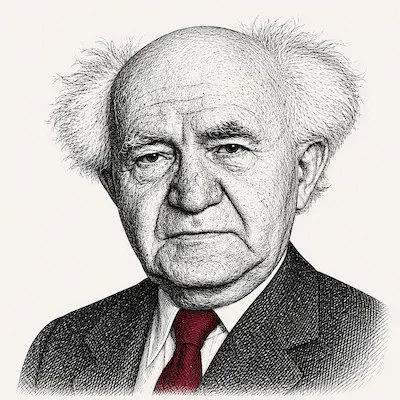
Military presence must serve concrete strategic purposes, not abstract global reach.
Schmidt misses the fundamental point. In 1956 I coordinated with Britain and France at Sèvres because their interests aligned with ours against Egypt. When Eisenhower forced withdrawal, I learned that distant allies pursue their own objectives first. America's 750 bases create more commitments than capabilities. Each base is a hostage to local politics. Israel survived by building indigenous deterrence, not by depending on foreign garrisons. A superpower that cannot distinguish vital from peripheral interests will lose both.

Supreme strategic excellence achieves security without permanent military deployment.
Ben-Gurion understands the vulnerability of fixed positions. In the Wu campaigns against Chu, I positioned forces where the enemy was unprepared, struck swiftly, and withdrew before counterattack. Permanent bases reverse this logic. They telegraph intentions, create predictable targets, and consume resources defending static positions. America's global presence allows adversaries to study patterns, prepare countermeasures, and choose timing. China builds one base in Djibouti while America defends 750. Who faces the greater strategic burden?

Military presence must generate more security than it consumes in resources and legitimacy.
Sun Tzu correctly identifies the cost problem, but misses the alliance geometry. When I designed the Mauryan state, distant military commitments required local legitimacy and tributary relationships that made them self-sustaining. America's bases work when they serve host nation security needs, like Singapore or Poland facing regional threats. They fail when they serve only American global positioning, like Niger where no genuine security partnership existed. The mandala principle applies: your enemy's enemy is your natural ally, but only if the alliance serves their interests, not just yours.
The convergence note
Where the council converges: Fixed military positions become vulnerabilities when they lack genuine partnership with host populations.
Where it divides: Whether America's global reach creates more security than the commitments consume. Whether small states need American bases for regional stability or whether they create dependency.
For a policymaker to decide on: Which bases serve mutual security interests and which serve only American global positioning.